
Dog Red Between Paw Pads and Limping: What to Do
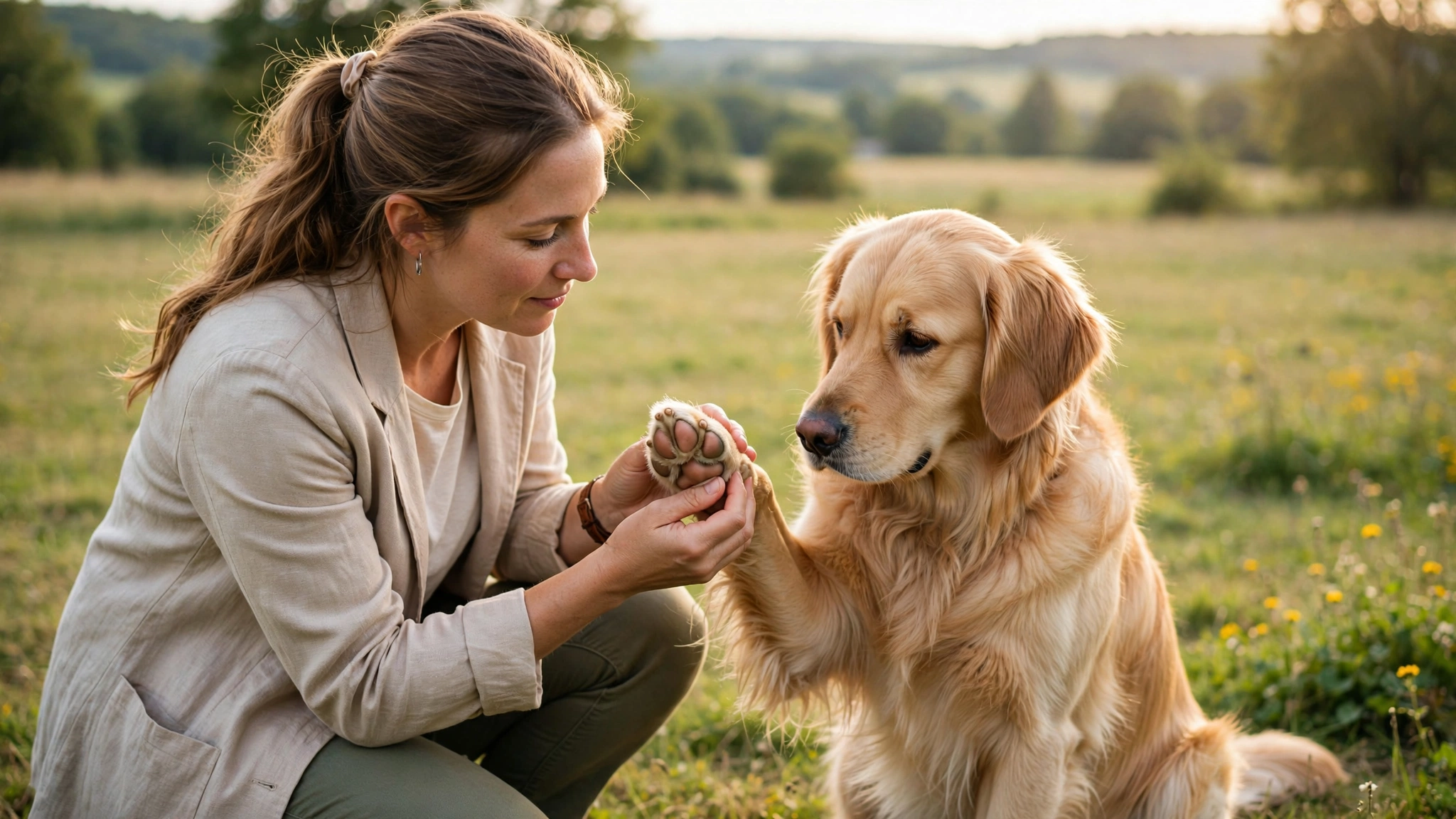
Quick answer: Redness between your dog’s paw pads plus limping usually means something is irritating or infecting the skin there — most often allergies with a secondary yeast or bacterial infection, a burn from hot pavement, a foreign object like a grass awn, or an interdigital cyst. Gently clean the paw, check between every toe, rest your dog, and prevent licking. See your vet promptly if limping lasts more than a day or two, or immediately if your dog cannot bear weight, the paw is swollen, or there is discharge.
Do Not Panic — But Do Take It Seriously
A dog that is red between the pads and limping is telling you the foot hurts. The limping itself is useful information: it means this is not just cosmetic discoloration but genuine pain or inflammation. The good news is that most causes are treatable, and many are straightforward once a vet identifies them. Your job right now is to gather clues (one paw or all four? sudden or gradual? any smell?) and keep the foot clean and rested until you know more.
The Most Common Causes
1. Allergies with secondary yeast or bacterial infection
This is the number one pattern vets see: environmental allergies (pollen, grass, dust mites) make the feet itchy, the dog licks constantly, and the warm moisture between the toes grows yeast or bacteria. Signs include redness between multiple paws, a musty or “corn chip” odor, brownish staining of the fur, and relentless licking. Our guide to fixing Frito feet in dogs covers the yeast angle in depth. These infections keep coming back until the underlying allergy is managed, so this one usually needs a vet’s diagnosis and treatment plan.
2. Interdigital cysts (furuncles)
A red, swollen bump between the toes — often on just one foot — is frequently an interdigital cyst: a deep bacterial infection of a hair follicle. Short-coated breeds like Bulldogs, Shar-Peis, and Labradors are prone to them because stiff hairs get pushed back into follicles during walking. They are painful, cause limping, and typically need veterinary treatment (soaks, antibiotics, lick prevention).
3. Burns from hot pavement or ice-melt chemicals
Red, irritated pads with limping after a summer walk screams hot asphalt — if you cannot hold your hand on the pavement for several seconds, it burns paws too. Winter brings chemical burns from road salt and de-icers, which also poison dogs that lick them off. Rover’s veterinary guide to burnt paw pads explains how to grade the severity and when home care is enough.
4. Foreign objects
Grass awns (foxtails), thorns, splinters, or tiny stones lodged between the toes cause sudden limping focused on one paw, with redness and swelling around the entry point. These often need professional removal — digging around yourself can push them deeper.
5. Contact dermatitis
Walking through lawn chemicals, cleaning products, or irritating plants can inflame the skin between pads. Usually affects the paws that had contact, and improves once the irritant is washed off and avoided.
6. Cuts, scrapes, or torn nails
A sliced pad or a broken nail bleeds and hurts, and dogs limp dramatically. Check each pad and nail carefully — torn nails are easy to miss under fur.
What to Check Right Now
- Spread every toe and look between the pads for redness, swelling, discharge, or embedded objects. Compare with the other paws.
- Sniff. A yeasty, musty odor points toward yeast infection; a foul smell suggests bacterial infection.
- Count the paws. All four feet affected leans toward allergies; one foot leans toward injury, cyst, or foreign object.
- Check the nails, including dewclaws — a cracked or torn nail causes outsized limping.
- Note the timeline. Sudden onset after a walk suggests injury or burn; gradual worsening over weeks suggests allergy-driven infection.
For the inspection and cleanup technique, see our walkthrough of getting sticky stuff out of dog paws safely — the same gentle approach works for examining sore feet.
Safe Home First Aid
- Rinse the paw with lukewarm water and a mild dog-safe soap to remove irritants, salt, or debris. Pat dry — do not rub.
- Epsom salt soak: Dissolve a few tablespoons of Epsom salt in warm water and soak the paw for 5–10 minutes. It eases pain and swelling and can help draw out minor irritants.
- Rest the foot. No running, jumping, or long walks — leash-only potty breaks until the limp resolves.
- Stop the licking. An e-collar/cone or a clean sock prevents the lick-itch cycle that turns mild irritation into full infection.
- Protect outdoors with a bootie or sock if the dog must walk on rough ground.
- Never give human pain medication. Ibuprofen, acetaminophen, and aspirin can be toxic or fatal to dogs. Pain relief must come from your vet.
When to See the Vet (and When It Is an Emergency)
See your vet promptly — within a day or two — if limping persists, redness spreads, or you find a lump, discharge, or a suspected foreign object. Go urgently if your dog cannot bear any weight on the leg, the paw or leg is swelling rapidly, there is uncontrolled bleeding, or limping comes with lethargy, tremors, or loss of appetite. At the clinic, expect a full paw exam and possibly skin cytology (a quick microscope check that distinguishes yeast from bacteria), and discussion of allergy testing if this keeps recurring.
Preventing the Next Episode
- Rinse paws after walks, especially in winter (salt) and summer (hot pavement, allergens).
- Keep the fur between the pads trimmed so it does not mat and trap moisture.
- Use the palm test on hot pavement; walk early or late on hot days.
- Consider booties for dogs with recurrent paw problems.
- Manage known allergies year-round rather than waiting for flare-ups.
- Inspect paws weekly — catching a foxtail on day one beats surgery on day ten.
Frequently Asked Questions
Why is my dog limping but I cannot see anything wrong?
Look closer between the toes — foxtails, small thorns, and early interdigital cysts hide there. Also check for odor, which reveals infections you cannot see. If a careful inspection finds nothing and limping persists, the problem may be higher up the leg and needs a vet exam.
Can I use Neosporin between my dog’s paw pads?
A thin layer on a minor surface scrape is generally considered safe, but dogs will lick it off — use an e-collar afterward. Do not use it on deep wounds, and never use creams containing steroids or “-caine” anesthetics without vet guidance.
Will the redness go away on its own?
Mild irritation from a new walking surface or a minor scrape often resolves in a few days with rest. Redness with limping, odor, swelling, or discharge will not reliably self-resolve and usually needs treatment.
Is redness between the pads always allergies?
No — it is the most common cause of recurrent redness, but single episodes are often injury, burns, cysts, or foreign objects. The pattern (one paw vs. all four, sudden vs. gradual) is your best clue.
My dog keeps getting interdigital cysts. What helps long-term?
Recurrent cysts usually mean an underlying issue — most often allergies. Talk to your vet about allergy management (which may include medication, diet trials, or immunotherapy), keep interdigital fur trimmed, and keep paws clean and dry.
Redness between the pads plus a limp is your dog’s clear signal that something needs attention. Check carefully, rest the foot, skip the human medicine cabinet, and let your vet sort the cause — most dogs are back on all four paws comfortably within a couple of weeks.


2 Comments