
Average Litter Size for Australian Shepherds: What to Expect
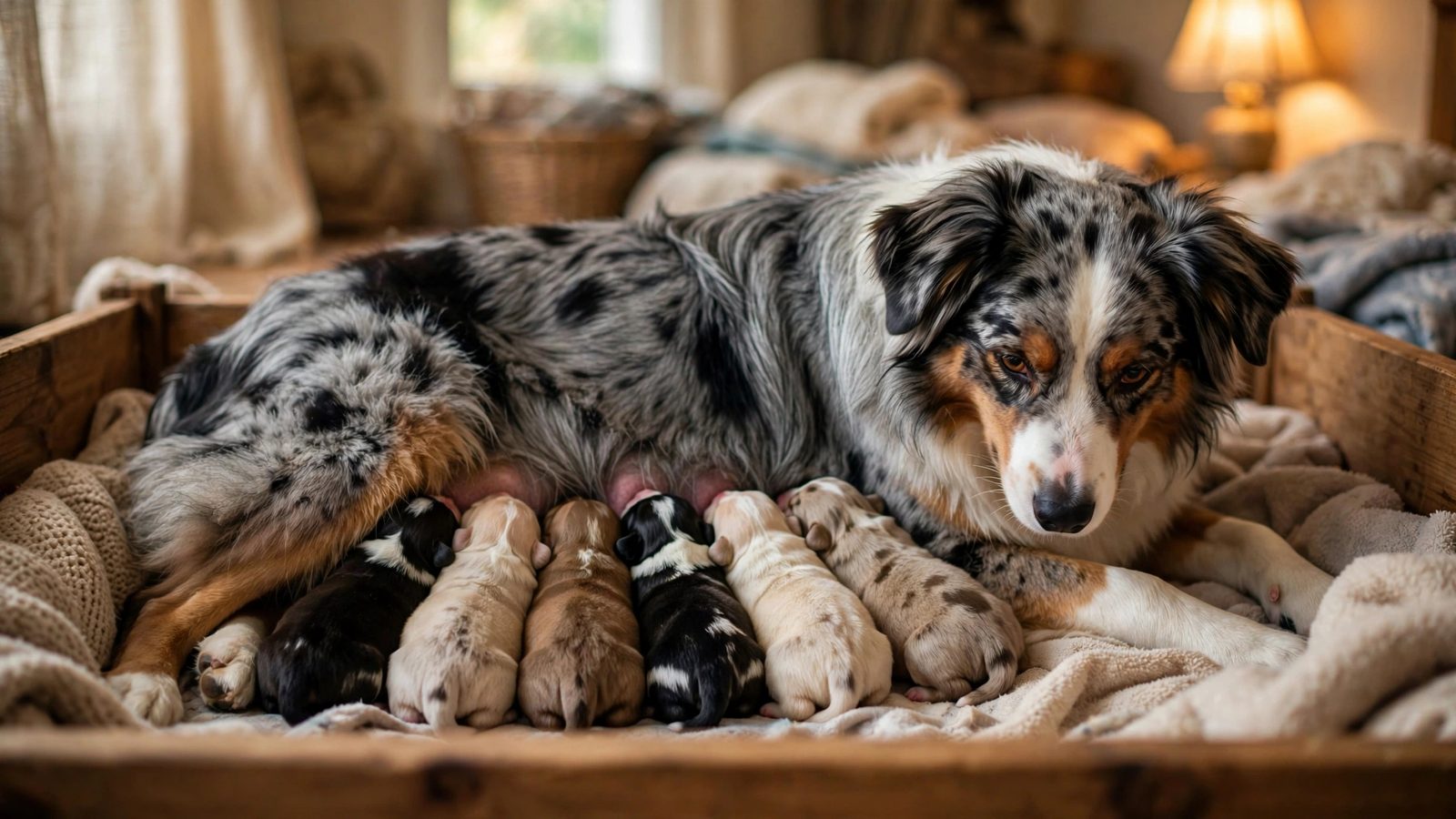
Quick answer: The average litter size for Australian Shepherds is about 7 puppies, with a normal range of roughly 6 to 9. First-time mothers often have smaller litters of 4 to 6, while experienced dams can occasionally deliver 10 or more. Overall, expect anywhere from 2 to 13 puppies — Aussies are a breed known for generous litters, so prepare for the high end, not just the average.
The Numbers: What’s Normal for Aussies
Across breeder records and breed surveys, the figures cluster tightly:
- Average: About 7 puppies per litter (most sources cite 6 to 8).
- Typical range: 6 to 9 puppies covers the large majority of healthy litters.
- Small litters: 2 to 4 puppies, more common in first-time mothers, older dams, or minis.
- Large litters: 10 to 13 puppies happen but are uncommon — the extreme high end of the range.
For context, Aussies sit above the all-breed average. Medium-large, athletic breeds tend to have bigger litters than small breeds, and the Australian Shepherd is squarely in that bigger-litter camp. If you are planning a breeding, set up your whelping area for eight or nine puppies; hoping for the average while preparing for more is the experienced breeder’s rule.
What Affects Litter Size
Litter size is not random — several factors push the number up or down:
- Age of the dam. Females bred in their prime (roughly 2 to 5 years old) tend to have the largest litters. Very young or older dams usually produce fewer puppies.
- First litter vs. later litters. A first-time mother commonly has 4 to 6 puppies; litter size often increases over the second and third litters before declining with age.
- Breeding timing. The likeliest cause of a surprisingly small litter is breeding on the wrong day. Ovulation timing via progesterone testing pinpoints the fertile window far better than counting days from the start of heat.
- Sire fertility. Litter size rests on both parents. A proven male with strong semen quality fertilizes more eggs; an older or subfertile male means fewer puppies.
- Method of mating. Research on canine reproduction finds natural mating tends to produce slightly larger litters than artificial insemination on average.
- Health and condition. The dam’s nutrition, body condition, and freedom from uterine infection or thyroid issues all influence how many embryos implant and develop.
- Genetics. Litter size runs in lines — dams from large litters tend to produce large litters themselves.
For a thorough primer on getting the fundamentals right, from timing to nutrition, read AKC’s dog breeding tips for beginners.
First Litters vs. Experienced Mothers
If your Aussie is expecting for the first time, temper your expectations: 4 to 6 puppies is a perfectly normal first litter, and even 3 can be fine. First-time dams are still maturing themselves, and their bodies are less efficient at carrying a large litter to term.
By the second or third litter, most healthy dams hit their stride and produce litters closer to the breed average of 7. Breeders also get better at timing breedings with experience, which compounds the effect. Do not breed a female on every heat cycle back-to-back — reputable breeders give dams recovery time between litters, which protects both the mother and future litter sizes.
Mini and Toy Aussies vs. Standards
Size matters. The figures above describe standard Australian Shepherds (40 to 65 pounds). Miniature American Shepherds (20 to 40 pounds) generally have smaller litters — typically 2 to 5 puppies — simply because a smaller uterus carries fewer pups. Toy varieties run smaller still.
This is worth knowing if you are buying a puppy: a breeder offering “ten mini Aussie puppies from one litter” deserves skepticism, since that number would be extraordinary for the size. Litter size claims should always be plausible for the dam’s size.
The Merle-to-Merle Warning
No discussion of Aussie litters is complete without this: never breed two merle Australian Shepherds together. When two merles are paired, roughly a quarter of the puppies can inherit two copies of the merle gene — “double merles” — which are often born predominantly white with serious vision and hearing impairments, including blindness and deafness.
This is not a litter-size issue but a welfare one, and it is the single most important genetic rule in Aussie breeding. Responsible breeders pair merle to non-merle (tri or solid) every time, health-test both parents, and know the coat genetics of their lines.
Preparing for a Litter of Seven (or More)
Seven hungry newborns are a wonderful handful. Before whelping day:
- Set up the whelping box early. Big enough for the dam to stretch out with room for puppies to scoot away from her — a common size is 4×4 feet for a standard Aussie. Introduce it weeks before the due date so she accepts it.
- Confirm the count. An x-ray around day 55 of pregnancy gives your vet a puppy count, so you know when whelping is finished — critical with large litters where a retained puppy is a emergency.
- Stock supplies. Clean towels, a bulb syringe, unwaxed dental floss for cords, a scale for daily weights, supplemental formula and bottles in case the dam cannot feed them all, and your vet’s emergency number on the fridge.
- Plan for round-the-clock care. Large litters may need supplemental feeding rotations in the first two weeks, especially if some puppies are much smaller.
- Line up homes early. Ethical breeders have waiting lists before the breeding happens, not after the puppies arrive. Screen buyers, and be ready to take any puppy back at any point in its life.
Once the puppies arrive, keep meticulous records — birth weights, daily gains, and markings — because you will need them for registration. Our guide to how to read an AKC litter certificate walks through exactly what the paperwork means when it is time to register the litter.
What If the Litter Is Very Small — or Very Large?
Averages hide the extremes, and the extremes need special handling.
Very small litters (1 to 3 puppies) sound easy but come with quirks. A single puppy misses out on the jostling and competition that teach bite inhibition and social skills, so the breeder must deliberately provide extra handling and, ideally, carefully supervised time with other stable dogs. Small litters also grow large: with all of the dam’s nutrition going to one or two puppies, they can become oversized, which increases the chance the dam will need a C-section. Your vet should monitor small litters closely in the final week.
Very large litters (10+ puppies) strain everyone. The dam may not produce enough milk for all of them, so expect to supplement with bottle feeding on a rotation — weakest puppies first. Weigh every puppy daily; any puppy that fails to gain for two days running needs veterinary attention, as fading-puppy situations escalate fast in big litters. The dam needs dramatically more calories — often two to four times her normal intake of a high-quality growth or performance diet — plus constant access to fresh water. Large litters also mean more homes to find, so start screening buyers long before the puppies are born.
Frequently Asked Questions
How many puppies do Australian Shepherds have the first time?
Usually 4 to 6. First litters run smaller than the breed average of 7, and anything in that range from a healthy dam is normal.
What is the largest recorded Aussie litter?
Litters of 12 to 13 puppies have been reported, though they are rare. Very large litters carry higher risks — more stillbirths, lower birth weights, and greater strain on the dam — so they need close veterinary supervision.
Do Mini Australian Shepherds have smaller litters?
Yes. Minis (20 to 40 pounds) typically have 2 to 5 puppies per litter, reflecting their smaller size. The “about 7” average applies to standard Australian Shepherds.
Can you predict how many puppies an Aussie will have?
Approximately. An x-ray in late pregnancy (around day 55) lets your vet count skulls and spines, giving a reliable expected number so you know when whelping is complete.
Is it safe to keep two puppies from the same litter?
It can be done but it is demanding — littermates can bond more with each other than with you and are harder to train. Read our guide to caring for two puppies from the same litter before deciding.
Conclusion
The average litter size for Australian Shepherds — about 7 puppies — makes them one of the more prolific medium-large breeds. Expect 6 to 9 in a typical healthy litter, fewer the first time around, and always prepare for more rather than fewer. Breed responsibly: health-test both parents, never pair merle to merle, time the breeding with progesterone testing, and have your vet, your whelping box, and your puppy homes ready well before day 63.



One Comment