How Often to Wash a Husky: A Practical Guide
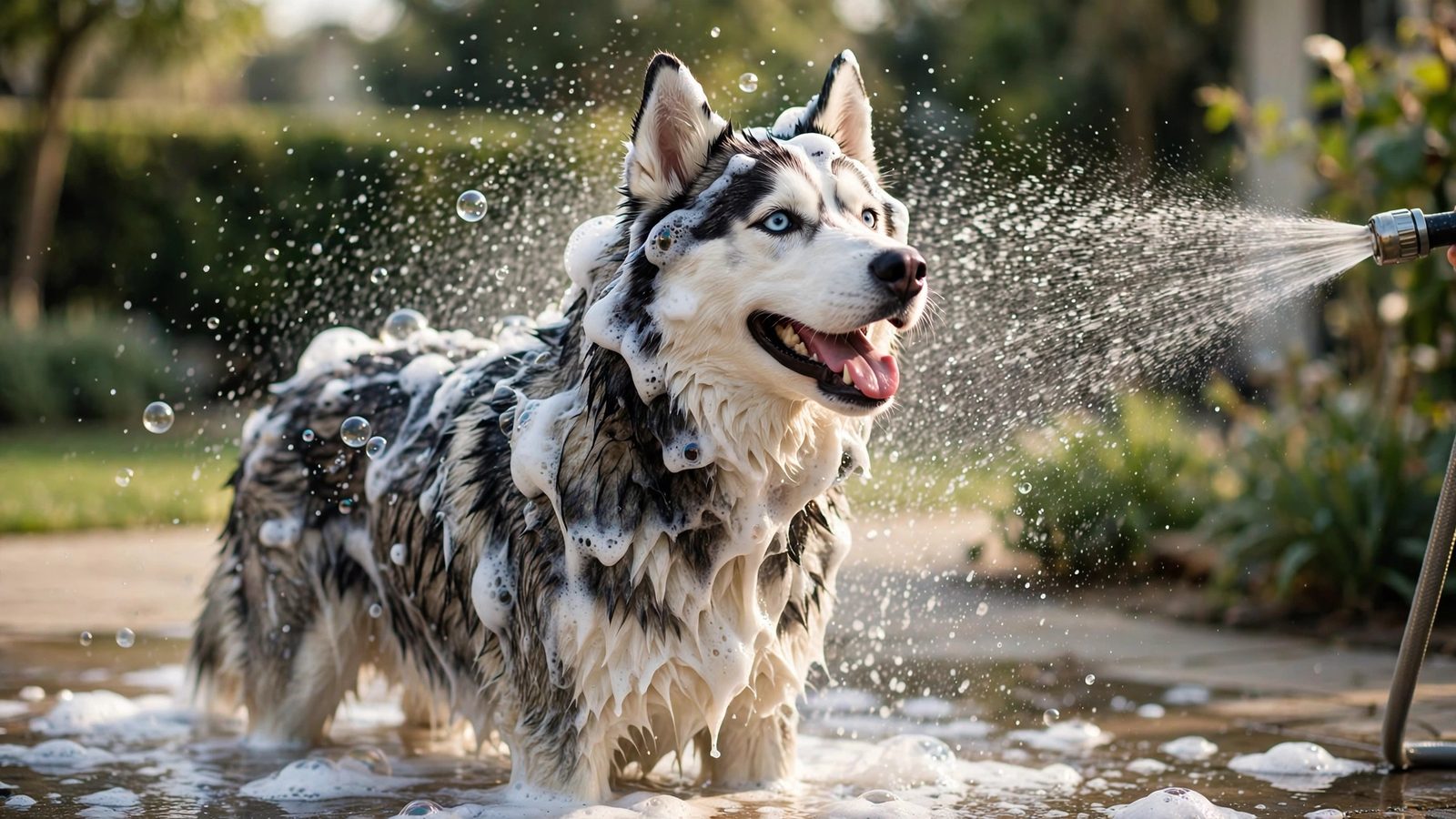
Short answer: Most Siberian Huskies only need a full bath every 3 to 4 months. Huskies have a naturally clean, low-odor double coat, and overbathing strips the oils that keep their skin and fur healthy. Bathe sooner only when your Husky gets genuinely filthy, starts “blowing” their undercoat, or your vet recommends it for a skin condition. Between baths, regular brushing does most of the work.
Why Huskies Need Fewer Baths Than Most Dogs
Huskies are famously clean dogs — many owners joke they groom themselves like cats. There is real biology behind it:
- A self-regulating double coat. The dense undercoat insulates while the coarser guard hairs repel dirt and moisture. Like other double-coated breeds and their shedding cycles, the coat is designed to manage itself with minimal intervention.
- Low natural oil. Unlike oily-coated breeds (think Basset Hounds or Labradors), Huskies produce little skin oil, so they rarely develop that classic “doggy smell.”
- Dirt sheds off. Once mud dries, it often brushes right out of a Husky coat — no bath required.
The result: a Husky bathed four times a year is usually a clean, sweet-smelling Husky. Bathing monthly “just because” does more harm than good.
When to Bathe Sooner Than Scheduled
The 3–4 month rhythm is a baseline, not a law. Break it when:
- Your Husky gets truly filthy — muddy hikes, garbage encounters, or the dreaded roll in something foul. Dirt left in the coat can irritate skin.
- Coat-blowing season arrives. Huskies “blow” their undercoat twice a year (spring and fall). A bath with thorough brushing loosens the dead undercoat dramatically faster.
- After flea treatment. Some topical flea products call for a bath beforehand — follow the product label.
- Your vet says so. Medicated baths for allergies, hot spots, or fungal issues follow the vet’s schedule, not the calendar.
- The smell test fails. A healthy Husky should not stink. Persistent odor can signal a skin or ear issue worth a vet check rather than another bath.
How to Bathe a Husky the Right Way
A Husky bath done wrong — especially the drying — causes more problems than skipping the bath entirely. Follow this order:
- Brush thoroughly BEFORE water touches the coat. This is the golden rule. A wet undercoat mats into felt that cannot be brushed out, traps moisture against the skin, and invites hot spots and rashes. Use an undercoat rake and slicker brush until no more loose fur comes out.
- Use lukewarm water and a dog-specific shampoo. Human shampoo disrupts canine skin pH. For Huskies, a gentle oatmeal or de-shedding formula works well. Avoid over-shampooing — one lather is usually enough.
- Rinse far longer than you think necessary. Dense double coats hide shampoo residue, which causes itching and flaking. Rinse until the water runs completely clear, then rinse once more.
- Dry completely — this step is non-negotiable. A damp undercoat is a hot-spot factory. Towel dry, then use a high-velocity dryer or cool-setting blow dryer while brushing, working down to the skin in sections. In warm weather, supervised outdoor air-drying after towel-drying is fine, but never leave a damp Husky in a cold draft.
For breed background and temperament context, see VCA Animal Hospitals’ Siberian Husky breed profile.
Between-Bath Coat Care
Brushing is the real grooming routine for a Husky — bathing is the occasional deep clean:
- Weekly brushing year-round with an undercoat rake keeps loose fur under control.
- Daily brushing during coat-blow (those dramatic 2–3 week sheds in spring and fall) prevents tumbleweeds of fur and keeps the new coat growing in cleanly.
- Wipe-downs with a damp cloth or pet wipe handle muddy paws and minor messes without a full bath.
- “Snow baths” count. Many Huskies gleefully roll in clean snow, which genuinely freshens the coat — nature’s dry shampoo.
5 Bathing Mistakes Husky Owners Make
- Overbathing. Monthly baths strip natural oils, causing dry, flaky, itchy skin — which owners then try to fix with more baths.
- Using human shampoo. Wrong pH, harsh detergents, and fragrances irritate Husky skin.
- Shaving the coat. Never shave a Husky except for medical necessity. The double coat regulates temperature both ways; shaving ruins insulation and the coat may never grow back correctly.
- Bathing a matted dog. Water tightens mats into solid felt. Brush or clip mats out first.
- Skipping the dry. A Husky sent outside damp in cool weather — or left damp indoors — is a hot spot waiting to happen.
Bathing Schedule by Lifestyle
Not all Huskies live the same life, so adjust the baseline to yours:
- Apartment/indoor Husky, leashed walks: every 4–6 months is often plenty. These dogs simply do not get dirty.
- Active outdoor Husky (hiking, dog parks, yard): every 3–4 months, plus as-needed baths after muddy adventures.
- Show or therapy dogs: bathed more often for presentation — sometimes monthly — but handlers compensate with conditioning sprays and careful coat care to offset the drying effect.
- Huskies with skin conditions: follow your vet’s medicated-bath schedule exactly, which may mean weekly baths for a period. This is treatment, not grooming.
What Shampoo Should You Use on a Husky?
- Gentle oatmeal or aloe formulas for routine baths — soothing and moisturizing.
- De-shedding shampoos during coat-blow season to help release undercoat.
- Whitening shampoos (used sparingly) for white markings that look dingy — they are mildly clarifying, so do not overuse.
- Medicated shampoos only on veterinary advice.
Whatever you choose, it must be formulated for dogs. And always follow with a thorough rinse: residue is the number-one cause of post-bath itching in double-coated breeds.
Signs You’ve Been Overbathing Your Husky
Caught in the too-frequent cycle? Look for: flaky dandruff on a dark coat, dull or brittle fur, constant scratching with no fleas found, and skin that looks dry or irritated. The fix is simple — stretch the interval back out to 3–4 months, brush more instead, and let the coat’s natural oils recover. Most Huskies rebound within a few weeks.
Frequently Asked Questions
Can I bathe my Husky once a month?
You can, but most Huskies do not need it, and monthly bathing often leads to dry skin. Unless your dog gets dirty constantly or has a vet-prescribed medicated schedule, stick to every 3–4 months.
Do Huskies smell if you don’t bathe them often?
Healthy Huskies are among the least smelly breeds thanks to their low-oil coat. If your Husky smells bad between baths, look for skin infections, ear infections, or dental issues rather than reaching for the shampoo.
Should I bathe my Husky during coat-blowing season?
Yes — a bath mid-blowout, combined with thorough brushing before and after, releases astonishing amounts of dead undercoat and shortens the shedding storm considerably.
What about wooly-coated Huskies?
Wooly Huskies (longer, softer guard hairs) take much longer to dry and mat more easily, so be extra diligent about pre-brushing and complete drying. Their bathing frequency is the same, but each bath is more work.
Can puppies be bathed on the same schedule?
Husky puppies need even fewer baths — only when dirty. Their puppy coat is delicate, and early overbathing can irritate young skin. Focus on brushing and positive grooming handling instead.
Is it okay to bathe a Husky in winter?
Yes, with one condition: the dog must be completely dry before going out into the cold. A damp undercoat in freezing temperatures is miserable and can chill the dog dangerously. Bathe indoors, dry thoroughly with a dryer, and confirm the coat is dry down to the skin before any outdoor time.
Why does my Husky still smell after a bath?
Usually one of three things: shampoo residue left in the dense coat (rinse longer), a damp undercoat that never fully dried (dry in sections to the skin), or an underlying issue like a skin or ear infection that bathing cannot fix — see your vet if the odor persists.
Do Huskies need conditioner?
Usually not for routine baths, but a light dog-safe conditioning spray after drying can help reduce static and make brushing easier during coat-blow season.
The Bottom Line
When it comes to washing a Husky, less is more: every 3 to 4 months for most dogs, with brushing doing the heavy lifting in between. Bathe for a reason, brush before you bathe, and dry like you mean it. Still deciding if a Husky’s maintenance level suits you? It helps to compare — see our breakdown of comparing high-energy breeds before you commit to make sure an active, independent breed fits your life.