When Do Great Danes Calm Down? Age-by-Age Timeline
If your Great Dane puppy just did zoomies through the living room and redecorated it in the process, here’s the reassurance you need: most Great Danes start calming down noticeably between 2 and 3 years of age, with full maturity sometimes taking until 3 or 4 — especially in males. The “gentle” in “gentle giant” is real; it just arrives on a slower schedule than in smaller breeds. And there’s plenty you can do to speed it along.
The Short Answer
Great Danes mature slowly, both physically and mentally. They’re not considered physically mature until 18–24 months and mentally mature until 2–3 years — roughly twice as long as a small breed. That extended puppyhood is why a 100-pound “puppy” can still have the impulse control of a Labrador retriever pup. Around age 2, most Danes turn a corner: the frantic energy fades, and the calm, couch-loving temperament the breed is famous for takes over.
Why Great Danes Stay Puppies So Long
It comes down to growth. A Great Dane goes from a one-pound newborn to a 120-plus-pound adult in about 18 months — one of the fastest growth rates of any breed. All that growing keeps growth hormones elevated, which fuels higher energy and more erratic behavior for longer. Their brains simply need more time to catch up with their bodies. This is normal breed behavior, not a training failure — though training absolutely helps manage it. (Energy timelines vary a lot by breed; for comparison, see when Shih Tzus calm down, which happens much earlier.)
Age-by-Age Energy Timeline
2–6 months: The tiny tornado
Everything is new, everything is chewable, and naps are the only off-switch. Focus on socialization, gentle handling, and crate training — not on “calm,” which isn’t developmentally available yet.
6–12 months: The gangly teenager
Your Dane may already weigh 70–100 pounds with zero awareness of their size. Mouthing, jumping, and counter-surfing peak here. Keep exercise moderate to protect growing joints: several short walks and gentle play sessions beat one long forced march.
1–2 years: The giant adolescent
Still very much a puppy mentally. This is the most destructive phase for under-exercised Danes — a bored adolescent Dane can dismantle furniture. Daily training, puzzle toys, and consistent exercise are non-negotiable now.
2–3 years: The turning point
Most owners report the biggest change here. The frantic edge comes off; your Dane starts choosing the couch over chaos more often. Training finally seems to “stick.”
3+ years: The gentle giant arrives
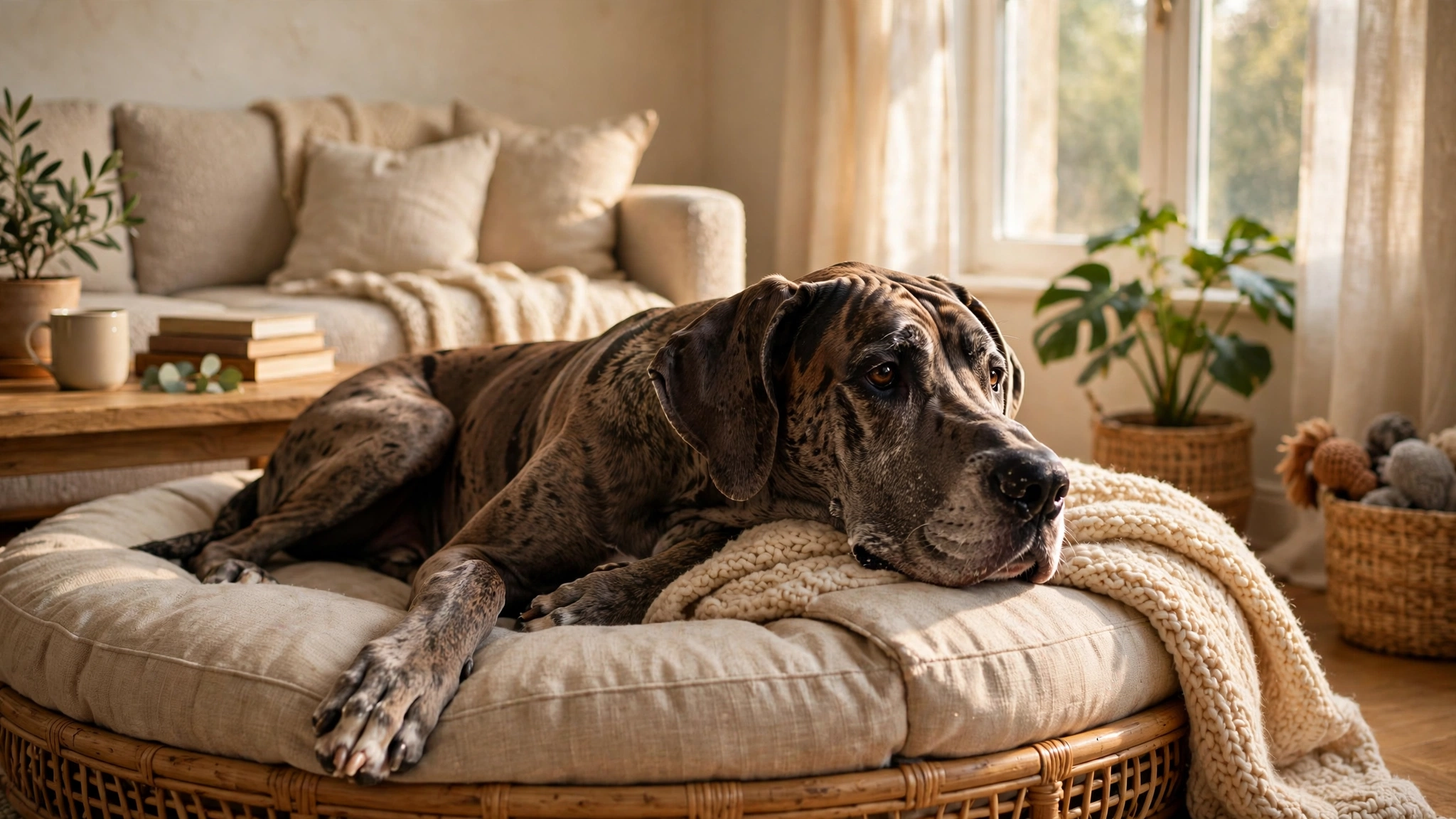
The classic Great Dane temperament — calm, affectionate, dignified, and deeply attached to their people. Adult Danes typically sleep 12–14 hours a day and are satisfied with 30–60 minutes of moderate daily exercise.
6 Ways to Help Your Dane Calm Down Sooner
1. Exercise right — for their age
For puppies under 12–18 months, avoid forced running, long hikes, and repetitive jumping on hard surfaces; growing giant-breed joints are vulnerable. Short walks (15–20 minutes, a few times daily) plus free play on soft ground is the formula. Adults do well on 30–60 minutes of moderate daily activity. Consistency beats intensity — a daily walk calms more than a weekend marathon.
2. Tire the brain, not just the body
Mental exercise exhausts a Dane as effectively as physical exercise. Ten to fifteen minutes of training practice, snuffle mats, frozen Kongs, and food puzzles give that big brain a job. A mentally tired Dane is a calm Dane.
3. Teach a “place” command
“Place” — go to your bed and stay until released — is the single most useful calmness command for a giant breed. Lure onto the bed, reward lying down, and build duration gradually. It gives you an instant off-switch when guests arrive or the household gets hectic.
4. Reward calm behavior (not just good behavior)
Most owners only interact with their Dane when it’s being wild. Flip it: quietly praise and treat lying calmly, chewing a toy peacefully, or settling on their own. Dogs repeat what gets rewarded — make calmness pay.
5. Build impulse control into daily life
“Wait” before meals, “leave it” with treats on the floor, calm greetings at the door — these structured exercises build the self-control muscle that transfers to everyday life. If excitement is tipping into problem barking, our guide to managing barking triggers through training covers the same principles.
6. Check the foundations: diet, sleep, anxiety
Some owners see a real difference switching away from foods heavy in fillers and artificial additives. Make sure your Dane gets 12–14 hours of sleep in a quiet, comfortable spot — an overtired giant is a wired giant. And if your dog paces, pants, and can’t settle even in calm settings, consider anxiety rather than excess energy; a veterinary behaviorist can help.
When Hyperactivity Isn’t Normal
See your vet or a behaviorist if your adult Dane (over 3) is still destructively hyper despite consistent exercise and training, or if you notice sudden behavior changes, compulsive behaviors, or hyperactivity paired with weight loss, excessive thirst, or restlessness — medical issues like thyroid problems can masquerade as “just being hyper.”
Training Tips for a Giant Puppy
With a Great Dane, training isn’t optional enrichment — it’s safety equipment. Every behavior you tolerate in a 30-pound puppy becomes a problem at 150 pounds. The good news: Danes are eager to please and highly trainable when you start early.
Four on the floor, from day one. A jumping Chihuahua is funny; a jumping Great Dane knocks over children and grandparents. Reward all four paws on the ground, and have guests only greet the puppy when it’s sitting. Everyone in the household must enforce this — one person who allows jumping un-trains weeks of work.
Loose-leash walking before they can pull you over. Start leash manners while the puppy is small enough that you can physically manage mistakes. A 150-pound dog that pulls is a liability; a 150-pound dog that walks nicely is a joy. Front-clip harnesses help during the learning phase.
Crate train while the crate still fits in your house. A Dane-sized crate is enormous, so establish the habit early when the puppy is portable. The crate becomes a safe den for rest — and enforced naps are a secret weapon against overtired puppy craziness.
Socialize deliberately. The socialization window closes around 14-16 weeks. Expose your Dane puppy to different people, dogs, sounds, and surfaces now, and you’ll get the stable, confident adult the breed is famous for. Skimp on it and you can get a fearful giant — the worst combination.
Keep sessions short and positive. Five to ten minutes, a few times a day, ending on a win. Danes are sensitive despite their size and shut down under harsh corrections. And enroll in a group obedience class — the distraction training around other dogs is worth the fee alone.
Frequently Asked Questions
At what age do Great Danes settle down?
Most start settling noticeably at 2 years and are reliably calm by 3. Males and slow-maturing lines may take until 3–4. If your Dane is under 2, time plus training is genuinely the answer.
Are Great Danes high-energy dogs?
As puppies, surprisingly yes. As adults, no — they’re a moderate-to-low-energy breed. Most adult Danes are couch enthusiasts who need only 30–60 minutes of daily exercise. The AKC’s Great Dane breed profile describes them as friendly, patient, and dependable — traits that shine once maturity arrives.
Will neutering calm my Great Dane down?
Neutering may take a slight edge off hormonally driven behaviors like roaming or marking, but it won’t transform an under-exercised adolescent into a calm adult. Training, exercise, and maturity do the heavy lifting. Discuss timing with your vet — for giant breeds, many vets recommend waiting until growth plates close.
Why is my 4-year-old Great Dane still hyper?
Some individuals stay higher-energy for life, but first rule out the fixable: insufficient daily exercise, lack of mental stimulation, anxiety, or a medical issue. A vet check plus an honest audit of exercise and enrichment usually finds the answer.
How much exercise does a Great Dane puppy need?
Less than you’d think. Short, frequent, gentle sessions — 15–20 minute walks a few times a day plus free play — protect developing joints. Avoid forced running until at least 18 months, and skip high-impact sports until your vet clears your dog’s growth plates.
The Bottom Line
Your Great Dane will calm down — most do dramatically between ages 2 and 3 — but you don’t have to just wait it out. Right-sized exercise, daily mental work, a solid “place” command, and rewarding calm behavior will get you to the gentle giant phase faster, with your furniture (mostly) intact.