How Often Do Great Danes Go Into Heat? Cycle Guide
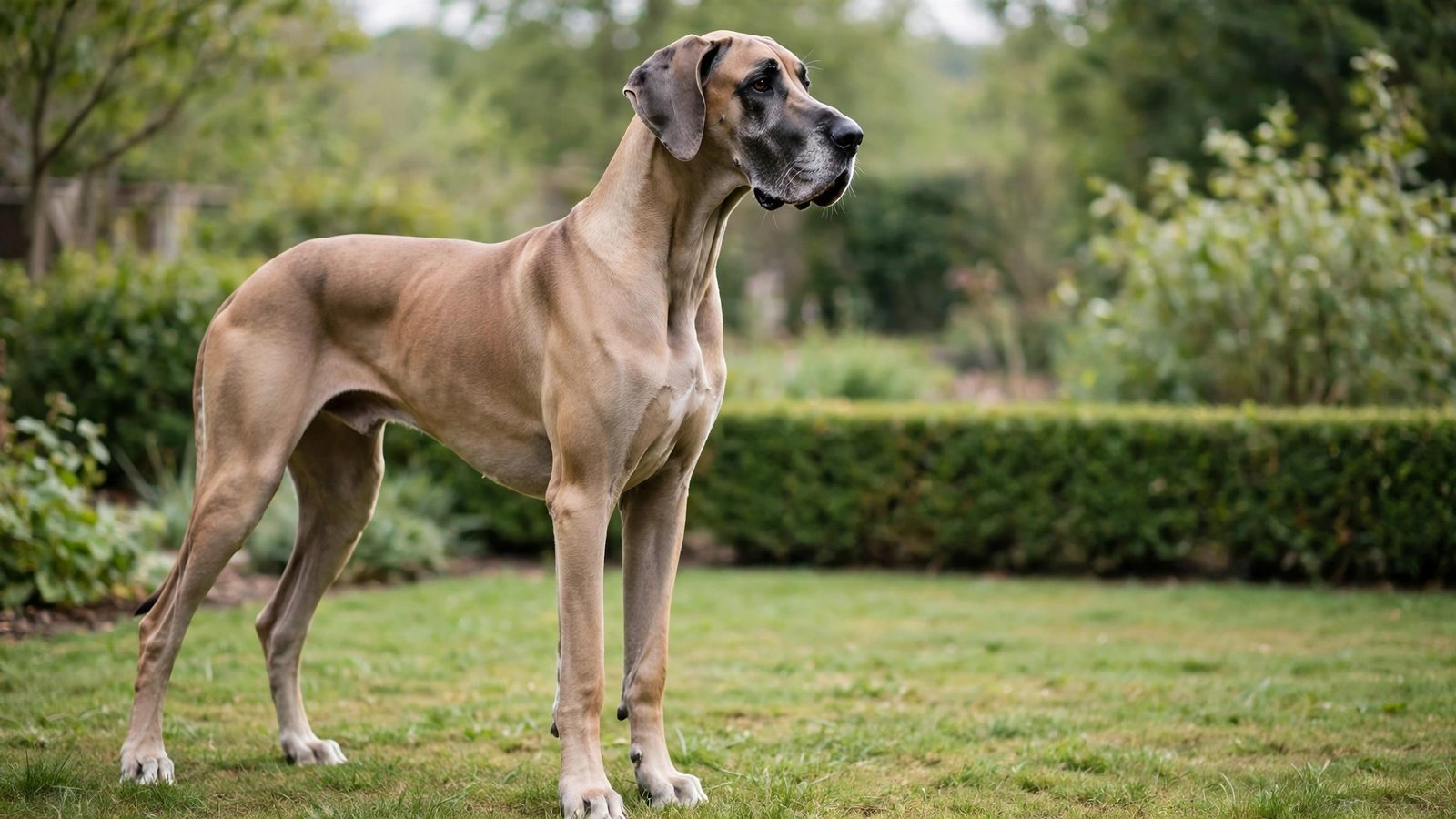
Most Great Danes go into heat about once every 12 to 18 months — roughly once a year, and sometimes less often. That surprises owners used to smaller dogs, which typically cycle twice a year. A Dane’s whole reproductive clock runs slower: her first heat may not arrive until she is 18 to 24 months old, and the quiet resting stage between cycles is long. Some individuals settle into a 6-to-12-month rhythm instead, and both patterns can be perfectly normal. What matters is learning your own dog’s pattern and knowing what each stage looks like in a 120-pound dog.
First Heat: Later Than You’d Expect
Small breeds can come into season at six months; Great Danes operate on giant-breed time. Most Dane females have their first heat somewhere between 10 and 24 months, with many breeders reporting 12 to 18 months as typical. There is no need to worry about a Dane who has not cycled by her first birthday — she is still growing, and her hormones are simply keeping pace with the rest of her. Do mention it at vet visits, and book a check if there is still no sign of a cycle by about two years of age, just to rule out a quiet thyroid or developmental issue. For a size comparison, our breakdown of how long poodles are in heat by size shows the same pattern: the bigger the dog, the later and slower the cycle.
How Often After the First Heat?
Once cycling, the typical Great Dane interval is every 12 to 18 months. That frequency comes straight from the structure of the cycle: the visible heat lasts about three weeks, the hormone-active phase after it lasts about two months, and then comes anestrus — a long reproductive rest that in Danes stretches for many months. Add those up and you get a dog who is “in season” for only a small slice of the year.
A few honest caveats. Young Danes often have irregular early cycles that settle with maturity. Some healthy Danes cycle every 8–10 months. And dogs do not go through menopause — a Dane will technically keep cycling her whole life, though intervals often lengthen as she ages. Track dates on a calendar: after two or three cycles you will know her personal rhythm, and any sudden change becomes easy to spot.
The Four Stages of a Dane’s Heat Cycle
- Proestrus (about 7–10 days): The opening stage. The vulva swells noticeably, a bloody discharge appears, and male dogs become very interested — but she will not accept them. In a giant breed the discharge volume is generous, so this is when washable diapers for female dogs in heat earn their keep; buy the largest size and expect to change them often.
- Estrus (about 5–14 days): The fertile window. Discharge lightens to pink or straw, the vulva softens, and she may “flag” — holding her tail to the side — and actively seek males. This is peak pregnancy risk, and it begins just as the bleeding eases, which catches many owners out.
- Diestrus (about 60–90 days): Fertility ends whether or not she was bred. Hormones stay elevated for weeks, which is why false pregnancies — nesting, mothering toys, even producing milk — are a normal possibility in this stage.
- Anestrus (several months): Full reproductive rest. No signs, no fertility. In Great Danes this long quiet stretch is precisely why heats come only once a year or so.
For the hormone-level detail behind these stages, the AKC’s guide to the canine heat cycle is the standard reference.
Signs Your Dane Is Coming Into Season
Swelling of the vulva is usually the first reliable sign, followed by discharge, more frequent urination (she is scent-marking), and licking herself clean — or trying to. Behavior shifts too: many Danes get clingy and restless, some get grumpy with other dogs, appetites wobble, and energy can swing between soppy and wired. Intact males in the neighborhood will confirm your diagnosis before you are sure yourself, which is your cue to tighten management immediately.
Managing a Giant Breed in Heat
- Supervise every minute outside. A Dane in estrus can clear or crash through fences, and intact males will test yours. Leash walks only, no dog parks, no off-leash yard time alone — for the full three to four weeks, not just the bleeding days.
- Assume strength beats barriers. Doors, baby gates, and crate doors that hold a Dane normally may not hold a determined Dane in standing heat, or a visiting male. Separate dogs with real doors between them.
- Plan for the mess. Washable diapers or old towels on her bed, and expect laundry. Many owners restrict carpeted rooms for the duration.
- Keep her world small and calm. Shorter, quieter exercise, puzzle feeders at home, and patience with the mood swings. The cycle passes.
Spaying a Great Dane: Timing Matters
If you are not breeding, spaying ends the cycle management for good — but with a giant breed, when matters. Most vets now advise waiting until growth is complete, around 18–24 months, because sex hormones play a role in healthy bone and joint development in very large dogs. Never schedule the surgery during an active heat: blood flow to the uterus is increased, and responsible practice is to wait at least two months after the cycle ends. Spaying also eliminates the risk of pyometra, a life-threatening uterine infection whose risk climbs with every year an older female stays intact — one more reason the “she’ll just keep cycling forever” fact deserves a plan, not a shrug. Discuss the timing for your individual dog with your vet.
Cycle Changes That Deserve a Vet Call
A Dane’s personal rhythm should be boringly predictable once she is mature, so treat changes as information. Heats arriving far more often than her pattern — every few months, or discharge that never really stops — can point to ovarian cysts or other reproductive problems. Discharge appearing outside a heat, especially in an older intact female who is also drinking more, eating less, or seems dull, is an emergency pattern until proven otherwise: pyometra, a womb infection, classically strikes in the weeks after a season and can kill within days. Likewise, a first heat that still has not appeared by about 24 months, or a previously regular dog whose cycles vanish for well over a year and a half, earns a vet conversation rather than more waiting. None of this is common, but all of it is time-sensitive, and the calendar you kept is what lets your vet judge “unusual” accurately.
Frequently Asked Questions
Can a Great Dane go into heat twice a year?
Some can. While 12–18 months is the classic Dane interval, individuals vary and a minority cycle every 6–10 months. Twice a year is common in smaller breeds and possible in Danes; what matters is that your dog’s pattern is consistent for her. A sudden shortening or lengthening of her usual interval is worth mentioning to your vet.
What is a silent or split heat in a Great Dane?
A silent heat is a true cycle with almost no outward signs — minimal swelling or discharge — that can still result in pregnancy if she is bred. A split heat starts, stops after a few days, then restarts a few weeks later; it is most common in young females and usually resolves with maturity. Both are reasons calendar tracking plus vigilance beats relying on visible signs alone.
At what age do Great Danes stop going into heat?
They do not stop. Dogs have no menopause, so an intact Dane will continue cycling into old age, often with longer gaps between seasons. Because pregnancy and pyometra both become riskier in senior females, most owners either spay earlier in life or manage an aging intact dog with extra care and vet input.
Should I breed my Dane on her first heat?
No. Danes should not be bred before two years of age: she is still growing during her first heats, and the breed’s essential health screening — cardiac evaluation, hip X-rays, thyroid, and eye exams — cannot be finalized until she is mature. Responsible Dane breeding starts at two, after testing, never at the first season.
The Bottom Line
Expect your Great Dane to come into heat every 12 to 18 months, starting later than small breeds and continuing, if she stays intact, for life. Learn the four stages, manage her carefully for the full three to four weeks of each season, and write every date down. With a dog this size, the calendar is not a nicety — it is your main management tool.