Restricting Water for Puppy at Night: Is It Safe?
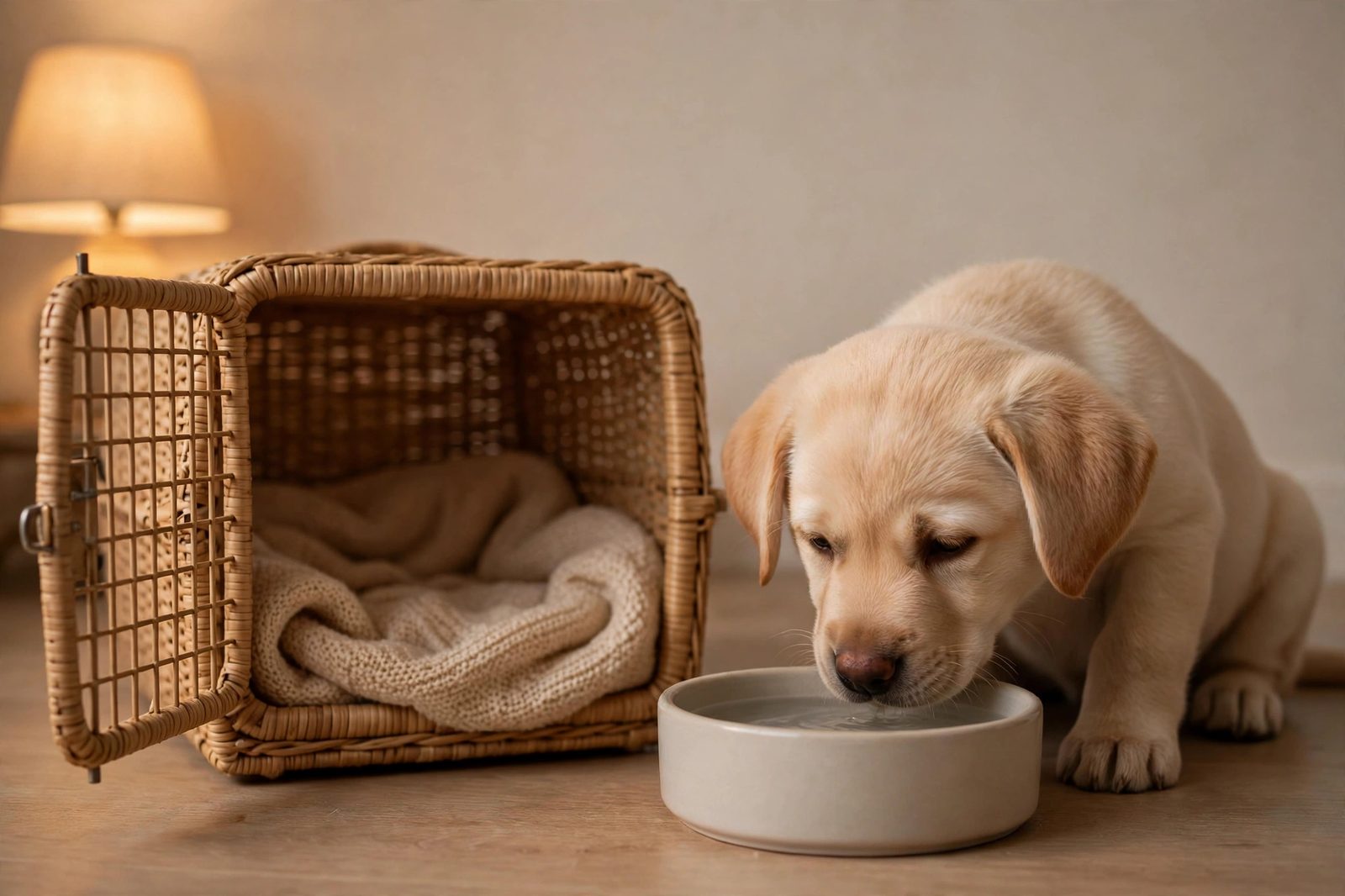
Here is the honest answer: letting a healthy puppy’s last drink happen an hour or two before bed — followed by a final toilet trip — is a sensible, widely used routine. Removing water for the whole evening, or letting a genuinely thirsty puppy go without, is not. The difference between managing timing and restricting access is the whole ballgame when it comes to restricting water for puppy at night.
Why This Question Comes Up at 2 A.M.
The logic is tempting: puppy drinks, puppy pees, puppy wakes you up. Remove the drink, remove the wake-up call. The problem is that a young puppy’s bladder is tiny and still maturing. A common rule of thumb is that a puppy can hold on for roughly their age in months plus one, in hours — so a 2-month-old may manage about three hours, and that is during the day with an empty-ish bladder. Nighttime accidents are not disobedience; they are development. No amount of water management changes bladder size, which is why thirst is the wrong tool for the job.
Why Puppies Need Water More Than Adult Dogs Do
A puppy’s body is around 80% water, higher than an adult dog’s, and they are growing fast, playing hard, and eating frequently. Puppies fed dry kibble need noticeably more drinking water than puppies on wet food, because their meals bring almost no moisture with them. Young puppies also dehydrate far faster than adults — a bout of vomiting or diarrhea that an adult dog shrugs off can make a puppy genuinely ill within hours. The AKC’s guidance on how much water puppies need suggests roughly half an ounce to an ounce of water per pound of body weight per day as a starting point, with active days demanding more. Against that backdrop, water should be freely available all day, every day. The only question worth debating is the last drink of the evening.
The Middle Path: Manage Timing, Not Access
- Free water all day. From the age a puppy starts eating solid food — see when a puppy can start drinking water — a clean, full bowl should always be down during waking hours.
- Normal drinks through the evening. Do not start rationing at dinner time.
- Last big drink about 1 to 2 hours before bed for most healthy puppies over 10 to 12 weeks. After that, pick the bowl up, or simply stop refilling it.
- A final toilet trip as the very last thing before the crate — after the last drink window, not before it.
- If your puppy is genuinely thirsty at bedtime, offer a few laps of water and then one more quick trip outside. Comfort beats a rigid rule.
- Plan a mid-night break for very young puppies instead of trying to stretch them through. Setting an alarm is kinder — and usually shorter-lived — than fighting biology.
A Sample Evening Routine That Works
- Early evening: dinner, followed by play. Water available throughout.
- Mid-evening: a calm-down period — gentle play, chewing, cuddles. Note when your puppy drinks; a drink usually means a toilet trip within 10 to 20 minutes.
- 1 to 2 hours before bed: last substantial drink, then the bowl comes up.
- Right before bed: final toilet trip, praise for going, straight into the crate with a small chew or comfort item.
- Overnight: respond to genuine restlessness — young puppies may need one break. Keep it dark, quiet, and boring so night trips do not become playtime.
- Morning: water goes back down first thing, alongside the first toilet trip of the day.
Expectations matter here too: the same bladder limits behind how long you can leave a 4-month-old puppy alone apply at night. As your puppy grows, the mid-night break quietly disappears on its own.
When You Should Never Restrict Water
- Your puppy has vomiting, diarrhea, or any illness — fluid losses make restriction dangerous.
- Hot weather, or an evening of heavy exercise and play.
- Your puppy is under about 8 to 10 weeks old, or still transitioning from milk to solids.
- Your puppy is on medication, or has kidney, urinary, or any diagnosed health condition — ask your vet first, always.
- Your puppy is crying, pacing, licking an empty bowl, or searching for water. That is thirst, not manipulation.
- After salty treats or chews, which drive extra drinking.
Watch for Dehydration — and for the Opposite Problem
Check in on any puppy whose water routine you are adjusting. Dehydration warning signs include dry or sticky gums, skin that stays “tented” when gently lifted at the scruff instead of snapping back, sunken-looking eyes, and unusual sleepiness. Any of these mean water back down immediately and a call to your vet.
Just as important: a puppy who suddenly starts drinking far more than usual — emptying the bowl repeatedly, asking for water at odd times — is not a candidate for restriction either. A sudden jump in thirst or urination can signal a urinary tract infection or another health problem, and it deserves veterinary attention rather than a training fix.
Does Restricting Water Actually Speed Up Potty Training?
Not in any way that matters. Potty training works through opportunities, supervision, and praise: take the puppy out often, reward toileting outside, and clean accidents without drama. A puppy does not learn where to pee by being thirsty — they just wake up uncomfortable, and some restricted puppies develop frantic gulping habits or a fixation on water that creates bigger problems than the accidents did. Manage the schedule, and let the bladder mature.
Does a Crate Change the Answer?
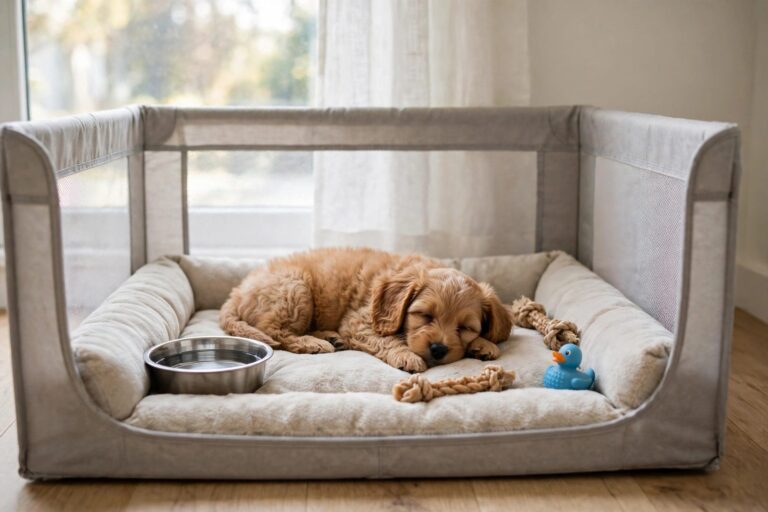
Owners usually ask this question in a crate-training context, so it is worth saying plainly: a crate does not change your puppy’s water needs, only your management of them. Dogs instinctively avoid soiling their sleeping space, which is why the crate helps training — but a puppy who wakes thirsty in a crate has no option except discomfort. Follow the same timing approach: free water all day, last drink an hour or two before lights-out, final toilet trip, then crate. If your puppy whines at 3 a.m., assume a toilet need first, a drink need second, and boredom a distant third — and meet the first two without fuss or fanfare.
How Long Until Puppies Sleep Through?
The good news is that this phase is short. Most puppies can manage a full night — six to eight hours — somewhere between about 3 and 4 months of age, and once bladder control matures, the mid-night break disappears quickly. Small breeds often take a little longer than large ones. You will usually see the change before you believe it: the 3 a.m. stirrings stretch to 4, then 5, then morning. At that point, keep the evening routine you have built, and if you want to return the water bowl to overnight access, do it — a puppy who no longer needs the night break will rarely drink enough to recreate the problem.
Frequently Asked Questions
How long before bed should I take the water bowl up?
For most healthy puppies over 10 to 12 weeks, 1 to 2 hours before bed is plenty. Younger puppies need a shorter window or none at all. Always follow the last drink with a final toilet trip.
Can an 8-week-old puppy go all night without water?
Physically, a healthy 8-week-old will usually manage a few hours of sleep without drinking — but expect at least one nighttime toilet break at this age, and never withhold water from a puppy who is awake and actively thirsty.
My puppy gulps huge amounts of water right before bed. What should I do?
Gulping often means the puppy has learned water disappears, or has not had enough chances to drink earlier. Offer smaller amounts more frequently through the evening, keep daytime access generous, and mention extreme drinking to your vet to rule out a medical cause.
Should I leave water in the crate overnight?
During early training, most owners manage timing instead and skip the crate bowl. Once your puppy is reliably sleeping through and house training is established, a spill-proof bowl in or near the crate is a perfectly reasonable choice.
The Bottom Line
Think timing, not deprivation. Free water all day, a last drink an hour or two before bed, a final toilet trip as the last job of the night, and a planned break for the youngest puppies will get you dry nights as fast as biology allows — without ever making your puppy thirsty to do it. And if thirst or urination suddenly changes, skip the training theories and call your vet.