How to Dry Puppy After Bath (Easy Step-by-Step Guide)
Start with a bath routine that feels calm and easy. A proper method keeps your puppy comfortable, clean, and healthy. With patience, the process becomes better over months, even if it feels like a challenge at first.
Step 1: Towel Drying and Removing Excess Water
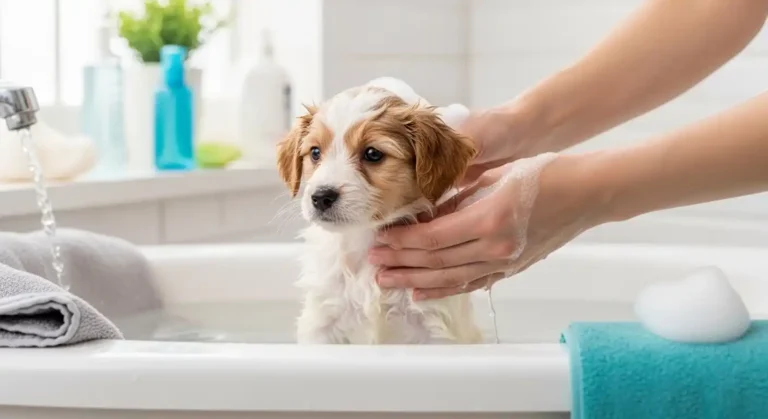
After you bathe, pick your puppy up and place it on a non-slip, rubber mat or surface to avoid a slippery mess.
Begin by removing excess water by squeezing from neck to tail.
Use the Right Towels
- Use absorbent towels like microfiber, shammy, polyamide, or suede
- These are lightweight, fur-resistant, and can soak maximum moisture
Correct Drying Technique
- Blot, pat, and press lightly on the fur
- Avoid rubbing to prevent tangles, mats, and matting
Dry in Sections
Work in sections:
- head, neck, back, belly
- legs, paws, between toes, and joints
Focus areas:
- under the belly
- behind ears
- inside each ear flap using cotton
This helps avoid:
- odor, irritation, bacterial buildup
- fungal infections and other problems
A good towel drying step is crucial for health, hygiene, and overall well-being, because wet fur can cause a damp feeling and discomfort.
More guide on why dogs lay on back.
Step 2: Using a Hair Dryer Safely
Move to the dryer based on your dog’s type.
Safe Dryer Settings
- Use the lowest heat and low noise setting
- Keep the dryer a few inches away
- Keep your hand moving around the body to feel the level of heat
This helps avoid:
- burn on sensitive skin
Choose the Right Dryer
- Avoid human dryers if possible
- Use a pet-safe dog dryer, blower, or XL super dryer
- Look for adjustable airflow
Best for:
- thick, long-haired, or thick-coated breeds like lab, husky, or mix
Make It Stress-Free
- introduce the noise slowly in a startle-free way
- Let your puppy sniff and inspect the tools
- Use treats to build a calm association
Watch for:
- body language, stress, and give breaks
If the puppy gets fidgety:
- stop and go slow
Alternative Drying Options
- Use a bathrobe, drying bag, or robe with a snug fit
- These help absorb leftover moisture
Benefits:
- faster, more efficient, less chaotic drying
Steps:
- wrap the puppy
- fasten properly
- allow napping for a few minutes while absorbing wet areas
Step 3: Natural Air Drying Method
If you prefer natural air drying, place your puppy in a warm, ventilated space.
Ideal Environment
- Use a window or a fan
- Avoid cold, humid, or drafty areas
This helps the coat:
- circulate and dry naturally
Grooming During Air Dry
- Use a slicker brush, glove, or comb
- separate tangles
- fluff the coat
- spread natural oils
Optional:
- Apply conditioner or detangler
Result:
- fur becomes softer and cleaner
Step 4: Behavior, Routine, and Comfort
Build a routine with:
- treats, praise, and play
- gentle massage to build a bond
This reduces:
- fear, anxiety, and stress
Common Puppy Reactions
- Zoomies,
- Shakes
- Playful attacks on the towel
Stay calm and guide them.
In my experience, with patience, the process improves over time.
FAQs
Why is towel drying important?
A good towel drying step is crucial for health, hygiene, and well-being because wet fur can lead to fungal infections, odor, and discomfort.
Can I use a human hair dryer?
It is better to avoid human dryers and use a pet-safe dog dryer to prevent burns and reduce stress.
What if my puppy is scared of the dryer?
introduce the noise slowly, use treats, allow sniff and inspect, and always keep the process startle-free.
Is air drying safe?
Yes, if done in a warm, ventilated space while avoiding cold or humid conditions.
Conclusion
A proper drying method keeps your house less wet, avoids puddles, and makes your puppy feel comfortable. With a calm approach and the right routine, your puppy stays happy, clean, and healthy.