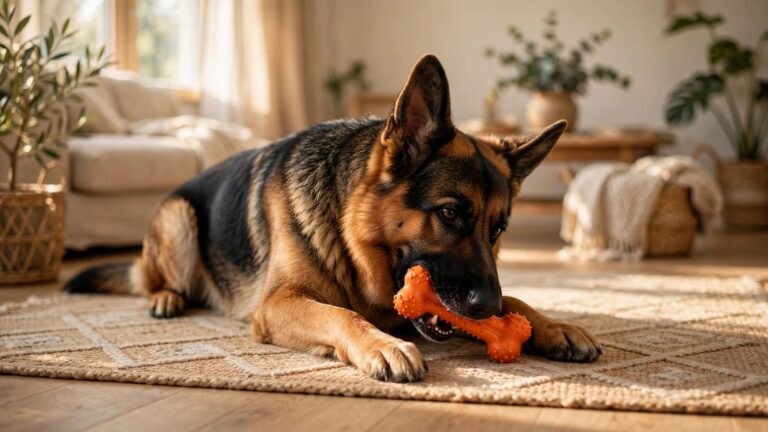
How Big Is a Large Dog? Weight, Height & Size Chart

Short answer: A large dog typically weighs 50–100 pounds (23–45 kg) and stands 21–28 inches (53–71 cm) at the shoulder. Think Labrador Retriever, Boxer, or German Shepherd. But “large” isn’t just a label — it determines food portions, crate and harness sizing, exercise needs, and even how long your puppy keeps growing. Here’s the full picture.
The Standard Dog Size Chart
There’s no single official chart every organization uses, but veterinarians, pet product makers, and kennel clubs broadly agree on these weight-based categories:
- Toy: under 10 lbs (under 4.5 kg) — Chihuahua, Pomeranian, Yorkshire Terrier
- Small: 10–25 lbs (4.5–11 kg) — Shih Tzu, French Bulldog, Miniature Schnauzer
- Medium: 25–50 lbs (11–23 kg) — Beagle, Cocker Spaniel, Border Collie
- Large: 50–100 lbs (23–45 kg) — Labrador Retriever, Boxer, Golden Retriever, German Shepherd, Siberian Husky
- Giant: over 100 lbs (over 45 kg) — Great Dane, Mastiff, Saint Bernard, Newfoundland
Height roughly tracks weight: large breeds generally stand 21–28 inches at the shoulder, while giants start around 28 inches and go up. Keep in mind that proportions vary — a stocky, short-legged breed can weigh as much as a taller, leaner one. For a visual sense of the upper end, browse the AKC’s largest dog breeds to see just how big “big” gets.
How to Measure Your Own Dog
Wondering where your dog falls? Two quick measurements:
- Weight: Step on a bathroom scale holding your dog, then subtract your own weight. For accuracy with squirmy dogs, ask your vet to weigh them at the next visit.
- Height: Have your dog stand squarely on a flat surface. Measure from the floor to the withers — the highest point of the shoulder blades, not the top of the head. That’s the standard reference point breeders and vets use.
Mixed breeds and puppies are the tricky cases: a puppy’s current size says little about their adult size, and mixed-breed adults can land anywhere between their parents’ sizes. Your vet can estimate adult size from growth charts, paw size (roughly), and breed mix.
Why Size Category Actually Matters
Food and nutrition
Large-breed puppies need specially formulated puppy food that keeps growth slow and steady — growing too fast raises the risk of hip and elbow dysplasia later. Portion sizes, feeding frequency, and calorie density all scale with size; a Labrador and a Chihuahua should not be eating the same kibble in different amounts.
Equipment sizing
Crates, harnesses, collars, beds, and even car restraints are all sized by weight and measurements. A harness that fits a 60-pound dog will choke a 25-pound one and slide off a 90-pound one. Measure before you buy — our guide to fitting a harness to your dog’s size walks through getting it right.
Exercise needs
Size loosely predicts energy, but not always the way you’d expect: many giant breeds are couch potatoes, while some small terriers need miles a day. Still, large working and sporting breeds (Shepherds, Retrievers, Huskies) generally need 1–2 hours of real activity daily.
Growth timelines
The bigger the dog, the longer they take to finish growing. Toy and small breeds are typically done by 6–10 months; medium breeds by 9–12 months; large breeds by 11–15 months; and giant breeds may keep filling out until 18–24 months. Don’t rush to switch a large-breed puppy to adult food — ask your vet when their growth plates have closed.
Space and cost
Be honest about logistics: a 90-pound dog needs a bigger crate, a bigger bed (choosing the right-size dog bed matters more than you’d think), more food, higher medication doses (priced by weight), and more room in your home and car. Large dogs are wonderful — just budget for the scale.
Health considerations
Large and giant breeds are predisposed to certain conditions: hip and elbow dysplasia, bloat (gastric dilatation-volvulus — a true emergency), and certain heart issues. They also age faster — a Great Dane is a senior at 6, while a Chihuahua may not be senior until 10+. Knowing your dog’s size category helps you and your vet plan preventive care on the right schedule.
Common Large Dog Breeds at a Glance
To anchor the category with real numbers (adult weight ranges):
- Labrador Retriever: 55–80 lbs — the classic large family dog
- Golden Retriever: 55–75 lbs
- German Shepherd: 50–90 lbs
- Boxer: 50–80 lbs
- Siberian Husky: 35–60 lbs (straddles medium/large)
- Standard Poodle: 40–70 lbs
- Australian Shepherd: 40–65 lbs
- Doberman Pinscher: 60–100 lbs
- Rottweiler: 80–135 lbs (large into giant)
Large vs. Giant: Where Exactly Is the Line?
The boundary between “large” and “giant” is the fuzziest in the size chart, and different sources draw it anywhere from 90 to 110 pounds. In practice, the distinction is about more than a number:
- Large breeds (Labrador, Boxer, German Shepherd, Golden Retriever) are big, athletic dogs that fit — albeit snugly — into normal family life: standard crates, regular cars, typical vet dosing.
- Giant breeds (Great Dane, Mastiff, Saint Bernard, Newfoundland, Irish Wolfhound) change the logistics of everything. They need XXL crates, reinforced furniture, vehicles with real cargo space, and food budgets that can exceed a small car payment.
Breeds in the 90–110 lb range — Rottweilers, Dobermans, Bernese Mountain Dogs — live on the border and get classified either way depending on who you ask. If you’re choosing between them, think less about the label and more about the practical questions: Can I lift this dog in an emergency? Does my car fit their crate? Can I afford giant-breed food and vet bills?
How Size Affects Lifespan and Lifetime Cost
Here’s the tradeoff nobody tells first-time large-dog owners: bigger dogs live shorter lives. While small breeds routinely reach 14–16 years, large breeds average 10–12, and giant breeds just 7–10. Large and giant puppies also grow astonishingly fast — a Great Dane puppy can gain 100+ pounds in its first year — which is why controlled growth through proper large-breed puppy nutrition matters so much for joint health.
Costs scale with size too:
- Food: A 90-pound dog eats roughly 3–4 times what a 20-pound dog eats. Premium large-breed food for a big dog can run $80–$150+ per month.
- Medication: Flea, tick, and heartworm preventives are dosed — and priced — by weight. A giant breed’s monthly preventives can cost double or triple a small dog’s.
- Vet procedures: Anesthesia, surgery, and even boarding are often priced by weight. Spaying a 90-pound dog costs notably more than spaying a 15-pound one.
- Gear: XL crates, orthopedic beds big enough for large joints, sturdy harnesses — everything costs more in large sizes and wears out under more weight.
None of this is a reason not to get a large dog — they’re among the most popular family dogs in the world for good reason. It’s just smart to budget with eyes open: the purchase price (or adoption fee) is the cheapest part of owning a big dog.
Frequently Asked Questions
Is a 40-pound dog considered large?
Usually medium. The large category generally starts around 50 pounds. A 40-pound dog like a Border Collie or English Springer Spaniel sits at the top of medium — though some product brands draw the line differently, so always check the specific size chart.
What’s the difference between large and giant breeds?
Weight: large is roughly 50–100 lbs, giant is 100+ lbs. Giants (Great Danes, Mastiffs, Saint Bernards) also tend to have shorter lifespans, higher food and medication costs, and need giant-specific nutrition as puppies.
How big will my large-breed puppy get?
Your vet can estimate from breed standards and growth curves. A rough rule: most puppies reach about half their adult weight by 4–5 months (large breeds), but this varies. For mixed breeds, it’s genuinely an educated guess until they’re done growing around 12–15 months.
What size crate does a large dog need?
A crate should let your dog stand without hunching, turn around easily, and stretch out lying down — typically 36–42 inches long for most large breeds (Labrador, Boxer, German Shepherd). When in doubt between sizes, go bigger, and measure your specific dog rather than relying on breed averages. For still-growing large-breed puppies, a crate with a divider panel lets you expand the space as they grow instead of buying twice.
Do large dogs need more exercise than small dogs?
Not automatically — it depends more on breed purpose than size. A working-bred large dog (Border Collie, Malinois) needs far more than a large companion breed (many Mastiffs are famously lazy). Research the breed’s energy level, not just its weight.
The Bottom Line
“Large dog” means roughly 50–100 pounds and 21–28 inches at the shoulder — Labrador territory. But the label is really a shortcut for everything that scales with size: food, gear, growth timelines, exercise, vet costs, and health planning. Measure your dog, know their category, and buy and feed accordingly.