
My Dog Ate a Dead Bee: Should You Worry?
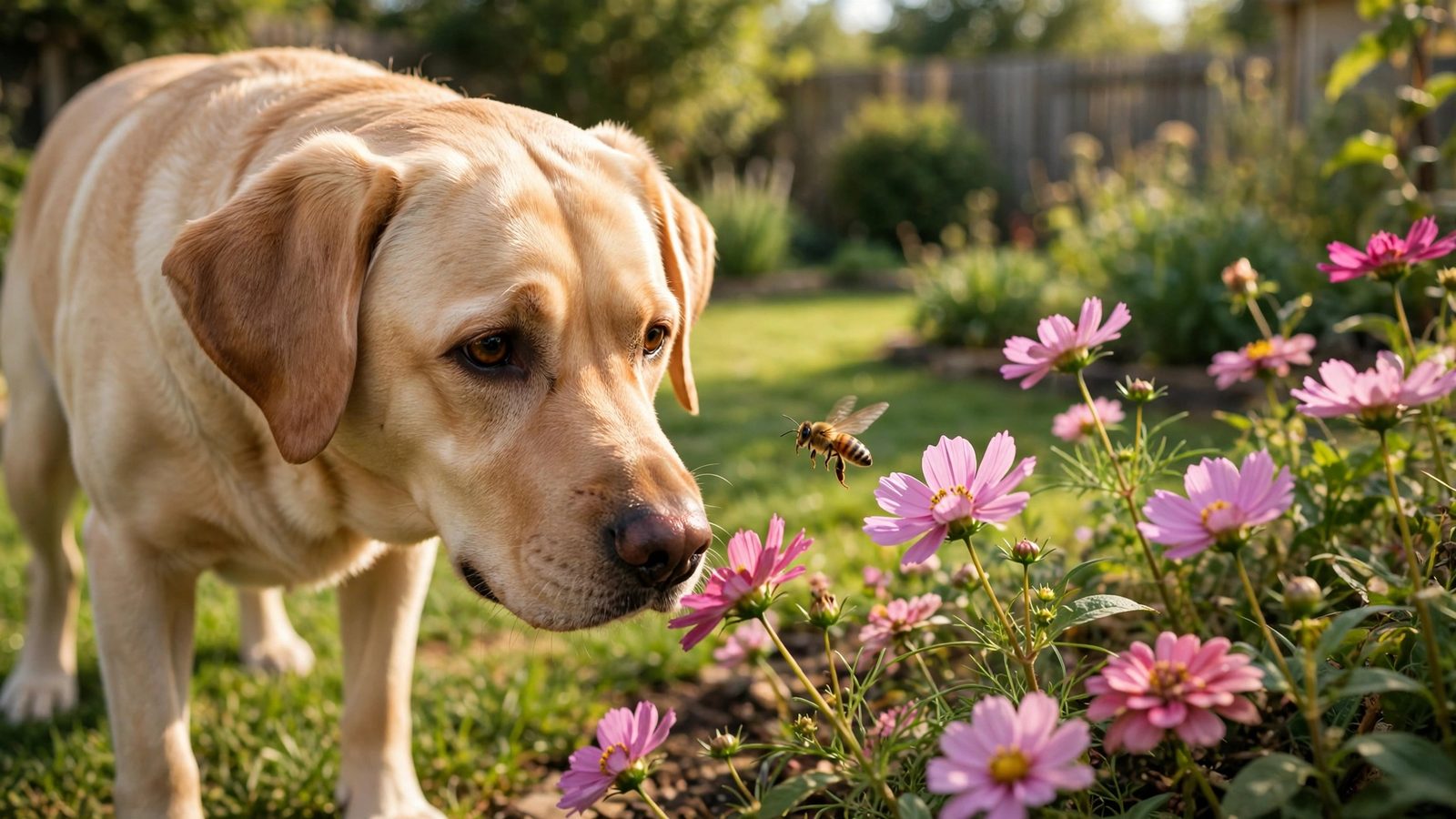
Short answer: If the bee was truly dead, there’s usually nothing to worry about. A dead bee can’t sting, and the insect itself is digested like any other odd snack your dog hoovers up. The real danger with bees is the sting, not the eating. Still, it’s worth knowing what to watch for — because a “dead” bee isn’t always as dead as it looks, and some dogs are allergic to bee venom.
Why a Dead Bee Is (Almost Always) Harmless
All of a bee’s danger is in its stinger and venom sac. Once the bee is dead, the venom delivery system doesn’t work — there’s no muscle action to pump venom, and the tiny amount of venom in the body breaks down in stomach acid. Your dog’s digestive system handles a dead bee the same way it handles a dead fly: with mild curiosity on your part and zero consequences for them.
The one exception: a bee that was just killed — swatted seconds ago — can theoretically still have a reactive stinger. If you watched your dog snap at a bee that was buzzing a moment earlier, treat it as a possible sting rather than a harmless snack (see below).
What to Do Right After: A 3-Step Check
- Check the mouth. Gently open your dog’s mouth and look at the lips, gums, tongue, and roof of the mouth for a stinger, swelling, or redness. If you see a stinger, scrape it out sideways with a credit card or your fingernail — don’t pinch it with tweezers, which can squeeze more venom in.
- Watch for 30–60 minutes. Keep your dog nearby and calm. Most allergic reactions appear within the first hour. Normal behavior — playing, drinking, napping — is a great sign.
- Monitor digestion for a day or two. A dead bee can occasionally cause mild stomach upset. A little gas or soft stool is no emergency; persistent vomiting or diarrhea is worth a vet call.
Signs of a Bee Sting or Allergic Reaction
If the bee wasn’t quite dead, or your dog is sensitive to venom, watch for:
- Sudden yelping, pawing at the face or mouth
- Swelling of the muzzle, lips, eyes, or the sting site
- Hives or raised welts in the coat
- Excessive drooling
- Vomiting or diarrhea
Get to a vet immediately if you see difficulty breathing, severe facial or throat swelling, pale gums, weakness, or collapse — these can signal anaphylaxis, which is life-threatening. Multiple stings (from disturbing a hive, for example) also warrant an emergency visit regardless of how your dog looks initially. PetMD’s guide to bee stings in dogs walks through the same escalation: mild local swelling can be monitored, but breathing trouble never waits.
For mild swelling, a cold compress (wrapped in cloth, 5–10 minutes) helps. Only give antihistamines like diphenhydramine if your vet advises it and tells you the correct dose for your dog’s weight — and make sure the product contains no decongestants or xylitol, which are dangerous for dogs. This is one of those moments where knowing when to call the vet matters more than any home remedy.
Why Do Dogs Eat Bees in the First Place?
To a dog, a bee is a small, buzzing, erratic toy. Herding and hunting breeds are hardwired to chase movement; terriers and playful adolescents snap at anything that annoys them; and some dogs simply explore the world mouth-first. A dog that’s been stung before may even snap at bees preemptively. It’s normal — but it’s a habit worth redirecting, because the next bee might be very much alive.
Live Bee vs. Dead Bee: Why the Distinction Matters
It’s worth understanding why the dead/live distinction is the whole ballgame. A honeybee’s stinger is a modified egg-laying organ attached to a venom sac and a tiny set of muscles. When a bee stings, those muscles keep pumping venom for up to a minute even after the bee pulls away (which is why the bee dies — the stinger tears free). A bee that’s been dead for more than a few minutes has no muscle activity left, so no venom delivery is possible.
This is also why “my dog snapped at a bee and it fell down” deserves more caution than “my dog ate a bee I found dead on the windowsill.” In the first case, the stinger may have fired during the snap — check the mouth carefully. In the second, the venom system has been offline for hours. Wasps and hornets are a slightly different story: they can sting repeatedly without dying, so a “dead” wasp found near a nest should get the same mouth check, just in case it was only stunned.
One more nuance: the danger of eating a live bee isn’t really the venom going into the stomach (stomach acid handles it) — it’s the sting happening on the way down, in the mouth or throat, where swelling can threaten the airway. That’s the scenario that turns a funny story into an emergency vet visit.
How to Stop Your Dog Eating Bees
- Teach a rock-solid “leave it.” This is the single most useful command for bee season. Practice with boring objects first, then graduate to exciting ones, rewarding generously.
- Supervise outdoor time in summer. Bees cluster around flowering plants, fallen fruit, open trash, and sweet drinks left on patios. A quick scan of the yard takes seconds.
- Keep your dog close on walks. Walking with a well-fitted harness (rather than a loose collar) gives you the control to steer your dog away from a patch of clover humming with bees.
- Don’t let them “play” with hives or nests. If you find a nest in your yard, keep the dog away from that area entirely until it’s professionally removed.
- Keep antihistamine guidance from your veterinarian on file. Ask your vet now — before bee season — what to give and how much if your dog gets stung. Having the answer in your phone beats googling in a panic.
Frequently Asked Questions
Can a dead bee still sting my dog from inside the stomach?
No. A truly dead bee cannot sting — the stinger needs the bee’s muscle contractions to drive venom in. The only gray area is a bee killed seconds before being eaten, which is why a quick mouth check is smart.
My dog ate a dead bee and is vomiting — what should I do?
A single episode of vomiting may just be stomach irritation and often resolves on its own. But repeated vomiting, especially with swelling, lethargy, or breathing changes, can indicate an allergic reaction — see your vet promptly.
How long after eating a bee should I watch my dog?
Watch closely for the first hour (that’s when allergic reactions show up), then casually monitor appetite and stool for 24–48 hours for mild digestive upset.
Are some dogs more at risk from bee stings?
Yes — dogs with known insect allergies, very small dogs (less body mass per sting), and dogs that disturb hives and take multiple stings. If your dog has reacted badly before, talk to your vet about an emergency plan.
Are some dogs more at risk from bee stings?
Yes — dogs with known insect allergies, very small dogs (less body mass per sting), and dogs that disturb hives and take multiple stings. If your dog has reacted badly before, talk to your vet about an emergency plan.
Can dogs be allergic to bee stings like humans are?
Yes. Just like people, individual dogs can have hypersensitive immune responses to bee venom. A dog that’s had a mild reaction before can have a worse one next time — the immune system “remembers.” If your dog has ever shown facial swelling, hives, or breathing difficulty after a sting, treat every future sting as potentially serious and discuss an emergency action plan (including whether to keep antihistamines your vet has advised on hand) with your veterinarian.
Should I keep an EpiPen for my dog?
Don’t buy one on your own — epinephrine dosing for dogs is weight-specific and an EpiPen delivers a human dose that could be dangerous for a small dog. But if your dog has had a severe reaction before, ask your vet whether they recommend keeping emergency medication on hand and what exactly to do with it. For most dogs, the right “emergency kit” is simpler: your vet’s number, the nearest emergency clinic’s address, and antihistamine guidance from your veterinarian saved in your phone.
The Bottom Line
A dead bee is just a crunchy, protein-rich accident — no venom, no sting, no drama. Check the mouth, watch for an hour, and carry on. Save your worry for live bees, and put your energy into a solid “leave it” before the next buzzing thing crosses your dog’s path.