Miniature Long Haired Dachshund vs Standard: Key Differences
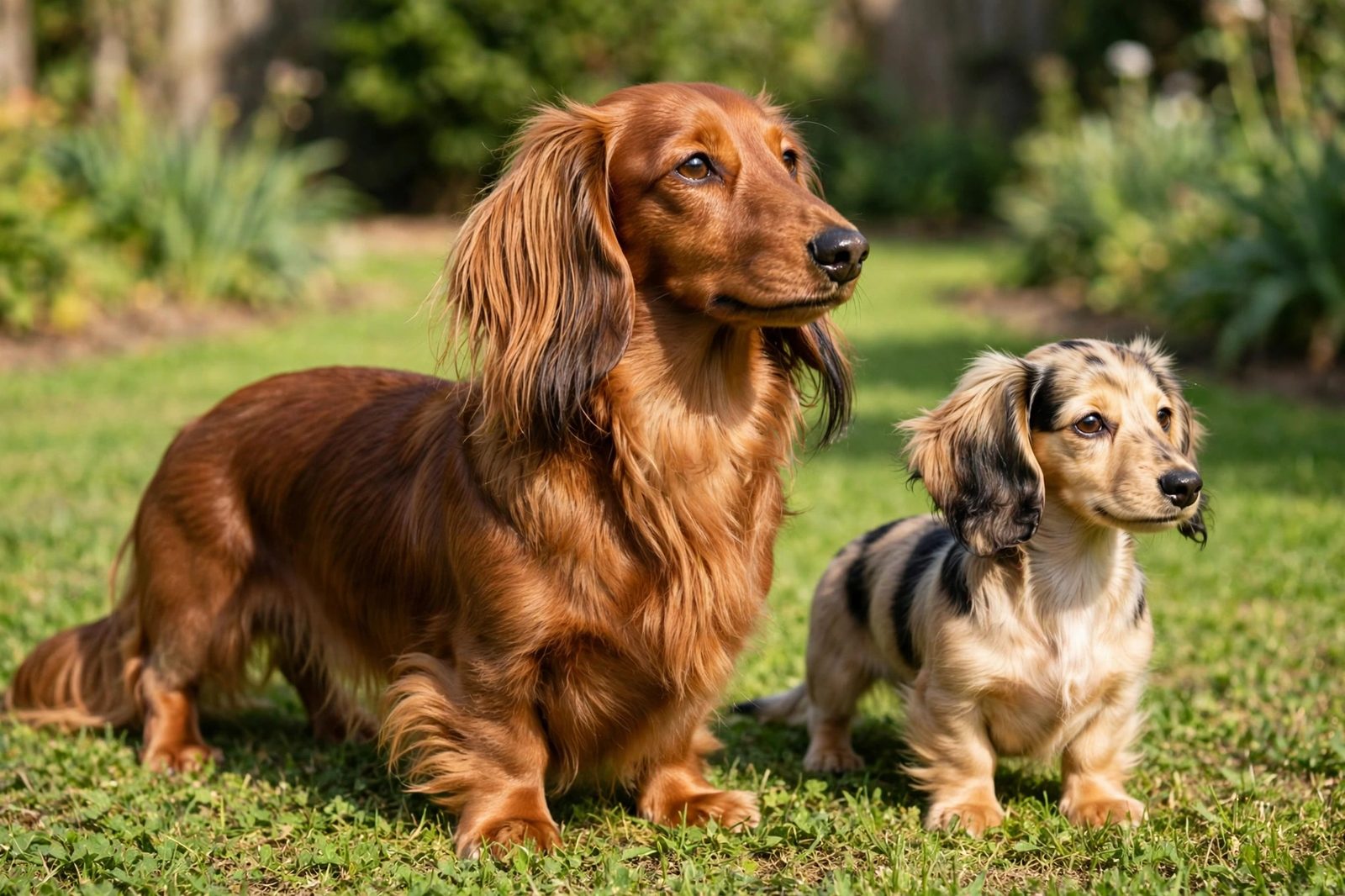
Choosing between a miniature long haired dachshund vs standard comes down to one official difference: size. But that single difference ripples into temperament, exercise needs, health risks, grooming time, and price. This guide breaks down every meaningful distinction so you can pick the long haired dachshund that actually fits your life.
The Short Answer
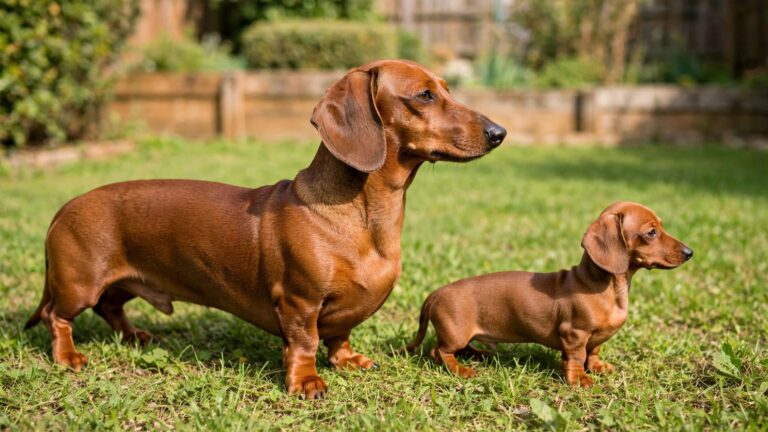
A miniature long haired dachshund and a standard long haired dachshund are the same breed with the same silky coat and the same bold personality. The standard stands 8 to 9 inches tall and weighs 16 to 32 pounds, while the miniature stands 5 to 7 inches tall and weighs 11 pounds or less. Beyond size, miniatures tend to live slightly longer, cost more from breeders, and fit better into apartments and travel-heavy lifestyles, while standards are sturdier playmates for active families and hold up better in rough-and-tumble homes with larger dogs.
Size and Weight: The Only Official Difference
Here is the part that surprises most shoppers: kennel clubs do not treat these as separate breeds. The American Kennel Club recognizes a single Dachshund breed divided into two size varieties, and the long coat is simply one of three coat types within it. Size is the only thing that officially separates them.
| Miniature Long Haired Dachshund | Standard Long Haired Dachshund | |
|---|---|---|
| Height at shoulder | 5 to 7 inches | 8 to 9 inches |
| Weight | 11 pounds or less | 16 to 32 pounds |
| Body length | Roughly 12 to 15 inches | Roughly 22 to 25 inches |
| Lifespan | 12 to 16 years | 12 to 14 years |
| Coat | Long, silky, feathered | Long, silky, feathered |
Dogs that land between 12 and 15 pounds are nicknamed “tweenies” by dachshund fanciers. The AKC classifies them as standards, since the miniature cutoff is a hard 11 pounds at 12 months of age. If you are comparing size classes the way our miniature vs full-size breed comparisons do, the dachshund is one of the cleanest examples: the line is drawn purely by the scale.
Temperament: Does Size Change the Personality?
Long haired dachshunds of both sizes share the same famously sweet disposition. The long coat variety was developed partly through crosses with spaniels, which softened the classic dachshund edge. Owners and breeders consistently describe longhairs as calmer, friendlier, and less one-person-oriented than smooth or wirehaired dachshunds. They tend to bond with the whole family rather than latching onto a single human.
That said, size does nudge behavior in a few predictable ways:
- Miniatures are more easily carried and coddled, which can accidentally produce a clingier, more anxious dog if owners skip training. A miniature that is scooped up at every bark can learn that the world is scary.
- Standards are more self-assured around bigger dogs and in new environments. Their extra size gives them confidence on walks and at the dog park.
- Both sizes bark. Dachshunds were bred to bay at prey underground, and the longhair’s spaniel genes only take the edge off. Neither variety is a quiet apartment dog by default.
- Prey drive is identical. Squirrels, rabbits, and rustling bushes trigger the same intense focus whether the dog weighs 9 pounds or 29.
For a deeper look at how size classes behave within a single breed family, see our Greyhound, Whippet and Italian Greyhound comparison, which shows the same pattern: smaller versions of a breed tend to be a little more sensitive and people-focused.
Grooming and Shedding
The coat itself is the same on both sizes: a soft, wavy, medium-to-long double coat with feathering on the ears, chest, belly, legs, and tail. Grooming needs are moderate. Plan on brushing two to three times per week to prevent mats behind the ears and in the feathering, plus a bath every four to six weeks.
The practical difference is time, not technique. Brushing a 10-pound miniature takes about ten minutes; a full-coated standard takes closer to twenty. Shedding is moderate to heavy in both, with bigger seasonal blows in spring and fall. Neither variety is hypoallergenic.
One grooming note specific to the longhair: the coat does not fully come in until the dog is around 18 months old. Puppy fluff gives way to the adult feathered coat gradually, so do not judge a six-month-old’s coat as the finished product.
Exercise and Energy Needs
Both sizes need 30 to 60 minutes of activity per day. Dachshunds are deceptively athletic, and the longhair is no couch potato despite its elegant looks. Daily walks plus scent games, puzzle toys, or gentle fetch keep them balanced.
The difference is intensity and endurance. A standard can happily join you for a two-mile walk or a long hike. A miniature does better with shorter outings and more frequent play sessions. Both varieties must avoid high-impact jumping on and off furniture, since the long back is vulnerable to intervertebral disc disease (IVDD) regardless of size. Ramps and steps are a smart investment either way.
Health: What Changes With Size
The headline health concern, IVDD, affects both sizes at roughly the same rate. It is a breed-shape problem, not a size problem. Keep both sizes lean, support their backs, and discourage stair marathons.
Where size does matter:
- Dental disease: Miniatures cram the same number of teeth into a much smaller jaw, so crowded teeth, tartar buildup, and early tooth loss are more common. Daily brushing or dental chews matter more for the little ones.
- Obesity: Both sizes gain weight easily, but a single extra pound on a 10-pound miniature is proportionally far more damaging than on a 28-pound standard. Measure food carefully.
- Fragility: Miniatures are more easily injured by rough handling, larger dogs, and falls. Homes with toddlers need stricter supervision rules for the miniature.
- Lifespan: Miniatures average 12 to 16 years versus 12 to 14 for standards, following the general rule that smaller dogs live longer.
Both sizes share the breed’s other predispositions: progressive retinal atrophy, Cushing’s disease, and patellar luxation. Buy from a breeder who screens for these, and check the details against the AKC’s official Dachshund breed standard before you commit.
Cost Comparison
Expect to pay more for the miniature. Long haired dachshunds generally run $2,500 to $6,000 from reputable breeders, with miniature longhairs at the top of that range and often above it, sometimes $3,500 to $7,000. Smaller litters, higher demand, and the trend toward tiny dogs all push the miniature’s price up. Rarer colors like English cream or dapple add a premium in both sizes.
Ongoing costs flip the other way: the standard eats more, needs larger doses of preventatives, and costs more to board. Over a 14-year life, the bigger dog is the more expensive one to keep.
Which One Fits Your Life?
Choose the miniature long haired dachshund if you live in an apartment, travel frequently and want a dog that fits in a cabin carrier, prefer lower food and medication costs, or want a lap-sized companion. Be honest about whether you will train a tiny dog with the same consistency as a big one.
Choose the standard long haired dachshund if you have an active household, larger dogs already, or young kids who are still learning gentle handling. The standard’s sturdiness makes it the more forgiving family dog, and it keeps up better on long walks and hikes.
Either way, meet both sizes in person before deciding. Breeders and dachshund meetup groups are the best place to feel the real-world difference between nine pounds of dachshund and twenty-nine.
Frequently Asked Questions
Are miniature and standard long haired dachshunds different breeds?
No. They are the same AKC-recognized breed in two size varieties. The only official difference is weight: 11 pounds or under for miniatures, 16 to 32 pounds for standards.
What is a tweenie dachshund?
A tweenie is an informal term for a dachshund weighing between 12 and 15 pounds, too big for the miniature class but small for a standard. The AKC classifies tweenies as standards.
Do miniature long haired dachshunds bark less than standards?
Not meaningfully. Both sizes are vocal, alert barkers. The longhair coat variety is calmer than smooth or wirehair dachshunds, but size does not quiet them down.
Which size is better with children?
The standard is generally the safer pick for families with young kids because it is sturdier and less easily injured. Miniatures do well with older, gentle children who understand careful handling.
Do long haired dachshunds shed a lot?
They shed moderately to heavily as a double-coated breed, with heavier seasonal shedding. Regular brushing keeps it manageable, but neither size is a low-shedding dog.
The Bottom Line
In the miniature long haired dachshund vs standard debate, there is no better dog, only a better fit. The miniature offers portability, a longer average lifespan, and lower daily costs. The standard offers sturdiness, confidence, and a better match for active families. Both bring the same silky coat, the same comical courage, and the same devotion. Choose the size that matches your home, your routine, and your handling style, and you will get the same wonderful breed either way.