Dachshund vs Miniature Dachshund: What’s Different?
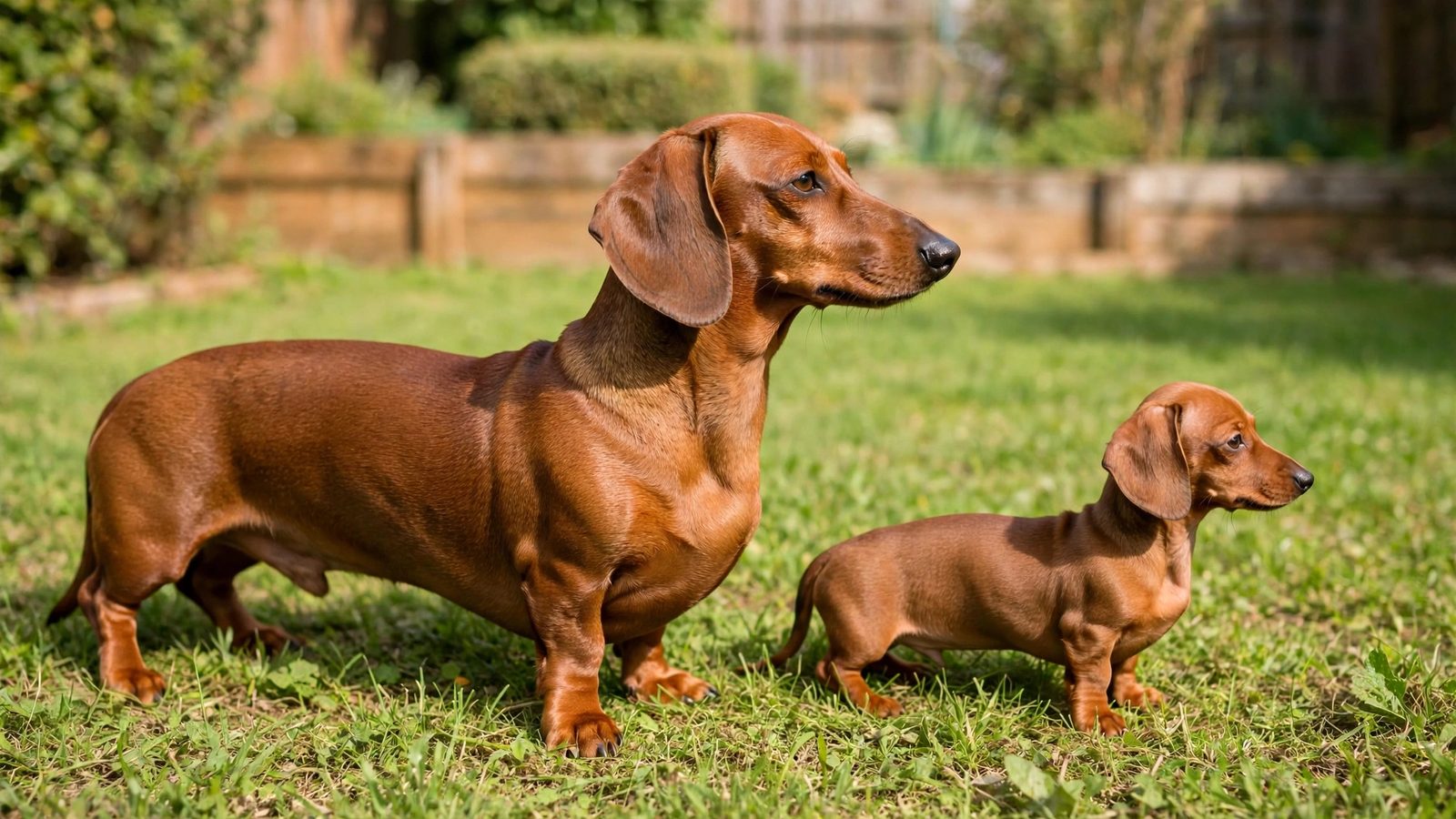
Standard or miniature — it is the first decision every future Dachshund owner faces, and it affects everything from food bills to apartment life. The quick answer: a Standard Dachshund weighs 16–32 pounds and stands 8–9 inches tall, while a Miniature Dachshund weighs 11 pounds or less and stands 5–7 inches tall. They are the same breed in two sizes — but the size difference ripples through temperament, exercise, health, and cost. Here is the full comparison.
At a Glance: Standard vs Miniature Dachshund
- Weight: 16–32 lbs (standard) vs. 11 lbs or less (miniature)
- Height at shoulder: 8–9 inches (standard) vs. 5–7 inches (miniature)
- Coat types: smooth, longhaired, and wirehaired — in both sizes
- Lifespan: 12–14 years (standard) vs. 12–16 years (miniature)
- Temperament: bold, loyal, stubborn, playful — in both, with minis often a touch more vocal
- Exercise: 30–60 minutes daily (standard) vs. 20–30 minutes (miniature)
- Best for: active homes with space (standard) vs. apartments and smaller homes (miniature)
The AKC recognizes just these two sizes in the US. Size-variant showdowns like our Mini vs full-size Australian Shepherd comparison follow the same pattern: same breed, scaled needs.
Size and Weight: The Official Numbers
Size is the only official difference between the varieties. Everything else — the long sausage body, short legs, floppy ears, big personality — is identical.
Standard Dachshund: 16–32 pounds, 8–9 inches at the withers. The original size, bred to hunt badgers.
Miniature Dachshund: 11 pounds or less (ideally 8–11 for show), 5–7 inches at the withers. Developed later as urban living grew.
Breeders measure the chest circumference as well as weight, since a stocky-but-healthy mini can weigh slightly over 11 pounds without being overweight.
What About Tweenies and Kaninchen?
You will hear two more terms:
- Tweenie (11–16 lbs): an unofficial, owner-coined label for dogs between the two sizes — usually a large miniature. Not a real variety, and nothing to worry about.
- Kaninchen (under ~7.7 lbs): a third, even smaller size recognized in Europe (mainly Germany) for rabbit hunting. Not recognized by the AKC.
Temperament Differences
Both sizes are classic Dachshunds: courageous to the point of comedy, deeply bonded to their people, clever, and famously stubborn. The differences are matters of degree:
- Vocalness: miniatures tend to bark a bit more — they were bred partly as alert dogs for smaller homes.
- Boldness: standards can be slightly more confident with bigger dogs and rougher play; minis may be more cautious (or more defiant — it varies by individual).
- Separation anxiety: minis, often carried and coddled more, can develop clinginess if not trained for independence early.
- Trainability: equal. Both are smart and willful; both respond best to patient, reward-based training.
For perspective on how size variants of one breed compare in daily life, see Greyhound vs Italian Greyhound vs Whippet.
Exercise Needs
Neither size is a couch potato, despite the short legs. Standards need 30–60 minutes of walking and play daily and enjoy longer hikes. Miniatures do well with 20–30 minutes, split into two shorter outings. Both need mental stimulation — puzzle toys, scent games (they are hounds, after all). Crucially for both sizes: no repeated stair climbing or jumping off furniture, which stresses their long spines.
Feeding and Diet Differences
A standard Dachshund eats roughly twice what a miniature does — expect about 1.5–2 cups of quality food daily for standards versus 3/4–1 cup for minis, adjusted for activity. Obesity is the number-one enemy of both sizes because extra weight crushes the spine, but minis gain weight faster on table scraps since their calorie budget is so small. Measure meals, limit treats to 10% of calories, and keep both sizes lean enough that you can feel (not see) the ribs.
Health: What Each Size Faces
Intervertebral disc disease (IVDD) is the signature risk for both — roughly 1 in 4 Dachshunds develops it. Prevention is identical: keep them lean, use ramps instead of stairs, support the chest and rear when lifting, and avoid rough wrestling.
Beyond IVDD, watch for:
- Both sizes: dental disease (crowded teeth), obesity, patellar luxation, eye issues (progressive retinal atrophy).
- Miniatures slightly more: dental crowding is worse in tiny jaws; they chill faster and may need coats in winter.
- Standards slightly more: sheer mass puts more load on joints; bloat risk, while low, rises with size.
Miniatures average a slightly longer lifespan (12–16 years) versus 12–14 for standards — a common small-dog advantage. The AKC’s Dachshund breed page has the official standard and recommended health screenings.
Cost Comparison
Miniatures cost a bit less to keep: less food, smaller doses of medication and preventatives, cheaper crates and gear. Purchase prices overlap heavily ($800–$2,000+ for well-bred puppies of either size), though minis are trendier in cities and sometimes priced higher. The big variable is vet bills — IVDD surgery can run $5,000–$10,000 for either size, which is why pet insurance is worth considering for this breed.
Which Size Fits Your Home?
Choose a Standard if: you have an active lifestyle, a yard, kids who play rough, or want a sturdier hiking companion. Choose a Miniature if: you live in an apartment, travel often (minis fit under airplane seats more easily), or want a true lap dog. Either way: commit to weight management, ramps, and training — the long back demands it in both sizes.
How to Tell Which Size Your Dachshund Is
Measure from the floor to the withers (the ridge between the shoulder blades) on an adult dog over 12 months old: 5–7 inches suggests miniature, 8–9 inches suggests standard. Weigh too: 11 pounds or under points to miniature, 16+ to standard. Between 11 and 16? Congratulations — you have a tweenie, a perfectly normal in-between Doxie.
Coat Types and Grooming by Size
Both sizes come in the same three coats — smooth, longhaired, and wirehaired — and grooming demands track the coat, not the size, with one caveat: everything takes a little longer on a standard simply because there is more dog. Smooth coats are wash-and-go in both sizes: a weekly rub with a hound mitt and baths as needed. Longhaired Dachshunds need brushing two to three times a week to prevent tangles behind the ears and on the feathered legs and belly; minis mat just as readily despite their smaller frame. Wirehaired coats need hand-stripping or professional grooming every few months to keep the harsh texture, plus regular brushing. Nail trims, ear checks, and dental care apply equally — though as noted, dental crowding deserves extra attention in miniatures, so introduce tooth brushing early and keep up with professional cleanings. Shedding is moderate in both sizes and heaviest seasonally; a good brush and a washable dog bed handle most of it.
Traveling With Each Size
If you travel, size matters more than almost anything else. A miniature Dachshund (under 11 pounds) fits comfortably in an airline-approved under-seat carrier, making air travel straightforward on most airlines. A standard Dachshund usually exceeds in-cabin weight limits and must fly as checked baggage — a stressful prospect for any dog. On road trips both sizes are easy passengers, though standards need a larger crash-tested crate or harness. Hotels and rentals with weight limits (commonly 25 or 50 pounds) accept both sizes without issue. For frequent flyers, the miniature’s portability is a genuine, practical advantage worth weighing alongside everything else.
Frequently Asked Questions
Do miniature Dachshunds live longer than standards?
On average, yes — minis often reach 12–16 years versus 12–14 for standards, following the general pattern of smaller dogs living longer.
Are miniature Dachshunds more aggressive?
Not aggressive, but they can be more vocal and feistier toward strangers and other dogs. Early socialization smooths this out in both sizes.
Can standard and miniature Dachshunds be bred together?
Responsible breeders do not cross the sizes — it muddies the varieties and can produce unpredictable structure. The sizes are bred separately.
Do both sizes come in all three coat types?
Yes — smooth, longhaired, and wirehaired coats all occur in both standard and miniature Dachshunds, in the same colors and patterns.
Which size is better for first-time owners?
Miniatures are slightly easier logistically (less food, easier to lift and travel with), but both sizes share the same stubborn streak and back-care needs. Pick based on your space and lifestyle.
Bottom line: standard vs miniature is purely a size decision — the Dachshund attitude comes in both. Measure your space, your activity level, and your lap, then choose accordingly. Whichever size you pick, you are getting one of the most characterful little hounds in the dog world.