
My Dog Won’t Poop in the Rain? Fixes That Work
The Short Answer
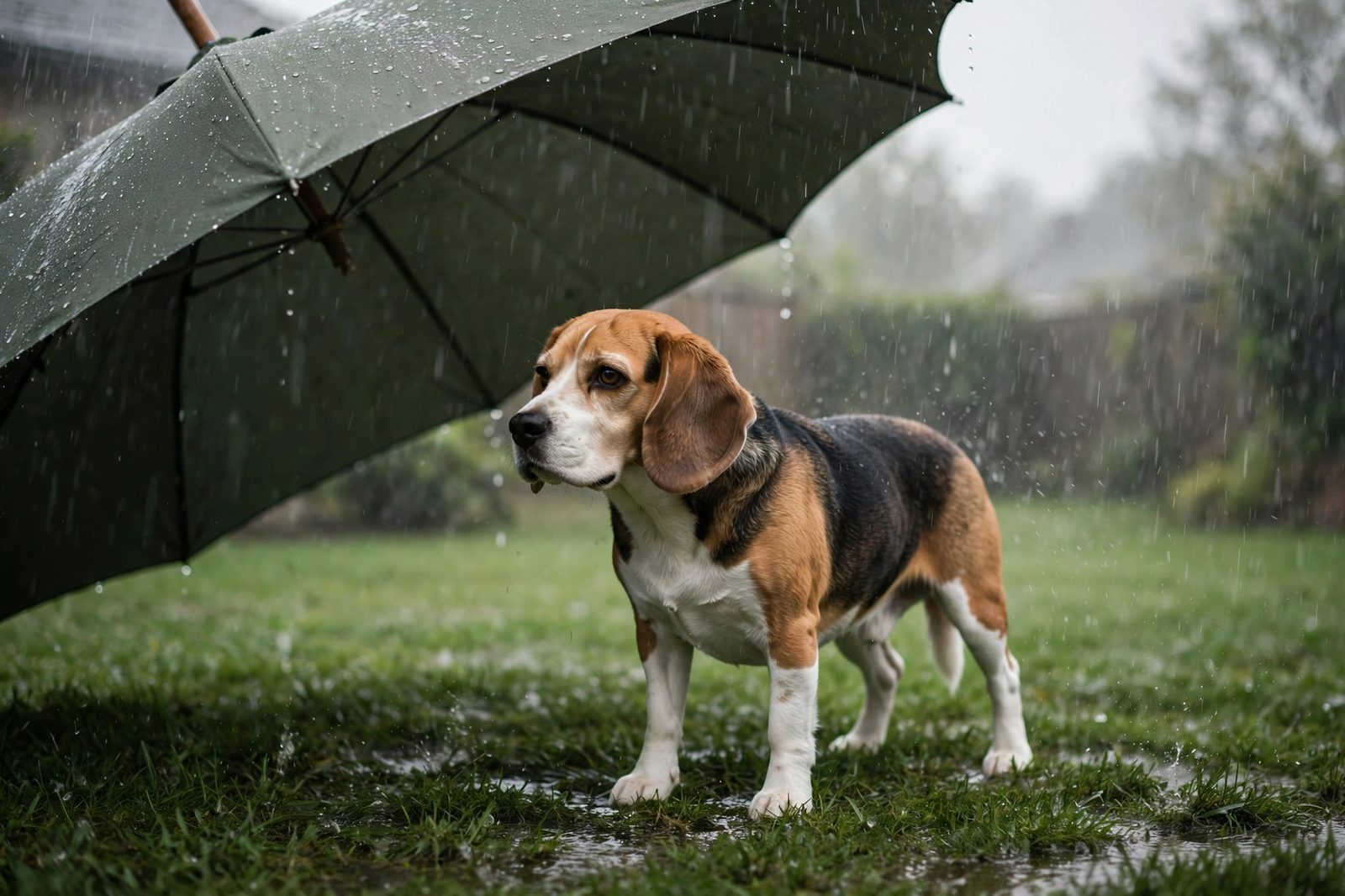
Dogs refuse to poop in the rain mostly because it feels wrong to them — wet paws, cold drops on the back, strange smells, and a broken routine all shout “not safe” to a creature of habit. It is frustrating, but it is normal, and it is fixable: go out with them, teach a potty cue, offer shelter from the rain, and reward bravery generously.
Why Dogs Refuse to Poop in the Rain
To understand the standoff at the back door, think like a dog. Elimination is a vulnerable moment, and dogs prefer it to happen somewhere safe, comfortable, and familiar-smelling. Rain scrambles every one of those criteria:
- Sensory overload. Rain changes everything at once — the patter of drops, the smell of wet earth, the feel of soaked grass. Dogs with sensitive temperaments find the barrage overwhelming and simply shut down.
- Wet paws and cold bellies. Many dogs hate the feeling of wet grass on their feet or cold rain on their backs, especially small, short-coated, or elderly dogs. Discomfort wins over the urge to go.
- Ruined scent markers. Dogs choose potty spots partly by smell. Heavy rain washes away the familiar scent cues, so the yard suddenly smells like nowhere.
- Noise anxiety. For some dogs it is not the wetness but the sound — drumming rain, wind, distant thunder. The anxiety generalizes to the whole outdoors.
- Broken routine. Dogs are creatures of habit. Anything that changes the usual potty ritual — timing, route, surface — can make them hold it.
- One bad experience. A single scary moment, like slipping on wet decking or getting caught in a downpour, can create a lasting negative association.
- Your own reluctance. Dogs read us fluently. If you hurry them, sigh, or drag them out with obvious distaste, they absorb the message that rain outings are miserable.
Is It Dangerous If My Dog Holds It?
Occasionally holding it through a storm is not an emergency. But routinely holding urine or stool for very long stretches can contribute to urinary tract infections, constipation, and genuine distress. If your dog regularly refuses to go for 12+ hours during wet weather, or strains painfully when they finally do go, talk to your vet. The goal is a dog who can relieve themselves in any weather, not one who white-knuckles it until the sun comes out.
How to Get Your Dog to Poop in the Rain: A Step-by-Step Plan
1. Go out with them — every time
This is the single biggest lever. Dogs take courage cues from their people. Grab a big umbrella, put on your boots, and walk out together on leash to the potty spot. Standing dry inside while shouting encouragement through the door does not work.
2. Teach a potty cue before you need it
On dry days, pair a word or phrase — “go potty,” “be quick,” “hurry up” — with the act. The instant your dog starts to eliminate, say the cue calmly, then throw a small party of praise and a high-value treat when they finish. After a few dozen repetitions, the cue itself triggers the association, and rainy-day outings get dramatically shorter.
3. Create a sheltered potty spot
Designate one area that stays relatively dry: under a wide eave, beneath a patio umbrella, a pop-up canopy, or even a covered patch of the yard. Dogs like going where they have gone before, so seed the spot by walking your dog there on dry days too. For apartment dwellers, a covered balcony patch or a porch grass pad works the same way.
4. Dress for the weather
A well-fitting raincoat keeps the worst of the wet off your dog’s back, and many reluctant dogs transform once the cold drops stop hitting their spine. Booties help paw-sensitive dogs, though they take a few indoor practice sessions first. Even holding a large umbrella over your dog while they sniff around buys them the dry seconds they need to focus.
5. Keep the routine sacred
Same door, same route, same spot, same cue, same reward — rain or shine. Predictability lowers anxiety. Take them out right after meals, play, and naps, just as you would on a sunny day.
6. Reward like it is the best thing ever
The first rainy-day poop deserves jackpot treatment: several treats in a row, enthusiastic praise, maybe a quick game. You are building a positive association to compete with the unpleasant sensations, so be generous early on.
7. Desensitize gradually
Between storms, practice short, fun outings in light drizzle. Toss treats in the grass, play briefly, then head in. The goal is a library of neutral-to-positive wet-weather memories that outweigh the scary ones.
What NOT to Do
- Do not punish accidents indoors. Scolding a dog who was too scared to go outside teaches them to fear you, not to brave the rain. It often makes them hide to eliminate, which is worse.
- Do not drag them into the downpour. Flooding a fearful dog with the scary stimulus usually intensifies the fear.
- Do not wait them out for hours. Marathon standoffs at the door help no one. Try for 5–10 focused minutes; if nothing happens, come in, supervise closely or crate briefly, and try again in 20–30 minutes.
- Do not skip the walk entirely. Some dogs only poop after movement stimulates the bowels. A short leashed walk in the rain often succeeds where standing in the yard fails.
When Refusing to Poop Signals Something Medical
Weather refusal is behavioral, but rule out medical issues if the pattern is new, sudden, or paired with other symptoms: straining with little result, crying while pooping, blood or mucus in the stool, vomiting, lethargy, or a sudden change in appetite. Arthritis can also make the cold, damp crouch of pooping painful for seniors. When in doubt, a vet check is cheap peace of mind — and if your dog’s issue is the flip side of the same coin, our guide on a dog refuses to pee in the rain covers the urinary version of this battle. Understanding why dogs poop on walks also helps, since movement-based elimination is one of your best rainy-day tools.
Breed, Age, and Coat Differences Worth Knowing
Not all dogs suffer equally in the rain. Small and toy breeds lose body heat fast, so a Chihuahua or Italian Greyhound may genuinely be cold within a minute of stepping onto wet grass — for them, a raincoat is less of an accessory and more of a necessity. Short-coated breeds like Boxers, Vizslas, and Dalmatians feel every drop, while a Newfoundland or Husky may barely notice a drizzle.
Age matters too. Puppies are still building confidence, and one miserable soaking can color their attitude toward wet weather for months, which is why early positive rain experiences are so valuable. Senior dogs face a different problem: arthritis and stiff joints make the cold, hunched posture of pooping genuinely painful on damp days. If your older dog’s rain refusal is new, a vet check for joint pain is worthwhile before assuming it is behavioral.
Rescue dogs with unknown histories deserve extra patience. A dog who lived outdoors through bad weather or was punished for indoor accidents may have deep-seated anxiety around both rain and elimination. For these dogs, progress is measured in weeks, not days — celebrate the small wins, like stepping onto wet grass voluntarily, even if no poop follows yet.
Frequently Asked Questions
Should I force my dog to poop in the rain?
No — force backfires. Patient, reward-based encouragement works; dragging and scolding deepens the fear. Short, structured attempts with big rewards beat one long miserable standoff.
Will a raincoat really help my dog poop outside?
Often, yes. Many dogs object specifically to cold water hitting their backs. A raincoat removes that trigger, and plenty of owners report their dog’s rainy-day reluctance vanishing once the coat goes on.
Can I just use pee pads on rainy days?
As a backup for severe storms, yes — but do not let it become the routine, or you will retrain the dog to prefer indoors. Place pads somewhere boring like a mudroom or porch, not in the dog’s favorite hangout spots.
How long can a dog hold their poop?
Healthy adult dogs can typically hold stool for 8–12 hours, but regularly pushing past that risks constipation and discomfort. Puppies and seniors need much more frequent outings regardless of weather.
Does the AKC have potty training guidance for bad weather?
Yes — the AKC’s puppy potty training timeline covers schedules and consistency principles that apply in any weather, and the same reward-based foundations fix rainy-day refusal.
Bottom line: your dog is not being stubborn — they are uncomfortable. Meet them halfway with shelter, gear, a cue word, and patience, and rainy days stop being a battle.




One Comment