How to Clean Up Runny Dog Poop on Grass: A Quick Guide
Solid poop is easy. Runny poop on grass is a different job entirely, and the wrong approach just smears it deeper into the lawn. If you need to know how to clean up runny dog poop on grass without ruining the lawn or your morning, here is the method that actually works: remove the bulk, absorb what is left, rinse it through, and let the grass recover. Done in the right order, the whole job takes about ten minutes.
What You’ll Need
Gather your kit before you start, because runny messes reward speed:
- Disposable gloves and a roll of sturdy, leak-proof poop bags.
- Old paper towels, newspaper, or a flattened cardboard box for scraping.
- A garden hose with a spray nozzle, or a watering can.
- An enzyme-based pet stain cleaner, or plain white vinegar diluted in water.
- Baking soda for odor, and a bucket if you want to contain rinse water.
Keep a small cleanup kit by the back door if your dog has a sensitive stomach. When diarrhea strikes, you will be glad you are not hunting for supplies.
Step-by-Step Cleanup on Grass
Work in this order and resist the urge to scrub, which only pushes waste into the soil and damages grass roots.
Step 1: Remove the bulk
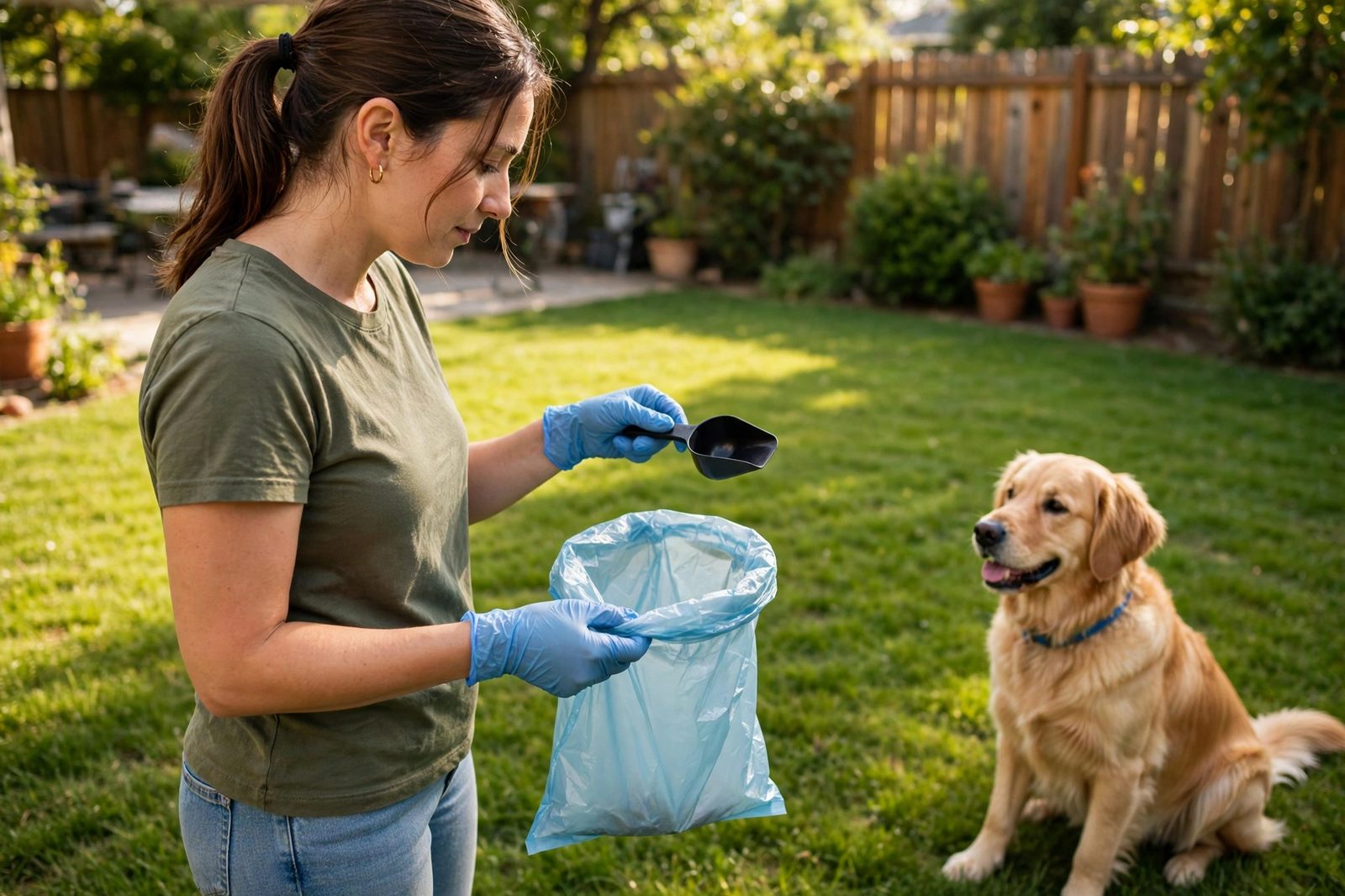
Put on gloves, slip your hand into a poop bag, and scoop up as much of the mess as you can in one motion, turning the bag inside out as you pull away. For very liquid messes, use a piece of cardboard or a paper towel as a scraper: slide it gently under the mess and lift it into the bag. A poop scoop with a flat edge works well too. Do not press down hard; you want to lift, not grind.
Step 2: Absorb what is left
Lay paper towels over the remaining residue and press lightly to absorb moisture, working from the outside in so you do not spread it. For a particularly wet patch, a sprinkle of clumping cat litter left for a few minutes will clump the liquid and make it scoopable. Remove the used towels and litter into a bag.
Step 3: Rinse it through
Spray the area with the hose on a gentle setting. The goal is to dilute and wash remaining particles down into the soil, where organic matter breaks down naturally. Grass is actually forgiving here: unlike hard surfaces, soil microbes help neutralize what is left. Avoid a high-pressure jet, which tears up turf and splashes waste around.
Step 4: Treat odor and residue
If a smell or faint stain remains, spray an enzyme-based pet cleaner made for outdoor use and let it sit for the recommended time, then rinse lightly. A diluted white vinegar spray also neutralizes odor. A sprinkle of baking soda left for a few hours before a final rinse helps with lingering smell. Do not use bleach on grass: it kills the lawn and can harm pets that walk on it later.
Step 5: Let the area dry
Keep children and pets off the spot until it is dry. Once dry, the area is generally safe to use again, though a follow-up rinse the next day does no harm if the mess was large.
What NOT to Do
- Do not leave it: dog waste carries parasites and bacteria, damages grass in concentrated spots, and washes into drains when it rains.
- Do not use bleach on the lawn: it kills grass and soil microbes and leaves a chemical residue pets can ingest.
- Do not scrub aggressively: scrubbing spreads the mess and tears up turf. Lift and rinse instead.
- Do not mow over it: mowing spreads waste across the lawn and onto the mower, which is exactly how parasites and bacteria get distributed.
Helping the Lawn Recover
Dog waste is high in nitrogen, which is why a single spot can first turn darker green and then burn yellow. If a patch dies back, rake out the dead grass, scatter a little topsoil, and reseed with a hard-wearing grass variety. Water the patch lightly for a week or two until new growth appears. Most lawns bounce back within a few weeks, and a healthy, well-fed lawn resists damage far better than a stressed one.
If your dog regularly has loose stools, the lawn is the least of your worries, and a vet visit matters more than any cleanup trick. Recurring diarrhea is covered in more detail in our guide to why dogs poop on walks, which explains how gut health and routine affect what ends up on the grass.
Hygiene and Safety
Dog feces can carry organisms that affect people as well as dogs, including Salmonella, Campylobacter, Giardia, and roundworms, and some dogs carry these without showing symptoms. Always wear gloves, wash your hands thoroughly afterward, and clean your scoop or hose nozzle. Keep the area off-limits to children until it is rinsed and dry. For the veterinary view on safe handling, see PetMD’s guide to cleaning up dog poop, which covers zoonotic risks and disposal in detail.
If you also need to collect a sample for the vet, the technique is similar but the timing matters: fresh is best, and refrigeration buys you time. Our guide to how to get a dog urine sample covers sample handling, and the same freshness principles apply to stool samples.
Reducing Future Runny Messes
If runny stools keep happening, cleanup gets easier when you change the setup rather than just the technique. Consider creating a designated potty area surfaced with pea gravel or mulch instead of grass. Hard, loose surfaces like gravel are far easier to rinse clean than turf, and they keep waste contained in one spot instead of scattered across the lawn. Train your dog to use that area with consistent guidance and rewards, and keep the rest of the yard as a clean play space.
Diet is the other lever. Sudden food changes, rich treats, table scraps, and scavenged items are the most common causes of occasional loose stools. Keep meals consistent, introduce any new food gradually over a week, and be cautious with fatty treats and rawhide-style chews. Some owners find that a probiotic helps a sensitive stomach, but check with your vet before adding supplements, especially for puppies or dogs with chronic digestive issues. And if loose stools coincide with a new food, a new treat, or a stressful event like boarding, that pattern is useful information for your vet.
Finally, make prompt pickup a habit even for solid stools. Waste left on the lawn breaks down, attracts flies, and spreads parasites through rain runoff, while a yard cleaned daily stays healthier for both your dog and your grass. A five-minute daily sweep beats a big weekend cleanup every time.
When Runny Poop Needs a Vet
One loose stool after a dietary indiscretion is usually no crisis. Call your vet if you see blood or black, tarry stool, diarrhea lasting more than 48 hours, vomiting alongside diarrhea, lethargy, loss of appetite, or signs of dehydration like dry gums and sunken eyes. Puppies, seniors, and dogs with immune problems should be seen sooner, since they dehydrate faster. Bring a fresh sample if you can, and note what your dog ate in the last day or two.
Frequently Asked Questions
Can I just hose runny dog poop into the lawn?
Mostly yes, after removing the bulk. Rinsing dilutes what remains and soil microbes break it down. But do not skip the bulk removal, and do not hose it toward drains, vegetable beds, or play areas.
Will dog poop kill my grass?
A single incident rarely does lasting damage, though concentrated nitrogen can yellow a spot. Repeated deposits in the same place are what kill grass. Rinsing after cleanup and rotating potty spots helps a lot.
Is it safe to use vinegar on grass after cleaning?
Diluted white vinegar is fine in small amounts and helps with odor. Undiluted vinegar in large quantities can burn grass, so dilute it and rinse after.
How do I clean runny poop off artificial grass?
The same lift-and-absorb steps apply, followed by a rinse and an enzyme cleaner made for artificial turf. Artificial grass drains well, but rinse thoroughly so residue does not sit in the infill.
Conclusion
Cleaning runny dog poop off grass comes down to order: lift the bulk, absorb the rest, rinse it through, and treat odor gently. Skip the bleach and the scrub brush, keep the area off-limits until dry, and watch your dog, not just your lawn. If loose stools keep happening, the cleanup kit is not the answer; your vet is.