
How Soon After My Puppy Eats Will He Poop? Timing Guide
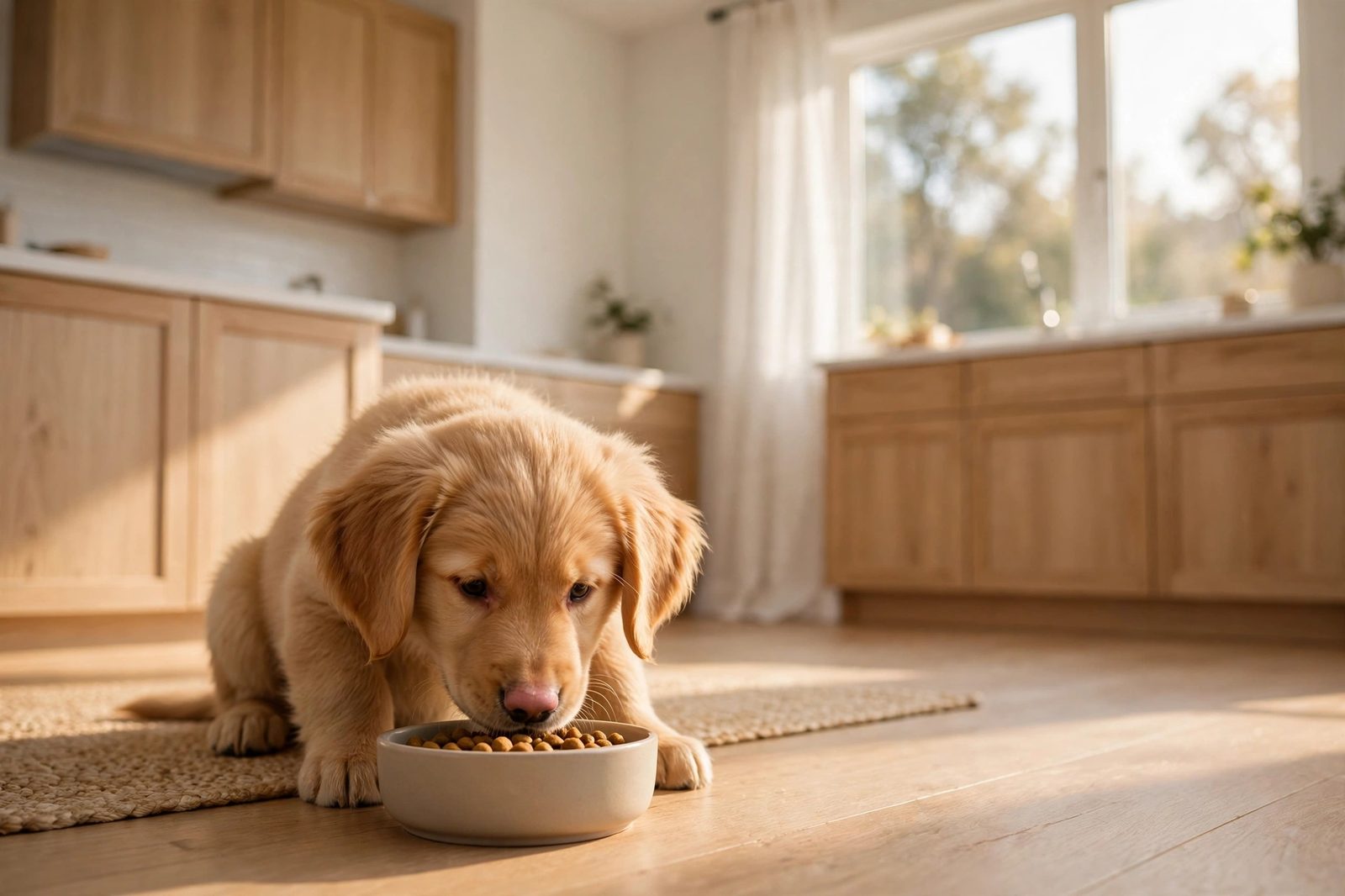
Short answer: Most puppies poop 5 to 30 minutes after eating, thanks to the gastrocolic reflex — a signal that fires when the stomach fills and tells the colon to make room. Young puppies are on the fast end of that range, older puppies slower. If you take your puppy out within that window after every meal, house training gets dramatically easier.
Why Puppies Poop So Soon After Eating
It is not that the meal your puppy just ate travels through the body in minutes — full digestion takes 8 to 12 hours or more. What happens instead is the gastrocolic reflex: when food stretches the stomach wall, nerves signal the colon to contract and move along whatever is already there. In puppies, whose digestive systems are still developing and whose bowels are less practiced at holding, that reflex is strong and fast. The result is the familiar pattern every new puppy owner knows: bowl down, meal finished, and a puppy suddenly circling and sniffing for a spot.
Typical Timing by Age
Every puppy differs, but this is a reliable starting guide for planning potty trips:
- 8 to 10 weeks: often 5 to 15 minutes after eating. Bladder and bowel control are minimal, so go out almost immediately.
- 10 to 12 weeks: usually 10 to 20 minutes after eating.
- 3 to 4 months: typically 15 to 30 minutes after eating, and many puppies start showing a clearer pre-poop signal.
- 4 to 6 months: often 20 to 45 minutes, with longer holds between meals as control improves.
- 6 months and up: approaching adult timing — many dogs settle around 30 minutes after eating, though some take longer.
Keep a simple log for the first week: meal time, poop time. Within days you will know your puppy’s personal window far better than any chart can tell you.
What Changes the Timing
Meal size and food type
Larger meals trigger a stronger reflex, and wet food — with its higher water content — tends to move things along faster than dry kibble. High-fiber foods can also speed transit, while a sudden diet change may temporarily scramble the schedule entirely.
Exercise and excitement
Gentle movement after a meal helps the bowels along, which is why a calm potty walk works so well. But avoid vigorous play or running for about two hours after eating, especially in large and giant breeds — heavy exercise on a full stomach raises the risk of bloat, a life-threatening twisting of the stomach.
Stress and routine changes
A new home, visitors, travel, or a vet visit can make a puppy poop sooner, later, or in odd places. Stress affects gut motility directly. Consistency — same food, same times, same potty spot — is the fastest way to a predictable schedule.
Health
Diarrhea, parasites, or food intolerance will override any normal schedule. If your puppy’s timing suddenly changes alongside loose stool, vomiting, or lethargy, that is a vet conversation, not a training problem.
Turning Timing Into a House Training Schedule
PetMD’s guide to how often dogs poop confirms the same rule of thumb: most dogs poop about 30 minutes after eating, with puppies on the faster end.
The meal-to-poop window is the single most useful tool in puppy house training. Build the day around it:
- Feed on a schedule, not free-choice. Three to four measured meals a day for young puppies, dropping to three and then two as they grow. Scheduled meals mean scheduled poops.
- Go out right after every meal. Leash up, head to the same spot, and wait calmly for up to 10 minutes. Praise and reward the moment your puppy goes.
- Pair meals with the other trigger times. Puppies also reliably need to go after waking up, after play sessions, and after drinking. Stack these with meals and you cover most accidents before they happen.
- If nothing happens, try again in 15 minutes. Bring your puppy back inside under close supervision (or into the crate briefly) and retry. Do not let an un-emptied puppy wander unsupervised — that is how accidents happen.
- Keep nights boring. A late meal means a late poop. Feed the last meal early enough that the final potty trip happens before bed.
Timing works the same way for the other end of the schedule. Our guide to how long after a puppy drinks water they pee pairs with this one to cover the full potty clock, and why dogs poop on walks explains why the walk itself is such a reliable trigger.
What If My Puppy Doesn’t Poop After Eating?
Do not panic if your puppy skips a post-meal poop occasionally — not every meal produces one, especially as puppies mature and meals consolidate. Watch for patterns instead. A puppy that strains, cries, or produces nothing for a day or two may be constipated, and that deserves a vet call, particularly if the belly looks bloated or the puppy seems uncomfortable. Never give a laxative unless your vet recommends it. On the other hand, a puppy that poops immediately every single time with very loose stool may need a diet review or a parasite check.
Sample Daily Schedule for a 3-Month-Old Puppy
Here is how the meal-to-poop window fits into a realistic day. Adjust the clock to your own routine, but keep the sequence: meal, then out within 20 minutes.
- 7:00 AM: Wake up, immediate potty trip (bladder and bowels are both full after the night).
- 7:15 AM: Breakfast, then a calm potty walk by 7:35 AM.
- 12:00 PM: Lunch, then out by 12:20 PM. A short play session afterward is fine once the poop is done.
- 5:00 PM: Dinner, then out by 5:20 PM.
- 9:30 PM: Final potty trip before bed — no food or big drinks after this point.
- Overnight: Young puppies may still need one boring, middle-of-the-night trip. Keep it dark and quiet, then straight back to the crate.
As your puppy matures, you will drop the lunch meal and then the midday trip, and the windows will stretch. The structure stays the same: feed, wait for the window, go out, reward.
When Timing Changes Suddenly
A puppy with a reliable schedule that suddenly poops much sooner, much later, or far more often is telling you something changed. The usual suspects, in order, are a diet change or new treats, stress (a move, a new pet, a vet visit), parasites, or a stomach bug. Check the stool itself: form, color, and any blood or mucus are useful details for your vet. A single odd day after a treat binge is rarely a concern. But timing changes that last more than a day or two, or that come with vomiting, lethargy, loss of appetite, or blood in the stool, should be checked promptly — puppies dehydrate faster than adult dogs, so do not wait it out for long.
Does the time of day affect poop timing?
Yes. Most puppies poop most reliably in the morning, because the overnight fast and the first meal both stimulate the bowels. Evening poops are often smaller and less predictable. If you are planning a long outing, a morning meal followed by a solid potty trip is your best setup.
FAQ: How Soon After Eating Will a Puppy Poop?
Do puppies poop after every meal?
Most young puppies do, especially under 4 months. As they grow and meals consolidate, many drop to two or three poops a day even with regular feeding.
Is 5 minutes after eating too fast?
No — for a young puppy, 5 to 15 minutes is completely normal. The gastrocolic reflex is strongest in very young dogs and eases as they mature.
Should I walk my puppy right after eating?
Yes, a calm, short potty walk is ideal. Avoid running, jumping, or rough play for about two hours after meals to reduce bloat risk, especially in large breeds.
Why does my puppy poop twice after one meal?
Common and normal. The first poop is the reflex clearing the colon; a second, smaller one often follows once the puppy relaxes or walks a little further.
Should I feed my puppy at the same times every day?
Yes — consistent meal times are the foundation of a predictable potty schedule. Puppies fed at random times poop at random times, which makes house training far harder. Pick set meal times you can keep seven days a week, and keep treats modest and consistent too, since large treat sessions can trigger extra poops.
Conclusion
Most puppies poop 5 to 30 minutes after eating, driven by the gastrocolic reflex rather than the meal itself racing through. Learn your puppy’s personal window, feed on a schedule, and head out right after meals — and house training becomes a matter of timing, not luck.


