Best Brush for Short-Haired Dogs: A Complete Guide
Short answer: the best brush for a short-haired dog is a two-tool combo: a soft bristle brush for daily smoothing and shine, plus a rubber curry brush or deshedding tool for weekly loose-hair removal. Short coats still trap dust, dander, and dead hair — regular brushing keeps the coat glossy and your furniture cleaner.
Why Short-Haired Dogs Still Need Brushing
It is a common myth that short-haired dogs are “wash and wear.” In reality, breeds like Beagles, Boxers, Pugs, and Labradors shed constantly — just in shorter hairs that weave into fabric and are harder to vacuum. Brushing does four jobs at once:
- Removes loose, dead hair before it lands on your couch.
- Distributes natural skin oils along the hair shaft, which is what gives a healthy coat its shine.
- Lifts dust, dander, and dried dirt trapped against the skin.
- Stimulates blood circulation in the skin, supporting healthier hair growth.
It also doubles as a health check: while brushing you will notice lumps, hot spots, fleas, or dry patches early, when they are easiest to treat.
The 4 Brush Types That Work on Short Hair
1. Bristle brush — the daily driver
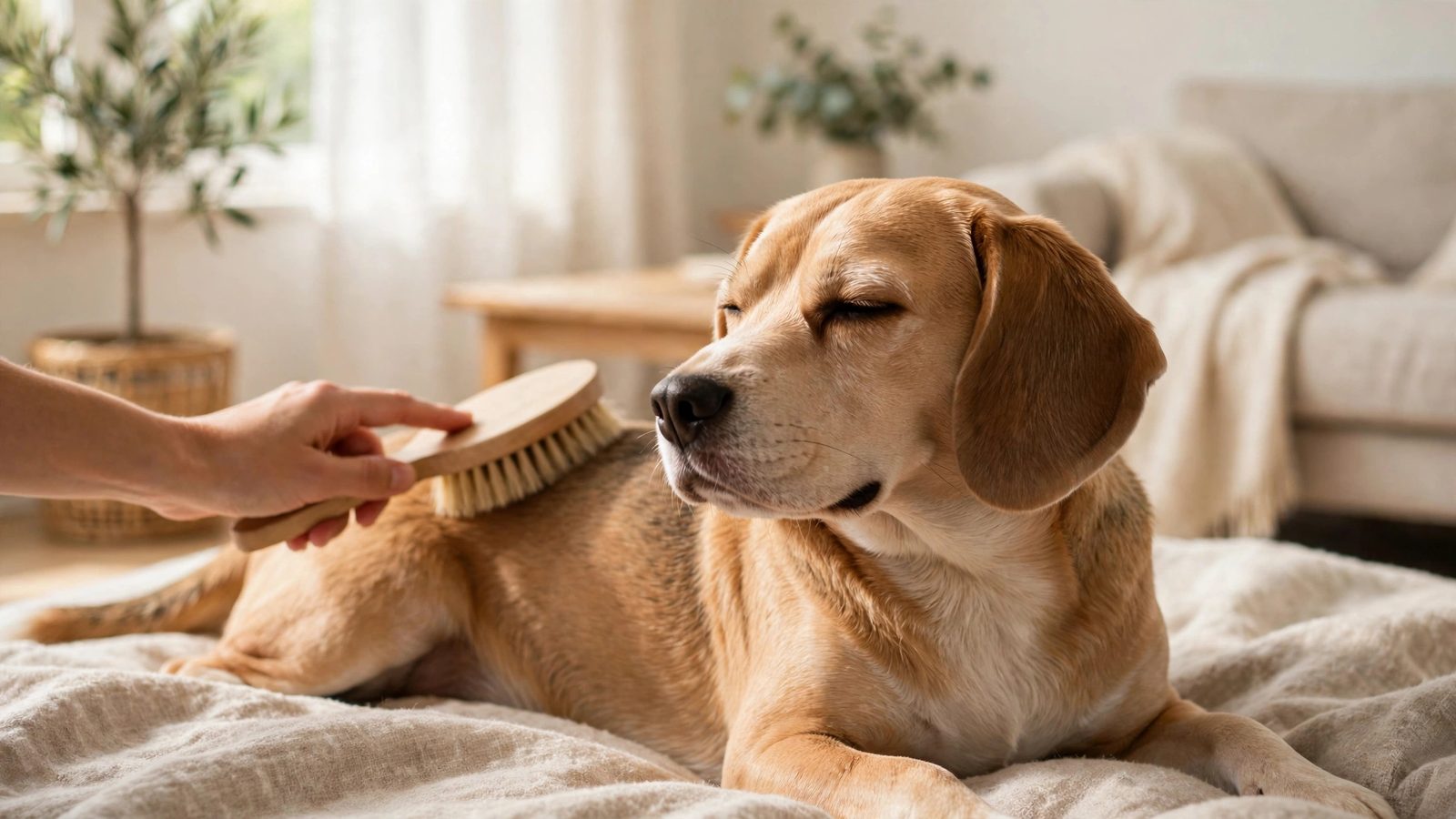
A classic brush with densely packed natural (boar) or nylon bristles. It is gentle enough for daily use, smooths the topcoat, and brings oils to the surface for that show-ring shine. Best for: finishing, sensitive skin, and dogs that dislike firmer tools. Look for soft-tipped bristles if your dog has thin or sensitive skin.
2. Rubber curry brush — the shed-buster
A flexible rubber pad with soft nubs or teeth. Used in small circles, it grabs loose hair like a magnet while massaging the skin. Many dogs love the feel, and it works dry or in the bath as a shampoo scrubber. Best for: heavy seasonal shedders and bath time. Groomers consistently rank rubber curries as the top tool for short, dense coats.
3. Deshedding tool — the heavy artillery
A stainless-steel blade (popularized by undercoat rakes and de-shedding combs) that reaches beneath the topcoat to pull out dead undercoat. Extremely effective — but also the easiest tool to misuse. Best for: double-coated short-haired breeds (Labs, Beagles, Pugs) during coat-blowing season. Use light pressure and limit sessions to avoid irritating the skin.
4. Slicker brush — the occasional helper
Fine wire pins on a padded base. Useful for working through minor tangles behind the ears or in feathering, but overkill as a daily tool for most short coats. Choose one with coated pin tips so it does not scratch the skin.
How to Choose the Right Brush
Match the tool to your dog, not to marketing:
- Heavy shedder (Lab, Pug, Beagle): rubber curry for weekly deep sessions + bristle brush for daily touch-ups. Add a deshedding tool during spring and fall coat blows.
- Light shedder (Greyhound, Boxer, Dalmatian): a bristle brush alone is usually enough, with a rubber curry once a week.
- Sensitive or thin-skinned dogs: soft natural-bristle brush only; skip metal deshedding blades, which can cause brush burn on delicate skin.
- Comfort matters for you too: an ergonomic, non-slip handle prevents wrist strain — you will brush more consistently if the tool feels good in your hand.
For a deeper breakdown of every brush style by coat type, see our guide to dog grooming brushes and their uses.
Brushing Technique: Step by Step
- Start calm. Brush after a walk or play session when your dog is settled, not buzzing with energy.
- Work with the grain. Always brush in the direction the hair grows, using long, smooth strokes from neck to tail.
- Use the curry first. In gentle circles, work the rubber curry over the body to loosen dead hair. Avoid bony areas and the belly with firm pressure.
- Finish with the bristle brush. Smooth everything down to distribute oils and catch what the curry loosened.
- Check as you go. Part the hair occasionally and glance at the skin for redness, flakes, or parasites.
- End on a good note. A treat after brushing builds a positive association, especially for puppies or nervous dogs.
How Often Should You Brush a Short-Haired Dog?
For most short-haired breeds, 2–3 times per week with a bristle brush keeps the coat in great shape, plus one deeper curry session per week. During seasonal shedding, step the curry up to every other day. Dogs that practically live outdoors or roll in everything may appreciate a quick daily once-over. If you are unsure where brushing fits into a full routine, our coat-care brushing schedule is a useful template you can adapt to any breed.
5 Brushing Mistakes to Avoid
- Pressing too hard with a deshedding tool. Let the blade do the work — pressure causes redness and brush burn, especially on short coats with little padding.
- Brushing against the grain. It pulls hair painfully and never removes more loose coat.
- Using a pin brush meant for long coats. Long pins skate over short hair without contacting the skin.
- Skipping the belly, legs, and tail base. Loose hair collects there too.
- Brushing a dirty, matted coat dry. If the coat is filthy, a bath (or at least a damp wipe-down) first prevents grinding grit into the skin.
Bristle vs. Rubber Curry vs. Deshedding Tool: Side by Side
Still unsure which tool to buy first? Here is how the three main options compare for a typical short-haired dog:
- Bristle brush: gentlest; best for daily smoothing and shine; removes surface dust and light loose hair; poor at deep deshedding.
- Rubber curry: best all-rounder; excellent at grabbing loose hair; massages skin; most dogs enjoy it; works wet or dry; will not scratch.
- Deshedding blade: most powerful for undercoat removal; highest risk of skin irritation if overused; reserve for heavy shedding weeks.
If your budget covers exactly one tool, make it the rubber curry — it handles 80% of short-coat grooming jobs safely. Add the bristle brush second for that finished, glossy look.
Seasonal Brushing Calendar
- Spring and fall (coat blow): curry every other day, bristle brush 3 times a week. Expect to fill the brush fast — that is the tool doing its job.
- Summer: bristle brush twice a week; curry once a week. Check for dry skin and fleas while you brush.
- Winter: indoor heating dries skin, so brush twice a week and watch for dandruff. A slightly damper coat (light misting) reduces static.
When to Replace Your Dog’s Brush
Brushes wear out, and a worn brush grooms poorly. Replace your bristle brush when bristles splay outward, bend permanently, or feel scratchy rather than smooth — typically every 6 to 12 months with regular use. Replace rubber curries when nubs tear or the rubber hardens and loses flexibility. Deshedding blades dull over time; if it starts pulling instead of gliding, it is done. A quick rinse after each session and monthly deep-clean keeps every tool working longer.
FAQ
Do short-haired dogs really shed more than long-haired dogs?
Not necessarily more, but their short, stiff hairs fall constantly year-round and embed in upholstery, so it feels like more. Regular brushing is the only thing that meaningfully reduces it.
Can I use a human brush on my dog?
In a pinch, a soft natural-bristle human brush works for smoothing, but purpose-made dog brushes have the right bristle stiffness, spacing, and handle angle for a dog’s body. They are inexpensive enough that it is worth owning the real thing.
Is a deshedding tool safe for short hair?
Yes, if used correctly: light pressure, short sessions (5–10 minutes), once or twice a week during heavy shedding, and never on irritated, sunburned, or broken skin. Stop if the skin looks pink.
My dog hates being brushed. What should I do?
Switch to a rubber curry — most dogs find the massage sensation pleasant — keep sessions under two minutes at first, and pair every session with high-value treats. Build duration gradually over a couple of weeks.
How do I clean the brush itself?
Pull trapped hair from bristles after every session — a fine comb dragged through the bristles works well. Wash rubber curries and plastic brushes monthly in warm soapy water, rinse well, and air-dry. A dirty brush just redistributes grime.
Can I share one brush between my dog and cat?
A rubber curry or soft bristle brush can be shared if both animals tolerate it, but wash it between species — cats are fastidious and may reject a brush smelling of dog. Deshedding blades should be sized to the animal; a large-dog blade is overkill on a cat.
The Bottom Line
You do not need a drawer full of gadgets. A quality bristle brush for daily shine and a rubber curry for weekly deshedding cover nearly every short-haired dog’s needs. Brush with the grain, keep it gentle and consistent, and both the coat and your furniture will thank you. For personalized advice on coat problems like excessive shedding or dullness, VCA’s grooming and coat care guide is an excellent veterinary reference.