Why Is My Shih Tzu Shedding Hair? Causes and Care
Quick answer: Shih Tzus do shed, but lightly — their hair-like coat has a long growth phase, so loose hairs usually stay trapped in the coat instead of landing on your floor. If your Shih Tzu is suddenly shedding noticeably, the most common reasons are the puppy-to-adult coat transition (around 6–10 months), seasonal change, diet issues, stress, or a health problem like allergies, parasites, or hormonal imbalance. Heavy shedding with bald patches, itching, or red skin always deserves a vet visit.
Why a “Non-Shedding” Breed Sheds at All
Shih Tzus are famous as a low-shedding breed, which leads many owners to expect zero hair around the house. The reality is more nuanced. All dogs lose old hairs as part of the normal hair follicle life cycle — the difference is in how much and how visibly.
Shih Tzus have hair rather than fur: finer, longer strands with a longer growing phase and a shorter resting phase than fur follicles. As the AKC’s chief veterinary officer has explained, hair tends to fall out slowly and get trapped in the surrounding coat rather than coming out in clumps like fur. That trapped hair is exactly why an unbrushed Shih Tzu mats — the loose hairs never leave; they tangle.
So when you find hair on your brush, in the bath drain, or on your clothes, that is usually normal. It becomes a concern only when the amount changes suddenly or the coat itself starts looking thin.
Normal Reasons Your Shih Tzu Is Shedding More
Puppy coat transition (6–10 months)
The single most dramatic shedding phase in a Shih Tzu’s life is the change from soft puppy fluff to the adult double coat, usually between 6 and 10 months. During this transition, shedding increases noticeably for a few weeks, and daily brushing becomes essential to prevent the matting that comes with it. Once the adult coat is in, shedding settles back down.
Seasonal shifts
Shih Tzus don’t “blow coat” like Huskies, but many shed slightly more with seasonal temperature changes — a bit more in summer as the coat lightens, and sometimes in winter when dry indoor air dries the skin. For a full picture of how shedding cycles work across breeds, see our complete shedding timeline for dogs.
Post-pregnancy coat blow
Female Shih Tzus often shed heavily after giving birth — breeders call this “blowing the coat.” Hormonal shifts drive it, and the coat grows back as hormones regulate.
Stress
Moves, new pets, loud construction, or changes in routine can trigger temporary increased shedding. It usually resolves once the dog settles.
When Shedding Signals a Health Problem
Hair loss is different from shedding. Normal shedding is loose old hairs; hair loss (alopecia) means thinning, bald patches, or broken coat caused by a problem with the hair follicle. See your vet promptly if you notice:
- Bald or thinning patches, especially symmetrical thinning on both sides of the body
- Red, scaly, crusty, or darkened skin under the thinning areas
- Hair loss with itching, licking, or chewing at the skin
- A dull, dry, brittle coat combined with weight gain, low energy, or increased thirst (possible thyroid issues)
- A bad smell from the skin, suggesting infection
Common medical causes
Veterinary references including the Merck Veterinary Manual list the usual suspects: parasites (fleas, mange mites), allergies (flea, environmental, or food — all leading to scratching that thins the coat), bacterial or fungal skin infections including ringworm, hormonal problems such as hypothyroidism or Cushing’s disease, and nutritional deficiencies, particularly poor protein quality. Even a tight collar rubbing one spot can wear hair away. Your vet will examine the pattern of hair loss and may run skin scrapings, cultures, or blood work to pin down the cause.
A Grooming Routine That Keeps Shedding Under Control
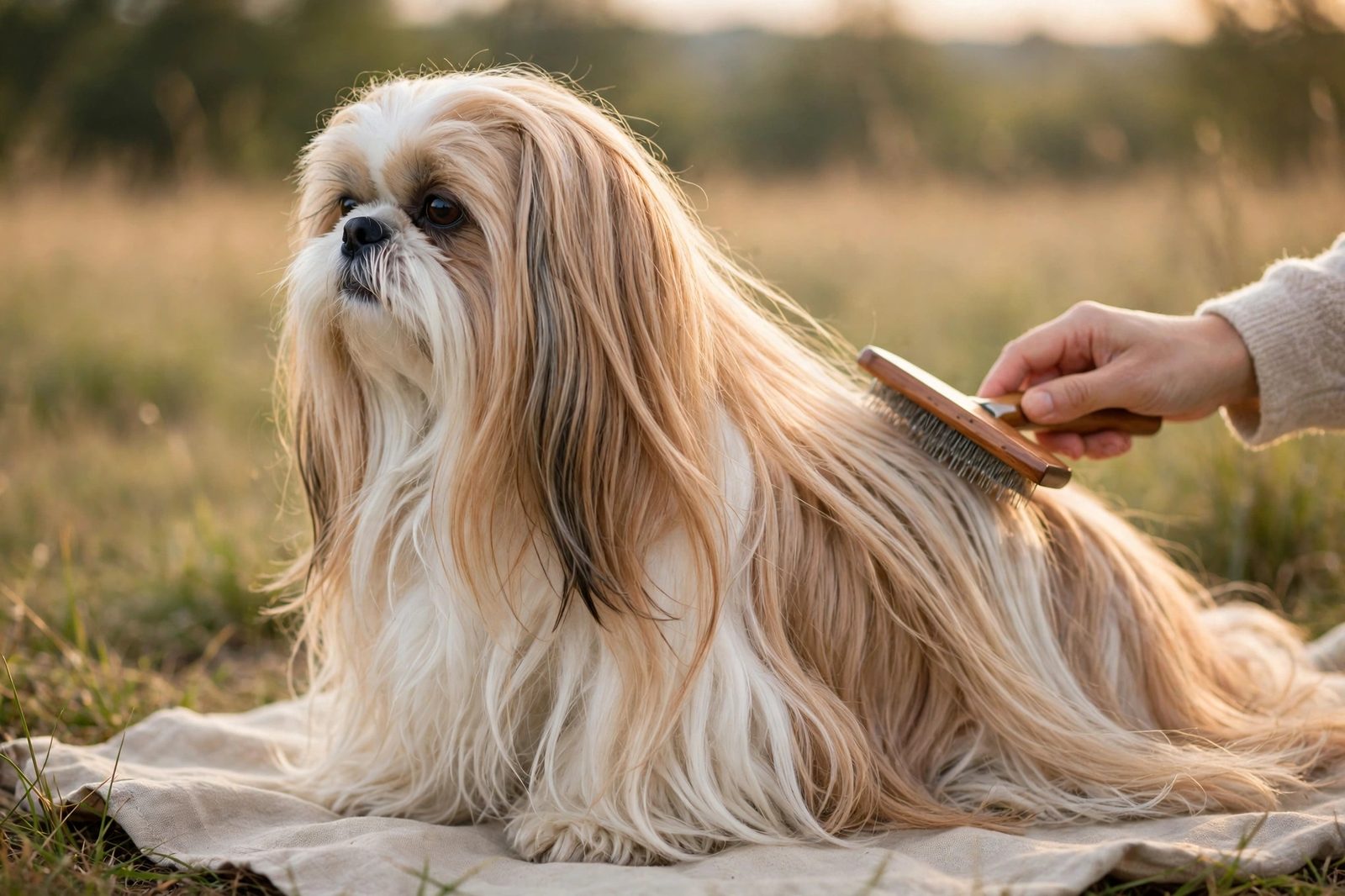
Because loose Shih Tzu hair stays in the coat, grooming is shedding control. A consistent routine makes a visible difference:
- Brush to the skin, not just the top layer. Part the hair in sections and brush from the skin outward with a pin brush or slicker, then follow with a comb. Brushing only the surface leaves hidden mats underneath. Long coats need daily brushing; a short puppy cut needs it 3–4 times a week. Choosing the right tool matters — our guide to grooming brushes by coat type covers which brush suits a silky double coat.
- Bathe every 3–4 weeks with a gentle dog shampoo, and dry the coat fully — damp hair mats faster and can encourage fungal growth.
- Brush before bathing, never after: water tightens mats and makes them nearly impossible to remove.
- Check the mat hotspots behind the ears, under the legs, on the belly, and around the collar.
- Keep the face clear: tie up the topknot or trim face hair so it stays out of the eyes, and wipe tear-stained eye corners daily.
- Feed a complete, balanced diet appropriate for your dog’s age — poor nutrition is one of the most common fixable causes of excess shedding, and omega fatty acids support coat health.
- Keep up with flea prevention year-round.
For breed-specific coat guidance, the AKC’s Shih Tzu coat care guide covers the topknot, brushing technique, and trim options in detail.
What About Shaving to Stop Shedding?
Shaving does not stop the hair growth cycle — it just makes the shed hairs shorter. Worse, it exposes the skin to sunburn and irritation, and in double-coated breeds it can disrupt coat regrowth. If long-coat maintenance is overwhelming, a neat puppy-cut trim every 4–6 weeks is a far better option than shaving: it reduces brushing time while keeping the skin protected.
The Shih Tzu Hair Growth Cycle, Simply Explained
Every hair follicle cycles through three phases: anagen (growth), catagen (transition), and telogen (rest, then shed). In fur-coated breeds like Labradors, a large share of follicles sit in telogen together — which is why they “blow coat” seasonally in dramatic waves. In Shih Tzus, the anagen phase is unusually long; hairs keep growing for years, so only a small fraction of follicles shed at any one time. That is the biological reason behind the breed’s low-shedding reputation.
This also explains the puppy coat transition: around 6–10 months, hormones trigger a mass shift of follicles out of the puppy-coat cycle into the adult pattern, producing the temporary heavy shed that surprises so many owners. And it explains why shaving cannot stop shedding — cutting the shaft does nothing to the follicle cycle underneath.
Understanding the cycle helps you read your dog’s coat: gradual, even thinning with age is normal follicle aging, while sudden patchy loss signals a follicle problem that deserves a vet visit.
Your Weekly Shih Tzu Coat Checklist
- Brush-outs: daily for a long coat, 3–4 times a week for a puppy cut — always down to the skin, in sections.
- Comb check: run a steel comb through after brushing; if it snags, there’s a mat hiding.
- Face and eyes: wipe tear corners daily and keep the topknot fresh or face hair trimmed.
- Ears: peek inside weekly for redness or odor, especially in humid weather.
- Skin scan: while brushing, check for flakes, redness, lumps, or parasites — early detection makes everything easier.
Frequently Asked Questions
Do Shih Tzus shed a lot?
No. They are a low-shedding breed, and most loose hair stays trapped in the coat until brushed out. Noticeable shedding on furniture or clothes is unusual and worth investigating.
Are Shih Tzus hypoallergenic?
No dog breed is truly hypoallergenic. Allergens come from dander, saliva, and urine — not just hair — and studies have found no evidence that any breed is allergen-free. Low shedding helps, but it is not the same as allergy-free.
Why is my Shih Tzu puppy suddenly shedding so much?
Most likely the puppy-to-adult coat transition around 6–10 months. It lasts a few weeks and is temporary. Brush daily during this phase to prevent matting, and it will settle once the adult coat comes in.
Will my Shih Tzu’s hair grow back after hair loss?
In most cases, yes — once the underlying cause (fleas, allergies, infection, hormones) is treated, the coat regrows. Hair may not return fully over deep scars, and regrowth after hormonal issues can take several months.
How often should I brush my Shih Tzu to control shedding?
Daily for a long coat, 3–4 times a week for a puppy cut. Regular brushing removes loose hair before it mats and is the single most effective shedding-control step for this breed.
Conclusion
A little Shih Tzu hair on the brush is normal — it means the coat is doing what coats do, and your grooming routine is catching it. What matters is change: sudden heavy shedding, thinning patches, or shedding paired with itching and red skin are your cues to look deeper, starting with grooming and diet and ending at the vet if needed. Keep up with brushing, feed well, and your Shih Tzu’s famous flowing coat will stay right where it belongs.