Full-Grown Mountain Cur Lab Mix: Size, Traits, and Care

A full-grown Mountain Cur–Lab mix may be a medium-to-large, active dog, but the name does not establish an exact adult weight, height, coat, or temperament. There is no single breed standard for this cross. The actual parents, the dog's growth history, and an individual assessment are more useful than a narrow online size prediction.
If you are considering a puppy, plan for uncertainty. If you are adopting an adult, ask about the dog in front of you: their measurements, walking habits, comfort around people and animals, and ability to rest in a home.
What does Mountain Cur–Lab mix mean?
The name usually describes ancestry involving a Mountain Cur and a Labrador Retriever. However, shelter or informal descriptions may be educated guesses rather than documented parentage. A short coat or certain color does not prove either breed is present.
A dog with known parents provides a clearer starting point than a dog assigned a label from appearance alone. DNA testing may offer additional ancestry information, but it does not supply a guaranteed adult personality or training outcome.
The United Kennel Club Mountain Cur standard describes that parent breed as an agile working tree dog. It is background information about the Mountain Cur, not a standard that a mixed-breed dog must satisfy.
How big will the mix become?
Expect considerable variation rather than a fixed "normal" weight for every cross. A puppy from a smaller Mountain Cur and a smaller Lab may develop differently from one whose parents are larger. Unknown additional ancestry introduces further uncertainty.
Parent height can provide context: the UKC Mountain Cur standard gives adult male heights of 18–26 inches and female heights of 16–24 inches. These parent-breed figures should not be copied into a prediction table as the guaranteed range for the mix.
Avoid doubling a puppy's weight at one age and treating the answer as certain. Ask your veterinarian to review serial measurements and body condition. Healthy development matters more than reaching an online target by a particular birthday.
If adult size determines whether your home or transport setup will work, adopting an adult can make planning easier. You can measure that dog's actual height and fit rather than purchase equipment around a guess.
When is a Mountain Cur–Lab mix full grown?
Dogs do not all finish growing at the same age. Height, weight, muscle development, and behavioral maturity also do not change on one shared deadline. A dog can look nearly adult while still needing age-appropriate management and activity.
Keep an ordinary growth record from veterinary appointments rather than weighing constantly to compare with a chart. If growth slows unexpectedly, appetite changes, or the dog appears uncomfortable, ask for professional assessment.
Do not encourage a puppy to become heavier simply to resemble a broad breed estimate. A healthy body condition and suitable care plan should guide decisions, not a claim that every adult mix ought to weigh the same amount.
What might the coat and appearance be like?
Many dogs described as this mix have short coats and athletic builds, but inheritance is variable. Colors and markings may resemble either parent's background. Siblings can differ, and an individual may not look equally like both breeds.
Short fur still needs appropriate brushing and ordinary grooming. Check the actual coat before choosing tools. Long outdoor outings may also mean more attention to paws and visible debris afterward.
If you are comparing other crosses, our guide to a full-grown Mountain Cur–Beagle mix explains why changing the second parent changes the possibilities. It does not create a reliable size formula for an unrelated dog.
Temperament: start with observations
The parent breeds have working backgrounds, so it is sensible to investigate interest in movement, scents, retrieving, and chasing. However, a mix is not guaranteed to combine only the most convenient traits of each parent.
Ask a foster carer or breeder for specific examples rather than labels such as "perfect family dog." How does the dog behave after a quiet morning? Can they leave an interesting scent when prompted? What happens around small animals or unfamiliar dogs?
| Area to assess | Useful question |
|---|---|
| Walking | Can the dog follow a turn and recover from distractions? |
| Rest | Can they settle in an ordinary room? |
| Handling | Are brushing and equipment checks comfortable? |
| Other animals | What interactions have actually been observed? |
| Visitors | Can the dog have space and a manageable greeting? |
| Alone time | What length and setup have been tried without distress? |
Do not deliberately provoke a reaction to test the dog. Use existing observations and professional guidance when an introduction or handling situation is uncertain.
Plan activity and teach rest
Choose movement and enrichment around age, fitness, and comfort. Sniffing walks, reward-based training, and suitable games may offer variety. Build unfamiliar activities gradually and keep chasing wildlife off the plan.
An active ancestry label should not become a reason for unlimited exercise. Our guide to whether a dog is tired or bored helps you think about activity and recovery together. Some unsettled dogs need an easier environment or more rest rather than another strenuous game.
Use secure equipment and boundaries. Even a sociable dog may run after movement, and recall should be taught in safe conditions before being relied on near hazards. Do not assume Labrador ancestry removes hunting interest.
Is this mix suitable for children or other pets?
It can be, depending on the dog and household, but no breed combination guarantees compatibility. Supervise children actively, prevent rough handling, and provide the dog with an undisturbed resting area.
For existing pets, assess real history and arrange introductions carefully. "Raised with animals" is not enough detail: ask which animals, in what setting, and with what supervision. Seek qualified help if there is a chasing, guarding, or bite concern.
Questions to answer before bringing one home
Ask what supports the ancestry description, request available veterinary records, and discuss daily care with the person who knows the dog. For a puppy, ask about the parents and relevant documented screening rather than accepting a crossbred label as a health guarantee.
Make the decision around the individual dog's needs and your practical capacity. The best guide to the adult Mountain Cur–Lab mix is a measured, observed dog supported by a suitable home, not a precise-looking prediction built from the name alone.
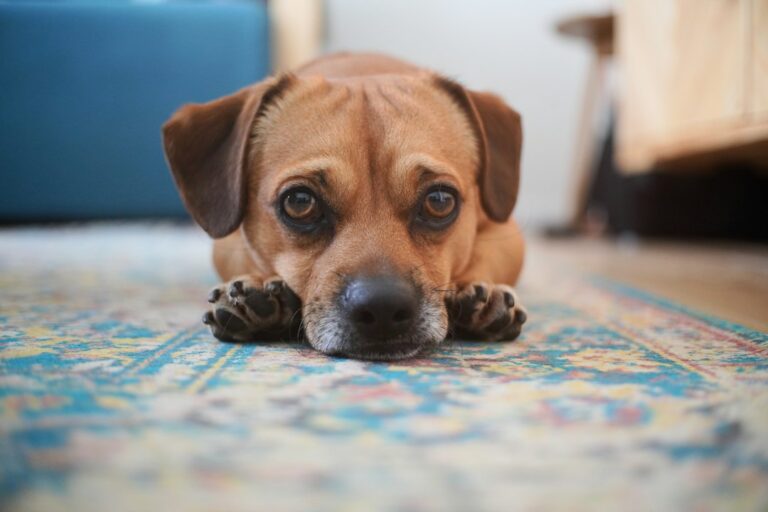
Featured photo: Illustrative dog photo; Mountain Cur and Labrador ancestry is not verified. Kobi Kadosh / Unsplash.