How to Make Dog Like Cat
Being realistic matters when two animals must get along in one home. A dog and cat can become a happy, furry-friend pair, but their quality of life comes first. I have seen one fully grown dog with a strong prey drive learn to live peacefully with a calm cat, but it took a slow process, lots of patience, and clear expectations.
Some pets show aggressive actions, fear, animosity, or even impossible behavior during early introductions. If you are inexperienced, do not fear to seek help from professional dog trainers or a professional dog trainer who can assess limits and build a detailed strategy.
Pets that are raised together, like puppies, kittens, or a young kitten, often show better compatibility, better relationship building, and easier household integration. Still, even adults can learn through gradual introduction, supervised interaction, and strong trust building.
Slow and Safe Introductions
Start in a neutral outdoor area or use separate rooms with baby gates and a small barrier. Keep the dog on a leash at a safe distance while the cat sets pace.
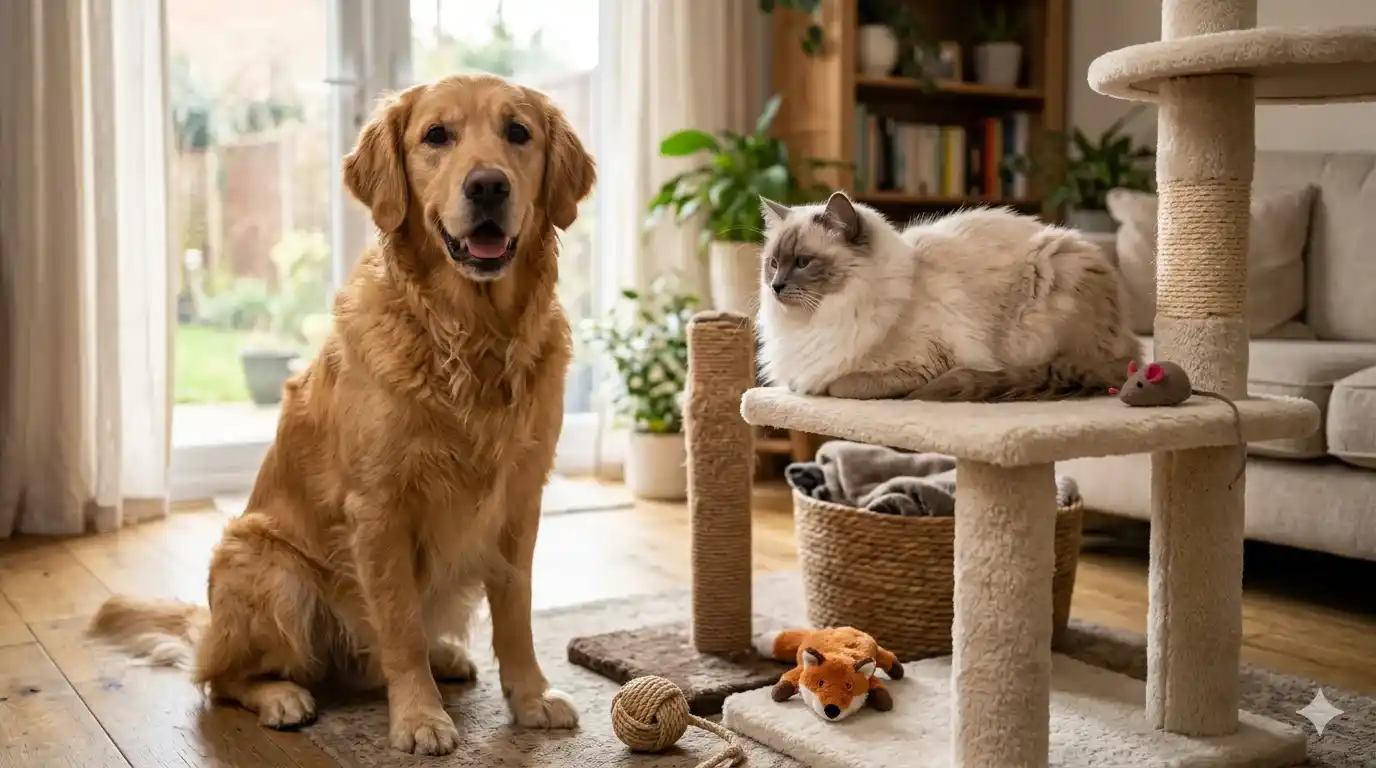
A confident cat needs a safe space, safe zones, escape route, escape places, higher places, cat trees, cat furniture, scratching posts, scratchers, and shelving. Add beds, food bowls, water bowls, litter boxes, a litter box, toys, wand toys, and catnip to help the cat acclimate.
I like using scent swapping, a simple smell test, and letting pets smell dog scent and scents before face meetings. A roaming cat should always have escape access and a dog-free area.
Signs to Watch During Introductions
During a controlled introduction, watch for:
- growling
- whining
- yipping
- pawing
- barking
- lunging
- hissing
- taunting
- chase behavior
- predatory behaviors
These can be a natural reaction linked to territorial behavior and behavioral instincts.
Some pets feel threatened, defensive, distressed, agitated, excited, upset, nervous, or trapped. A desperate animal may lash out or flee.
Stay firm and consistent, using a cautious approach with effective interaction management, strong supervision, and careful monitoring.
Training for Peaceful Coexistence

Good obedience training helps pets coexist peacefully.
Basic Commands and Rewards
First, master basics like:
- sit
- stay
- lie down
- heel
- come when called
These basic commands improve discipline, dog focus, attention control, and reliable obedience.
I used clicker training with one energetic lab and saw huge behavioral progress after daily training sessions. A clicker works as a reward marker and an effective tool for positive reinforcement and reinforcement training.
Say a yes command, then give a reward, treat, favorite treats, turkey, or chicken treats when the dog shows calm behavior, calm demeanor, or reward calmness.
This conditioning and reward system teaches the dog to associate calmness and associate with good things.
Managing Excited Behavior
A tired dog with enough exercise, mental stimulation, snuffle mats, and puzzle toys stays less worked up and more ready for learning.
If the dog starts to chase cat, use:
- leave it
- redirect dog
- remove cat
Good leash control, a loose leash, and careful redirection stop dangerous behavior, destructive behavior, and other unwanted behavior before pets lose focus.
Some dogs are hard-wired to chase small furry things, so training is a high bar and can feel difficult.
Dogs often show funny body language when they feel safe at home. If you want to better understand trust signs and comfort behavior, read our guide on why dogs lay on back and what this cute position really means.
Safe Supervised Meetings
Use crate training only with a crate-trained dog. A crate can help during supervised meetings, calm interaction, and controlled freedom.
Never leave unattended animals together too soon. Keep a close eye on every interaction pace and every behavior correction.
If the dog notices cat and stays calm, use click and treat, rewarded praise, and a soft verbal cue.
Let pets move gradually closer through a gradual transition and gradual exposure. Keep feeding opposite ends of the room with a divider or open door nearby.
Watch body language, communication, and relationship dynamics.
One skittish kitten I worked with started using slow blink, direct eye contact, and quiet sniffing after weeks of socialization, adaptation, and gentle integration.
A scared cat may need more alone time, while an excited dog may need short timeout sessions or small time outs for control excitement.
Building Long-Term Friendship
Real success comes from peaceful coexistence, not forcing instant friendship. Respect boundaries, respect autonomy, and the pet’s animal nature.
Never force a touching moment or push pets into a fast approach. Keep pets in a supervised room and allow a comfortable pace with lots of calm movements, a soothing voice, and a non-threatening voice.
Over time, pets build:
- positive associations
- mutual respect
- tolerance
- harmony
- a sweet bond
I once saw two resident cats and a rescue dog become best friends, play together, exchange little kisses, and act like wrestling mates after several weeks of continue practice and daily practice obedience.
That kind of symbiotic relationship grows from safe interaction, good behavior management, strong supervision training, and plenty of positive attention.
Keeping the Peace Long-Term
Always use realistic expectations. Some pets only tolerate each other, and that is still a win for household peace and emotional comfort.
Never allow prevent chasing rules to slip, or pets may undo progress. Watch for:
- aggression
- avoidance
- intimidation
- hunting behavior
Also watch for signs the cat feels feared.
A cat with claws may defend its territory if it feels cornered. A muzzle may help in rare cases, but there is an unattended muzzle risk, so never leave it on without supervise interactions.
Keep using consistency, calm training, and a strong understanding of feline behavior and canine behavior.
Pets need comfort, confidence, confidence building, animal comfort, and a healthy adjustment period before they can truly coexist, coexist perfectly, or become loving companions.
Some pets even become a role model for each other during kitten play, playful behavior, and gentle affectionate behavior.
With enough patience, safety, behavior management, and trainer guidance, many pets can build lasting relationship reciprocity and happy harmony building inside the home.
FAQs
How long does it take for a dog and cat to get along?
Every pet is different. Some pets need only a few days. Others may need several weeks or a longer adjustment period.
What should I do if my dog keeps chasing my cat?
Use leave it, strong leash control, careful redirection, and reward calm actions with positive reinforcement.
Can older pets still learn to live together?
Yes. Even adults can learn through gradual introduction, supervised interaction, and daily training.
Conclusion
Good results come from patience, consistency, and safe training steps. With proper supervision, clear boundaries, and calm introductions, many pets can build trust, comfort, and peaceful companionship at home.