
Is It Ok for Dogs to Eat Leaves?
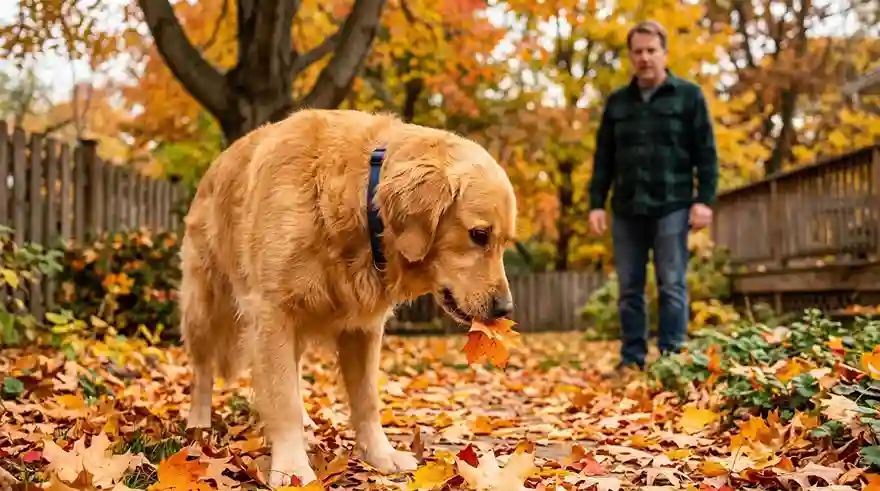
Dogs often eat leaves in the fall, when temperatures start to drop, and dry leaves cover the sidewalk. This dog behavior is common in both young pups and older dogs. Some cases are harmless, but others can become risky and may require veterinary attention.
Why Dogs Eat Leaves and When It Becomes Risky
Natural Dog Behavior and Diet Gaps
During the fall, many trees turn into shades of orange. Dogs may enjoy crunching and munching a stray leaf during a walk or while playing in the yard.
Research on domesticated dog behavior shows that wolves and other wild dogs ate grass and plants when they could not find regular sources of meat. Leaves are not nutritionally dense, but dogs may use them to:
- Fill diet gaps
- Increase fiber intake
- Support nutrition
- Balance diet needs
Some dogs also enjoy the taste and leaf texture.
Dog owners sometimes add dog-friendly herbs and dog-safe vegetables like:
- Carrots
- Peas
- Celery
Some people also grow a small herb garden with:
- Rosemary
- Basil
- Thyme
A healthy complete diet and proper daily meals can help prevent:
- Dietary gaps
- Fiber deficiency
- Dietary deficiency problems
Stomach Problems and Medical Causes
Some dogs start eating leaves because they have:
- Upset stomach
- Stomach nausea
- Gastrointestinal pain
- Digestive discomfort
- Digestive pain
- Gastrointestinal issue
Some dogs try to induce vomiting to relieve discomfort. This may lead to:
- Vomit
- Vomiting behavior
- Vomiting leaves
Large amounts of leaves can cause:
- Blockage
- Intestinal blockage
- Stomach obstruction
- Gastrointestinal blockage
- Digestive problems
This is more risky for:
- Puppies
- Small dogs
- Dogs with an underlying gastrointestinal issue
- Dogs with underlying medical conditions
PICA, Anxiety, and Boredom
Some dogs may have PICA, Pica, or another behavioral disorder that causes non-food consumption of:
- Rocks
- Plastic
- Wood
- Other non-food items
Dogs with puppy teething, anxiety behavior, dog stress, boredom, or attention seeking habits may show:
- Compulsive eating
- Leaf chewing
- Chewing leaves
- Plant eating
I once cared for a bored dog that kept consuming leaves every day until we added more mental stimulation, physical stimulation, and interactive games.
Safe Ways to Stop Leaf-Eating Behavior

Leaf eating is not always dangerous, but it can become very risky.
Dangerous Leaves and Toxic Exposure
Some wet leaves may carry:
- Harmful chemicals
- Pesticides
- Slug slime
- Snail slime
- Worms
- Contaminated leaves with animal stools
Dogs may also eat leaves from:
- Poisonous plants
- Poisonous trees
- Tomato plants
- Tomatoes
- Castor oil plants
- Tulips
- Apple trees
- Peach trees
These toxic plants and toxic leaves may cause:
- Drooling
- Diarrhoea
- Lethargy
- Reduced appetite
- Breathing problems
- Breathing difficulty
- Collapse
- Seizures
- Tremors
- Gastrointestinal bleeding
- Liver failure
- Kidney failure
- Stomach upset
- Organ failure
- Toxic reaction
Dogs may also face:
- Lungworm
- Parasite risk
- Chemical poisoning
- Poison exposure
- Leaf poisoning
- Toxic ingestion
If your dog shows stomach symptoms, vomiting symptoms, appetite issues, or signs of canine sickness, you should:
- Contact vet support
- Speak to a veterinary professional
- Plan a veterinary visit
- Get emergency care and professional advice
How to Stop Dogs From Eating Leaves
Dog owners should discourage this leaf-eating behavior early.
Use:
- Behavioral training
- Dog training
- Behavior correction methods
During outdoor walks and supervised walks:
- Keep a close watch on your dog’s mouths
- Give a stern no
- Use the leave it command
You can also use:
- Walking leash
- Gentle leash correction
- Gentle tug
These methods help redirect attention and redirect behavior.
Some dogs improve after:
- Reward training
- Positive interaction
- Healthy owner interaction
Toys, Exercise, and Mental Stimulation
Give your dog:
- Toy
- Interactive toy
- Chewing toy
- Chewing stick
- Food puzzle
These can distract dogs from chewing foliage and foliage eating.
Extra activities can also help:
- Exercise
- Dog exercise
- Physical activity
- Mental activity
- Play sessions
- Interactive play
- Play engagement
- Outdoor play
- Sniff walks
- Sniffing time
These activities improve canine engagement and help dogs stay calm.
Many dogs also enjoy:
- Playdates
- Training classes
- Dog daycare
- Time with a dog walker
Good dog supervision, better dog focus, and more dog attention can help prevent leaf eating and support long-term canine health and dog safety.
If your dog keeps eating leaves and later gets sick, you may notice signs like vomiting, stomach pain, or digestive upset. Our guide on why does my dog eat leaves and then throw up explains the common causes, warning signs, and when you should contact a vet for help.
FAQs
Can eating leaves make dogs sick?
Yes. Wet leaves, toxic leaves, harmful chemicals, and pesticides can cause digestive problems, toxic ingestion, and serious health issues.
Why do puppies eat leaves?
Puppies may eat leaves because of puppy teething, boredom, curiosity, anxiety behavior, or attention-seeking habits.
When should I contact a vet?
You should contact a vet if your dog shows vomiting symptoms, stomach symptoms, appetite issues, diarrhoea, lethargy, breathing problems, seizures, or signs of canine sickness.
Conclusion
Leaf eating can be normal dog behavior, but it may also point to digestive discomfort, boredom, anxiety, or toxic exposure. Good nutrition, mental stimulation, dog supervision, and early training can help prevent leaf-eating behavior and support better canine health and dog safety.