
Should I Walk My Dogs Separately? Pros & Cons
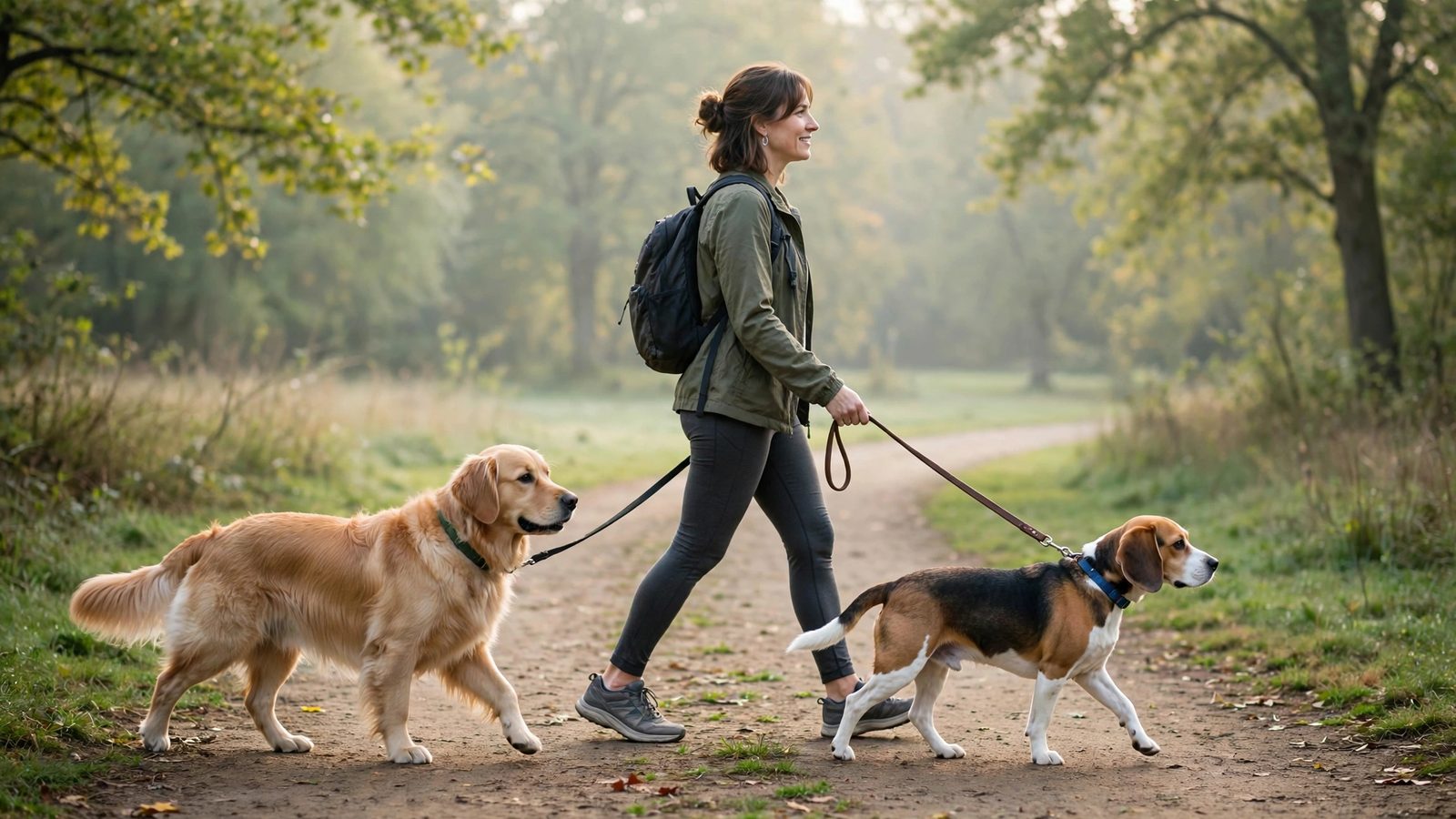
Short answer: Walk your dogs together if they both walk politely on leash and enjoy it — it’s a great time-saver and bonding experience. Walk them separately if one needs training, they have very different exercise needs, or together-walks are stressful for anyone involved. Many multi-dog owners do a hybrid: some walks together, some solo.
Two leashes, one human, zero free hands — walking multiple dogs can feel like a circus act. Whether to split them up or keep the pack together is one of the most practical questions in multi-dog life, and the answer is refreshingly personal.
The Case for Walking Together
- Massive time savings. One 40-minute walk beats two 30-minute walks when your schedule is tight.
- Pack bonding. Walking side by side is a naturally bonding activity — dogs that “migrate” together tend to get along better at home too.
- Social enrichment. Dogs enjoy the company; a solo walk can feel like a demotion to a social dog.
- It’s just more fun. For many owners, the group walk is the highlight of the day.
The Case for Walking Separately
- Real training happens one-on-one. You cannot effectively train loose-leash walking, reactivity, or recall while managing two dogs. The dog that needs work gets 100% of your attention on a solo walk.
- Individual bonding. Each dog gets you all to themselves — especially valuable for a new or insecure dog finding their place.
- Different needs, different walks. A senior who needs a slow sniff stroll and an adolescent who needs a brisk 45 minutes cannot both be happy on the same walk. Neither can a 10-pound dog and an 80-pound puller.
- Safety and control. Two strong dogs reacting to a squirrel can overpower one person. Solo walks are simply safer with large, excitable, or reactive dogs.
- Preventing over-dependence. Puppies raised doing everything together can develop littermate-style over-bonding, becoming anxious when separated. Solo outings build independence.
Decision Framework: Together or Separate?
Walk them together if:
- Both walk politely on leash without constant pulling
- Neither dog is reactive toward people, dogs, or traffic
- Their pace and exercise needs are reasonably similar
- You feel in control and actually enjoy it
- They’re already comfortable and friendly with each other
Walk them separately if:
- One or both pull hard, lunge, or react — you need training time, not a wrestling match
- There’s a big size, age, or energy gap
- One dog is new and still learning the ropes (or the household)
- You have puppies under six months who need individual socialization
- Together-walks leave you stressed instead of refreshed
If you’re on the fence, try this: walk them together for a week and honestly assess. Are both dogs relaxed and happy? Are you? If yes, carry on. If it’s chaos, split them up without guilt.
The Hybrid Approach (What Most Owners Actually Do)
You don’t have to choose one forever. A practical weekly rhythm:
- Weekday mornings: one efficient together-walk before work.
- Evenings or weekends: solo walks for training and bonding — the dog who needs leash work gets a training walk; the easy dog gets a sniffy decompression walk.
- New dog or puppy: mostly separate walks for the first month, gradually adding together-walks as manners improve.
This gives you the time savings of together-walks plus the training and relationship benefits of solo time.
Gear That Makes Together-Walks Work
- A leash coupler or splitter — one handle, two clips. Best for dogs of similar size that walk well.
- A waist-worn leash / hands-free belt — frees your hands and uses your core for control. Excellent for one strong dog.
- Two separate leashes, one per hand — maximum individual control; the standard choice for training walks.
- Front-clip harnesses on pullers reduce the sled-dog effect dramatically.
- A second handler — the gold standard. Two people, two dogs, zero compromises. Recruit a partner, friend, or dog walker for the tricky phases.
For technique — leash handling, positioning, and managing two dogs around distractions — see the best way to walk two dogs together. And since mismatched energy is a top reason to split walks, it’s worth checking how much exercise different dogs need by age to calibrate each dog’s ideal outing.
Special Cases
- Two puppies: Walk separately most of the time. They need to learn to navigate the world as individuals, not as a furry unit.
- One reactive dog: Walk the reactive dog solo for training; walk the easy dog with a partner or at off-peak times. Don’t let the reactive dog rehearse lunging while you’re outnumbered.
- Senior + young dog: Give the senior their gentle stroll and the youngster their real workout separately — then a short together-walk for bonding if they enjoy it.
- Brand-new second dog: Parallel walks (same direction, generous distance, two handlers) are actually a fantastic bonding tool during introductions — just don’t jump to sharing one person’s hands too soon.
A Sample Week: The Hybrid Schedule in Practice
Here’s what a realistic hybrid week looks like for an owner with two dogs — one easy, one still in training:
- Monday–Friday mornings: 30-minute together-walk. The trained dog sets the pace; the trainee practices in real-world conditions with the easy dog as a role model.
- Monday/Wednesday/Friday evenings: 20-minute solo training walk for the dog who pulls — focused loose-leash work with high-value rewards and minimal distractions.
- Tuesday/Thursday evenings: 25-minute solo decompression walk for the easy dog — long leash, sniffing, no agenda. Their well-earned reward for being good.
- Weekend: one long adventure together (a hike or park outing) plus one solo outing per dog.
The total time is about the same as walking both dogs separately every day, but each dog gets targeted attention where it counts. Track the trainee’s progress weekly: as leash manners improve, shift the ratio toward more together-walks. Many owners graduate to mostly group walks within a few months — the separate sessions were simply the training wheels.
Frequently Asked Questions
Will walking them separately make my dogs jealous?
Dogs live in the moment far more than we do. The dog staying home gets a stuffed Kong or a nap; the walking dog gets adventure. Rotate who goes first and keep departures and returns boring, and jealousy is rarely an issue.
How do I walk two dogs that both pull?
Don’t — not together, anyway. Walk them separately with front-clip harnesses and train loose-leash skills one at a time. Combine them only when each walks politely solo. Two pullers together will train you to tolerate pulling.
Is it bad for bonded dogs to be separated on walks?
No. Healthy independence is good for bonded dogs — it prevents separation anxiety and builds each dog’s confidence. Start with short solo outings and build up; most dogs adjust within a week or two.
How long should each walk be?
It depends on the dog, not the pack. As a rule of thumb, most adult dogs thrive on 30–60 minutes of walking daily, split however suits your schedule. Puppies and seniors need less; high-energy breeds need more. Match the walk to the dog in front of you.
Can I walk three or more dogs at once?
Experienced handlers do, but the complexity multiplies fast. Honest rule: if you can’t safely control every dog during a surprise (off-leash dog charges, squirrel, dropped leash), you have too many leashes. Split the group or bring help. The AKC’s dog training advice section has good resources on building the leash skills that make multi-dog walks possible.
What if one dog is reactive and the other isn’t?
Walk them separately, full stop — at least until the reactive dog’s training is solid. Walking a reactive dog alongside a calm companion often backfires: you’re outnumbered when triggers appear, the calm dog may copy the reactive habits, and neither dog gets a good walk. Use the calm dog’s solo walks as your stress-free baseline and the reactive dog’s sessions for focused training.
The Bottom Line
There’s no moral victory in walking dogs together or separately — there’s only what works for your dogs and your life. Walk them together when it’s joyful, split them when it’s not, and mix both across the week. The best walking routine is the one you’ll actually stick with.