
Do Dalmatians Make Good Guard Dogs? An Honest Look
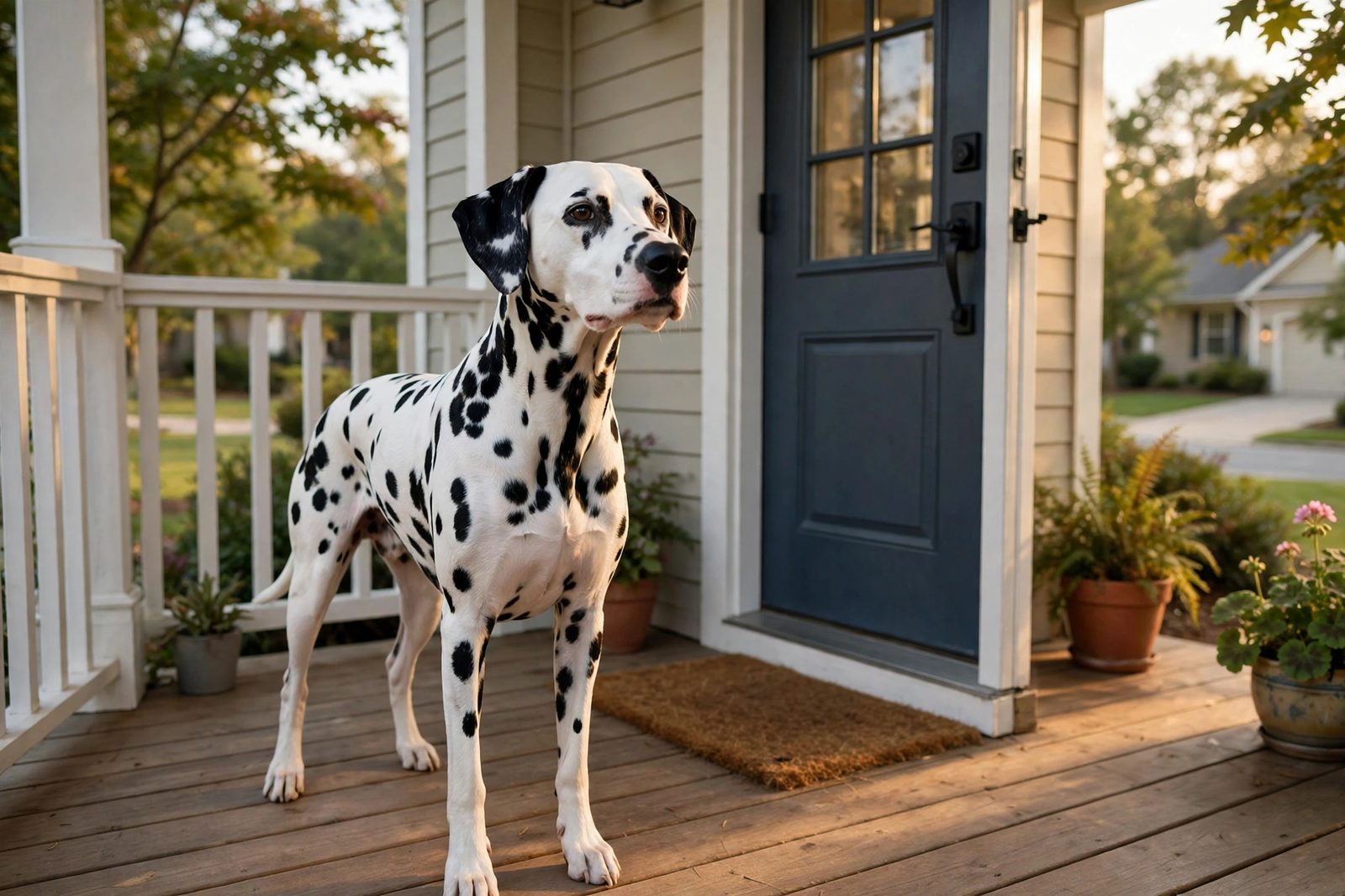
The short answer: Yes — with one important caveat. A Dalmatian makes an excellent watchdog who will notice trouble early and sound the alarm with total confidence, and their size and boldness make them a solid visual deterrent. What they are not is a true protection breed in the mold of a German Shepherd or Rottweiler. If you want a loyal family dog who alerts you, looks the part, and stands its ground beside you, a Dalmatian fits the job. If you want a dog expected to physically engage an intruder, you need a different breed.
Watchdog vs. Guard Dog: A Difference That Matters
People use these terms interchangeably, but they describe two different jobs. A watchdog notices something unusual and alerts you — barking at the stranger at the gate, the odd noise at 2 a.m., the car that slows down outside your house. A guard dog goes a step further: it is expected to confront, deter, and if necessary physically stop a threat.
Dalmatians sit firmly in the watchdog camp, with one foot in the guard dog camp. They are alert, territorial, and brave, and most will instinctively place themselves between their family and a stranger. What they generally lack is the sheer size, stopping power, and ingrained confrontation drive of breeds developed for personal protection. Being honest about that distinction is the key to being happy with one — and it is the point most breed guides gloss over in their rush to call the Dalmatian an “excellent guard dog.”
Bred to Guard: From Coach Dogs to Firehouses
The Dalmatian’s protective instincts are not an accident. Named after Dalmatia, in modern-day Croatia, the breed made its reputation in 17th- and 18th-century England as a coach dog. Dalmatians trotted beside horse-drawn carriages for miles, and when the coach stopped, they guarded the horses, the luggage, and the passengers against highwaymen and thieves. It was real guarding work, done on the move, and it selected for exactly the traits you still see today: stamina, wariness of strangers, loyalty to their people, and the nerve to hold their ground.
That same skill set carried them into American firehouses, where they ran ahead of horse-drawn fire engines to clear the street, calmed the horses at fire scenes, and guarded the equipment and the firehouse itself while crews were away. A breed does not hold jobs like that for two centuries without genuine guarding instinct behind it.
Traits That Make Dalmatians Good Watchdogs
They Are Always on Alert
Dalmatians are observant, high-awareness dogs. They notice changes in their environment — an unfamiliar car, a new person on the street, a gate left open — and they react to them. Very little happens around a Dalmatian’s home without the dog knowing about it first.
A Serious Alarm Bark
Dalmatians are not pointless, yappy barkers. Most are fairly quiet day to day, which makes their alarm bark all the more effective: when a Dalmatian barks at your door, it is loud, deep, and unmistakably serious. For many would-be intruders, that sound alone — from a dog they cannot see — is deterrent enough.
Natural Wariness of Strangers
A well-bred Dalmatian is reserved with people it does not know. It is not hostile, but it does not rush to befriend visitors either. That built-in suspicion is exactly what you want in a dog whose job is to watch your home: friends get announced, and strangers get scrutinized.
Loyalty and Protective Instinct
Dalmatians bond intensely with their families. That loyalty fuels a genuine protective streak — they will bark, posture, and position themselves between their people and anything they judge to be a threat. They are brave dogs who rarely back down from a confrontation they believe matters.
Size and Presence
At roughly 45 to 70 pounds of lean, athletic muscle, a Dalmatian is big enough to make a stranger think twice. Combined with their bold stance and famous spotted coat, they project far more confidence and capability than most medium-sized breeds.
Where Dalmatians Fall Short as Guard Dogs
An honest assessment has to include the limits. First, Dalmatians were bred to deter and repel, not to fight. Most will bark, advance, and hold their ground — but faced with a determined intruder who pushes past the noise, many will not physically engage, and they should never be expected to.
Second, underneath the wariness, most Dalmatians genuinely like people. Once a visitor is welcomed in by you, the “guard dog” often clocks off and asks for attention. That is lovely in a family pet, but it is not security.
Third, there is a breed-specific wrinkle few guides mention: Dalmatians are unusually prone to deafness. Around 8 percent are born deaf in both ears and over 20 percent are deaf in one ear. A partially deaf dog may miss the very sounds a watchdog exists to catch. If guarding ability matters to you, buy only from a breeder who BAER hearing-tests puppies, and ask for the results.
Finally, a Dalmatian is a lot of dog. They need one to two hours of exercise a day, every day. An under-exercised Dalmatian is not a vigilant guardian — it is a bored, destructive roommate who will guard your skirting boards from survival.
Training the Protective Streak in the Right Direction
The same instincts that make a Dalmatian a good watchdog can curdle into overprotectiveness, resource guarding, or fear-based aggression if the dog is under-socialized. The fix is early, thorough socialization: expose your puppy to many people, places, and situations so they learn to distinguish a genuine threat from the mail carrier. Pair that with basic obedience and a reliable “quiet” command, so the alarm bark has an off switch. Dalmatians are intelligent and food-motivated but headstrong, so keep training consistent and reward-based. And never deliberately train a Dalmatian to be aggressive — protection training belongs with specialist breeds and professional handlers, not family pets.
One practical way to polish the watchdog instinct is to train two cues: “watch” and “quiet.” Reward your Dalmatian for one or two alert barks when someone arrives — that barking is the job, after all — then cue “quiet,” and reward the silence generously. Practiced daily at the front door, this turns an excitable alerter into a controlled one who sounds off on cue and settles on cue. Add a solid recall and a “place” command for when guests come in, and you have a watchdog whose instincts work for your household instead of against it.
Is a Dalmatian the Right Guard Dog for Your Home?
Choose a Dalmatian if you are an active household that wants an alert, loyal family dog whose bark and presence will put off opportunistic intruders. Think twice if you are sedentary, away from home all day, or genuinely need personal protection. If real guarding ability is your top priority, read our honest look at whether a German Shepherd is a good dog before you decide — that is a breed built for the full guard dog role. If you would rather have a calmer, gentler family watchdog, it is also worth weighing the pros and cons of a Bernese Mountain Dog. For the official picture of the Dalmatian’s temperament, size, and care needs, see the AKC’s Dalmatian breed profile.
Frequently Asked Questions
Will a Dalmatian protect its owner?
Most Dalmatians will bark, step between their owner and a stranger, and hold their ground. Some may chase off or even nip at someone who grabs their owner. But this is instinct, not trained protection — you should never rely on a Dalmatian to physically stop an attacker.
Do Dalmatians bark a lot?
Not usually. Dalmatians tend to bark with a purpose — at visitors, strangers, and unusual sounds — rather than barking all day. That said, a bored or under-socialized Dalmatian can become a nuisance barker, so training a “quiet” command early is worthwhile.
Are Dalmatians aggressive toward strangers?
They should be reserved, not aggressive. A well-bred, well-socialized Dalmatian watches strangers calmly and warms up once you accept them. Aggression toward visitors usually signals fear or poor socialization, not good guarding, and it needs training help.
Do Dalmatians make good guard dogs for apartments?
Their alertness works anywhere, but apartment life is a challenge: they need a great deal of exercise, and a dog that announces every hallway noise can strain neighbor relations. It can work for committed runners and cyclists, but a Dalmatian is happiest with space to move.
The bottom line: Dalmatians make genuinely good guard dogs of the alert-and-deter kind — vigilant, brave, loyal, and loud when it counts, with two centuries of guarding work behind them. Just go in with clear eyes: you are getting a first-class watchdog with a deterrent presence, not a bodyguard. For most families, that is exactly the right dog for the job.



One Comment