Full Grown Black and White Beagle: Size, Looks & Care
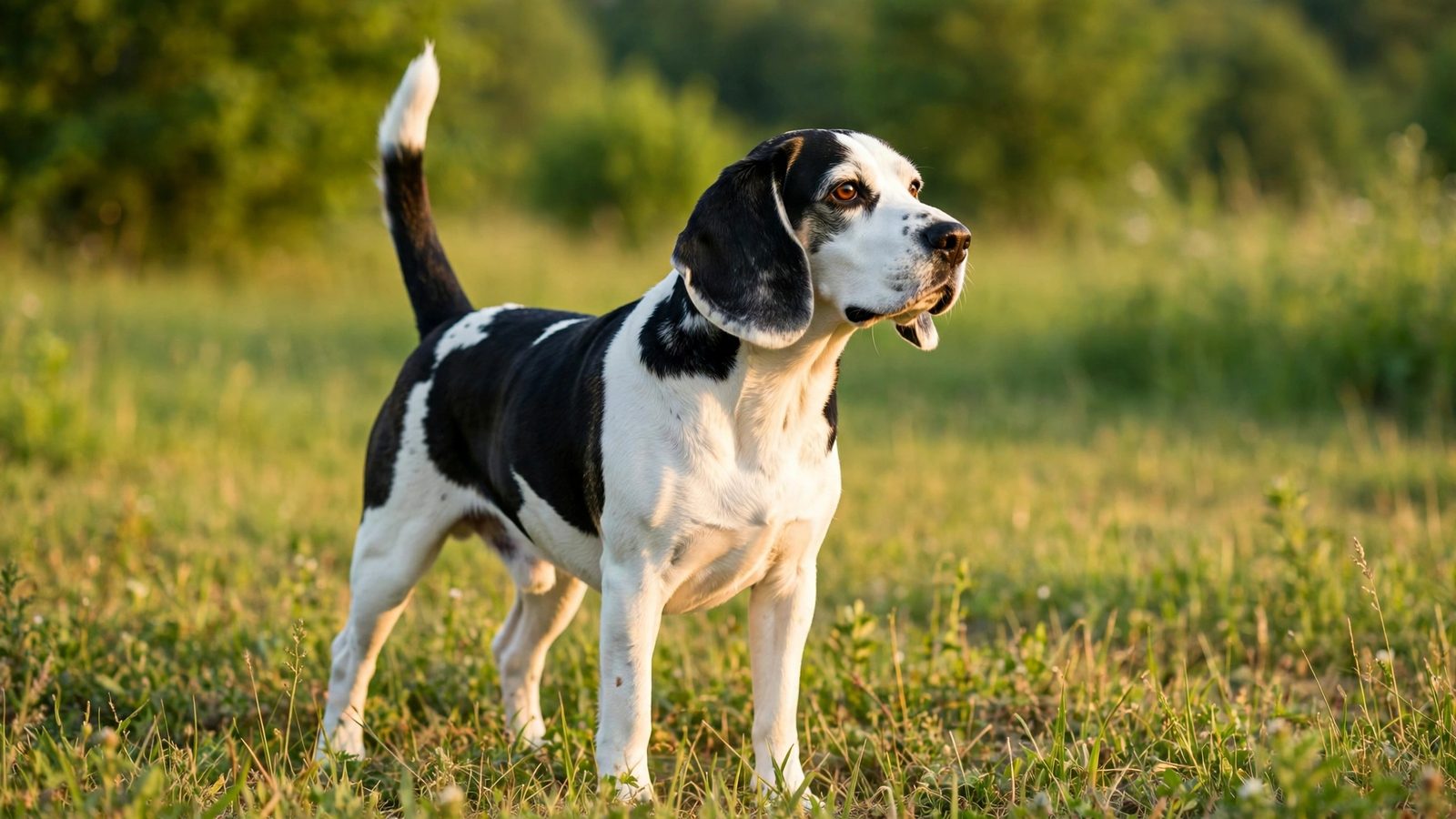
Short answer: A full grown black and white Beagle is a sturdy, medium-small scent hound standing 13–15 inches at the shoulder and weighing roughly 20–25 pounds, with a white base coat marked by distinct black patches — usually a black “saddle” across the back, black ears, and black patches on the body. It’s a recognized two-color variety of the breed. One surprise for new owners: many black-and-white Beagle puppies develop tan or brown markings as they mature, so a “black and white” puppy may become a tricolor adult. Below is the full picture — looks, size, temperament, care, and an honest take on whether this dog fits your life.
What a Black-and-White Beagle Actually Looks Like
Forget the classic tricolor (black, tan, and white) you see in most photos. A black-and-white Beagle carries just two colors: a white base with solid black markings. The pattern varies dog to dog, but the typical layout is a black saddle draped over the back, black covering the ears and often the top of the head, black patches on the body, and white on the legs, chest, muzzle blaze, and the tip of the tail. That white tail tip isn’t decorative trivia — hound breeders call it the “flag,” and it helped hunters spot the dog in tall grass.
The coat itself is the standard Beagle coat: short, dense, smooth, and weather-resistant — a double coat that’s heavier in winter and sheds out in spring. Structurally, a black-and-white Beagle is identical to any other Beagle: broad domed skull, long low-set ears that reach nearly to the nose, square muzzle, soft pleading eyes, deep chest, straight back, and that merry tail carried high.
Do Black-and-White Beagles Change Color as They Grow?
Yes — and this is the single most misunderstood thing about the color. Beagle puppies are frequently born black and white, and the tan or brown markings develop later, typically filling in between a few months and two years of age. A puppy that looks purely black-and-white at eight weeks can easily mature into a tricolor adult as brown “bleeds” into the black areas, especially on the face, legs, and around the saddle edges.
True black-and-white adults do exist — they’re a legitimate two-color variety — but they’re less common than tricolors precisely because so many black-and-white puppies don’t stay that way. If you’re buying a puppy specifically for the black-and-white look, ask the breeder about the parents’ adult coloring and the coloring of previous litters; that’s your best predictor. And be aware that some Beagles keep slowly shifting shade throughout life, occasionally losing black markings almost entirely in old age.
Full Grown Size and Weight
The AKC recognizes two Beagle size varieties, and your dog’s adult size depends on which one they are:
- 13-inch variety: stands under 13 inches at the shoulder, typically around 18–20 pounds full grown.
- 15-inch variety: stands 13–15 inches at the shoulder, typically 20–25 pounds, with sturdy males occasionally reaching the high 20s.
Males run slightly heavier than females. Beagles reach their full height around 8–10 months but keep filling out — adding chest depth and muscle — until about 18 months, so don’t judge the final build too early. Whatever the variety, expect a dog that’s solid and surprisingly dense for its size: a 22-pound Beagle feels heavier than it looks.
One honest warning: Beagles are legendary chowhounds with a food drive that borders on professional. An adult Beagle left to self-regulate will become an overweight Beagle, and extra pounds strain joints and shorten lives. Portion control isn’t optional with this breed — it’s the core of adult weight management.
Temperament: The Merry Hound Personality
Every breed standard describes the Beagle as “merry,” and it’s accurate. Black-and-white Beagles share the breed-wide temperament: cheerful, curious, gentle, and deeply social. They were bred to hunt in packs, which shaped two defining traits — they adore company (human and canine) and they follow their nose with single-minded devotion.
The practical translation: this is a friendly, affectionate family dog that is typically wonderful with children and gets along with other dogs. It’s also a dog that will ignore your recall the instant an interesting scent crosses its path, can be vocal (the famous Beagle bay, plus howling when lonely), and gets destructive when bored or left alone too long. Stubbornness is real — not defiance, exactly, but a hound’s calm prioritization of smells over your instructions. Training works, but it runs on patience, consistency, and high-value treats, not on the Beagle’s desire to please.
Exercise and Care Needs
A full grown Beagle needs at least an hour of real exercise daily — walks, play, and ideally scent-based games that engage the nose. A leashed walk around the block won’t cut it for most young adults; they need to move and sniff. Scent work, “find it” games with hidden treats, and long exploratory walks on a secure leash are the gold standard.
- Containment is non-negotiable. Off-leash in an unfenced area, a Beagle following a scent is gone. Fenced yards and leashes, always.
- Mental exercise matters as much as physical. Puzzle feeders and nose games tire a Beagle faster than mileage alone.
- Grooming is easy: weekly brushing with a hound mitt, more during spring shed; bathe only when dirty. Check those long ears weekly — floppy ears trap moisture and Beagles are prone to ear infections.
- Watch the waistline: measure food, limit treats to 10% of calories, and don’t mistake begging for hunger.
- Health watch: the breed can be prone to epilepsy, hypothyroidism, hip dysplasia, cherry eye, and glaucoma. Regular vet checkups catch most of this early. Lifespan is typically 12–15 years.
Honest Breed Fit: Is a Black-and-White Beagle Right for You?
This dog is a great fit if: you want a cheerful, sturdy, medium-small family companion; you can commit to an hour-plus of daily exercise; you have a fenced yard or are diligent about leashes; you find hound vocalizations charming rather than maddening; and someone is home most of the day (or there’s a second dog for company).
Think twice if: you need reliable off-leash recall, quiet apartment living with thin walls, a low-exercise dog, or a pet that can be left alone 10 hours a day. Also be realistic about the nose: Beagles counter-surf, trash-raid, and steal food with Olympic dedication. If that sounds exhausting rather than funny, the breed will wear you down.
Still comparing breeds? Our pros and cons of the Labrador Retriever covers another classic family choice with a very different energy profile, and our honest answer on German Shepherds walks through the same fit-or-not questions for a larger, more trainable breed. For the breed authority’s own take, the AKC’s Beagle breed guide is an excellent second opinion.
FAQ
Is a black and white Beagle rare?
Genuinely black-and-white adults are less common than tricolors, but not extremely rare — black-and-white is a standard, recognized two-color variety. What is uncommon is a puppy that stays purely black and white into adulthood, since tan markings so often develop with maturity.
Do black and white Beagles shed a lot?
Yes — color doesn’t change the coat. Beagles shed moderately year-round with a heavier shed in spring. Weekly brushing keeps it manageable, but if anyone in the home has dog allergies, know that no Beagle is hypoallergenic.
At what age is a Beagle fully grown?
Height is essentially done by 8–10 months, but most Beagles keep filling out until around 18 months. Mentally, expect puppy-like energy and mischief well into the second year — the body matures faster than the brain.
Are black and white Beagles good with kids?
Generally yes — Beagles are famously patient, sturdy, and playful with children. As with any breed, supervise interactions with small kids, teach children to respect the dog’s food and space, and remember that a Beagle’s mouthiness in play can overwhelm toddlers.
How much does a black and white Beagle puppy cost?
Prices vary widely by region and breeder reputation, but expect pet-quality Beagle puppies from health-tested parents to run several hundred to over a thousand dollars. Color alone shouldn’t command a premium — be wary of any breeder charging extra for “rare” black-and-white coloring without health testing to back it up.
The Bottom Line
A full grown black and white Beagle is a handsome, compact hound — 13 to 15 inches, 20 to 25 pounds of merry, nose-driven energy in a striking two-tone coat. Just remember the color may evolve as your puppy matures, and the dog underneath the coat is 100% classic Beagle: joyful, stubborn, hungry, and happiest with its nose to the ground and its people nearby. If that description makes you smile, you’ll get along famously.