Why Is Puppy Fur So Soft? The Science Explained
The Short Answer
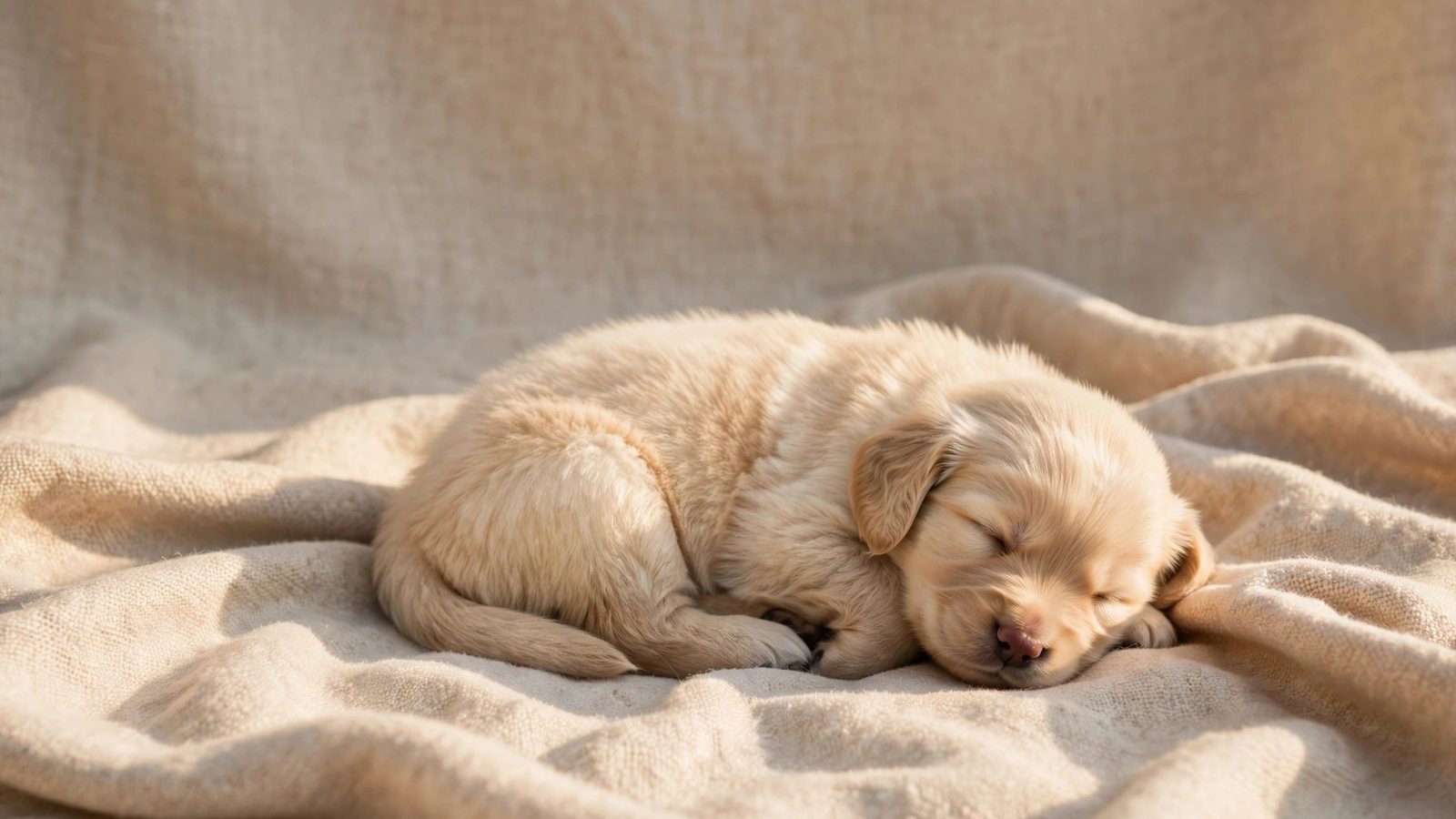
Puppy fur is so soft because it is unfinished. A puppy’s hair follicles are shallow and hold only a handful of fine, downy secondary hairs — the coarse, stiff primary hairs (guard hairs) that give adult coats their texture have not grown in yet. In other words, your puppy is not wearing a complete coat; it is wearing the soft, delicate first draft of one. That cloud-like fluff is by design: it insulates a helpless newborn, protects sensitive skin, and buys time while the tougher adult coat develops underneath.
What Puppy Fur Is Actually Made Of
To understand the softness, you have to look at what is happening inside the skin. Every dog is born with the full number of hair follicles it will ever have — that count never changes. What changes is what each follicle produces.
An adult dog’s follicle holds around 17 hairs: a mix of thick primary hairs (the guard hairs that give the coat its structure, water resistance, and color depth) and finer secondary hairs (the soft undercoat). A newborn puppy’s follicles, by contrast, are shallow and hold only about 7 hairs — all of them soft, fine secondary hairs. The primary hairs are simply absent because the shallow follicle cannot support them yet.
As the puppy grows, each follicle develops deeper into the skin and becomes able to support primary hairs alongside the secondary ones. This is a structural transformation, not just a cosmetic one: the coat goes from a single layer of baby-soft fluff to a complex, multi-textured adult coat. Depending on the breed, the follicles mature at different rates — wool-type coats and fur-bearing breeds tend to mature earlier, while wire coats take longer because wiry guard hairs need the deepest follicles and the longest growing phase to develop their coarse texture.
Why Evolution Made Puppy Fur So Soft
The softness is not just adorable; it is functional. Newborn puppies are essentially helpless — they cannot regulate their body temperature well, they cannot see or hear for the first couple of weeks, and their skin is paper-thin and easily injured.
That fine, downy first coat — sometimes called neonatal hair — does several jobs at once. It traps a layer of warm air against the body, helping the puppy hold onto heat when the mother is not right there providing it. Its softness gives constant tactile feedback, which matters for a creature that navigates the world by touch: the pup can feel the warmth of its mother and the press of its littermates. And it forms a gentle buffer that protects delicate newborn skin from scratches, bites during nursing scrums, and the roughness of the whelping box.
There is also a less scientific but very real function: soft fur invites handling. A puppy that feels irresistible to touch gets picked up, stroked, and checked over by its mother — and by humans. All of that contact supports bonding, socialization, and early health monitoring. Nature, it turns out, is an excellent marketer.
When the Adult Coat Comes In
Nothing soft lasts forever, and the puppy coat is no exception. Most puppies begin shedding their baby coat between 4 and 6 months of age, though the window is wide: the transition can start as early as 12 weeks in some breeds and as late as a year in others. Many dogs complete the change by 10 to 12 months, but some — famously the Pomeranian — can take up to 2 years to grow their full adult coat.
During the transition, new adult hair grows in alongside the old puppy hair, and the change is often visible: the coat may look patchy, ruffled, or shaggy for a few awkward months. Long-haired breed owners even have a name for it: “the uglies.” Do not panic — this is normal. What you are seeing is the deeper follicles coming online and the coarse guard hairs pushing through the baby fluff.
The AKC’s guide to why puppies shed their coats notes that even breeds marketed as non-shedding will shed a small amount as puppies. Color often changes too: Dalmatian spots appear in the first weeks, and breeds like English Setters, Bedlington Terriers, and Shih Tzus can shift color dramatically as the adult coat arrives. In many breeds the adult coat ends up darker than the puppy fluff; in some it goes lighter.
How the Coat Transition Behaves
The changeover is not just visual — you will notice it in your hands and on your floors. A few things to expect:
- The fur stops feeling as soft. As guard hairs come in, the coat becomes denser, thicker, and less fluffy. This is the single biggest texture change of a dog’s life, and it is permanent.
- Shedding increases. The puppy coat has to go somewhere, and it goes everywhere — on your clothes, your couch, and your black trousers. Short-haired breeds often shed more volume than people expect, because their coats are denser than they look.
- Tangles and mats appear. The mix of fine puppy hair and incoming adult hair catches on itself, especially behind the ears, in the armpits, and around the collar. This is the highest-risk period for matting in long-coated breeds.
- The puppy scratches and chews more. Growing hair can be itchy and uncomfortable, and many puppies become mouthy or scratchy during the transition. That is normal — but it is also worth ruling out parasites, since this is the age when puppies are most exposed. If you suspect visitors, here is how to safely treat fleas on an 8-week-old puppy.
Caring for the Coat During the Change
The coat transition is the most important grooming window in your dog’s life. What you do now sets up both the adult coat and your puppy’s lifelong attitude toward being handled. A few practical rules:
- Brush more, not less. Step up brushing frequency during the transition to clear out dead puppy hair and prevent mats before they tighten. Use a soft brush or comb appropriate to the coat type, work gently, and keep sessions short and positive.
- Do not shave or cut the coat mid-transition. Grooming professionals caution against cutting the coat while follicles are changing, because interference can disrupt the delicate cycle. Let the adult coat finish coming in before any major trims.
- Bathe sparingly. A bath with a mild puppy-formulated shampoo helps clear loose hair, but over-bathing strips the natural oils the new coat needs. Lukewarm water, puppy products only, and never human shampoo.
- Feed the coat from the inside. Hair is built from protein, and a growing puppy needs a complete, balanced diet to build a healthy adult coat. Ask your vet or breeder for guidance on what to feed your puppy for healthy growth — nutrition during this window shows up directly in coat quality.
- Build the grooming routine now. Handle paws, ears, and belly regularly, reward calm behavior, and make grooming a normal part of life. A puppy that learns grooming is safe and boring becomes an adult dog that stands quietly for it.
One more note: while the transition is happening, the follicles are on a delicate cycle, and stress can disrupt it. Keep the puppy’s world calm and predictable during heavy coat change — the coat is literally mirroring the body’s stress levels.
Frequently Asked Questions
Will my puppy’s coat change color?
Quite possibly. Many breeds shift shade as the adult coat comes in — often darker, sometimes lighter — and some, like Dalmatians and English Setters, develop entirely new patterns. The puppy color is not a promise.
Does losing the puppy coat mean my puppy will shed forever?
Not necessarily. Puppy shedding and adult shedding are different things. Some puppies shed heavily during the transition and barely shed as adults; others do the reverse. The adult coat’s shedding pattern will not be clear until the transition finishes.
Should I cut my puppy’s fur during the coat change?
It is best to wait until the adult coat has finished coming in. Cutting during the transition can interfere with the follicle cycle and may affect how the adult coat grows.
My puppy’s fur already feels coarser — is something wrong?
Almost certainly not. That coarsening is the guard hairs arriving, and it means the adult coat is developing exactly as it should. Enjoy the last of the fluff while it lasts.
Conclusion
Puppy fur is so soft because it is incomplete: shallow follicles producing only fine, downy secondary hairs, with the coarse guard hairs still waiting in the wings. That softness insulates, protects, and comforts a helpless newborn — and then, between 4 and 12 months, the real coat arrives and the magic gradually fades. Brush through the transition, feed the coat well, and do not mourn the fluff too much: the adult coat may not feel like a cloud, but it is the coat your dog was always meant to wear.