
When Do Male Puppies Start Marking? A Complete Age Guide
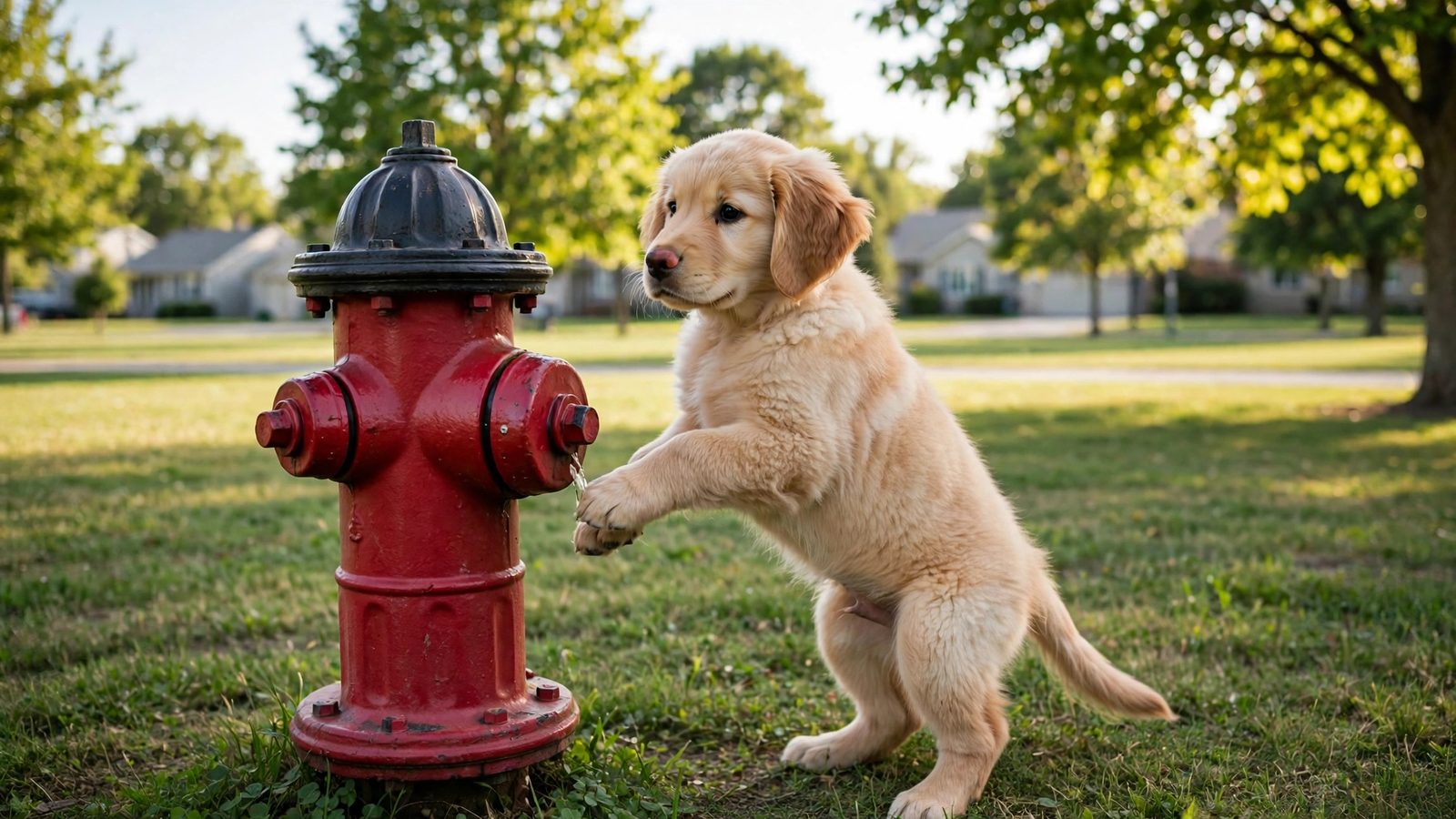
Quick answer: Most male puppies start marking between 6 and 12 months of age, as they approach sexual maturity. Some start as early as 5 months, while others may not begin until closer to a year. Research on puppy development found that by 8 months, about half of puppies were already urine marking, and by 2 years of age, 90 to 95 percent were leg-lifting and marking. If your adolescent male puppy has suddenly started leaving tiny pee spots on furniture, trees, or walls, marking has likely begun.
What Is Urine Marking (and How Is It Different From Peeing)?
Before we talk timing, it helps to understand what marking actually is. Regular urination is about emptying the bladder — your puppy squats or lifts, releases a large amount of urine in one spot, and is done for a while. Urine marking is a form of communication. Your dog deposits small amounts of urine in multiple locations, often on vertical surfaces like trees, poles, bushes, or furniture legs, to leave a scent message for other dogs.
That scent carries information about your dog’s age, sex, health, and reproductive status, picked up by other dogs through their vomeronasal organ — a specialized scent-detecting structure in the roof of the mouth. Think of it as your dog’s version of posting a status update: “I was here.” Unlike the old territorial theories, modern behaviorists note that marking is mostly about communication between dogs rather than strict boundary defense, and it can even reduce the chance of confrontations by letting dogs assess each other from a distance.
The classic posture is the raised-leg stance, which lets a dog aim urine high on a vertical surface so other dogs notice it. But marking doesn’t always involve leg lifting — dogs can mark in a squat or even a handstand-like posture, and studies have identified more than ten different pee postures in dogs. The key identifiers are small volume, multiple spots, and deliberate targeting of interesting locations.
At What Age Do Male Puppies Start Marking?
The widely accepted window is 6 to 12 months, tied to sexual maturity. Here’s how it typically breaks down:
- Under 5 months: Rare. Young puppies squat to pee and are focused on bladder control and house training. Marking before this age is unusual, though it can occasionally appear as early as 3 months in early-maturing individuals.
- 5 to 6 months: The earliest common onset. Hormones begin surging, and you may notice your puppy sniffing vertical surfaces with new intensity. Some owners report the first leg lifts around this age.
- 6 to 9 months: The most common starting window. Testosterone rises, and marking behaviors emerge — especially in intact (unneutered) males, where hormone levels are highest.
- 9 to 12 months: Late bloomers start here. Larger breeds, which mature more slowly overall, often fall into this range.
- Around 2 years: By this point, the vast majority of male dogs (90 to 95 percent) are lifting their legs and marking, according to developmental research.
Several factors influence exactly when your puppy starts: breed and size (smaller breeds often mature faster), individual temperament, environment (exposure to other dogs and their scent marks can accelerate interest), and whether the dog is intact or neutered. Not every male dog marks — some simply never develop the habit, and that’s completely normal.
Early Signs Your Puppy Is About to Start Marking
Marking rarely appears out of nowhere. Watch for these developmental clues in the weeks before it begins:
- Intense sniffing of vertical surfaces. Your puppy starts investigating fire hydrants, fence posts, trees, and furniture legs with unusual focus, as if reading a message board.
- Longer, more deliberate pee stops on walks. Instead of one big squat, your puppy dribbles tiny amounts on several different spots.
- First wobbly leg lifts. Early attempts can look clumsy — a half-raised leg, a lean against the target, or a quick lift-and-drop. Balance improves with practice.
- Increased interest in other dogs’ urine. Your puppy may become fascinated by spots where other dogs have marked, sniffing them thoroughly before adding his own deposit.
If you’re seeing these signs, it’s the ideal time to reinforce house training and decide on your approach to marking — before indoor habits form.
Why Do Male Puppies Mark?
Marking serves several purposes, and understanding the motivation helps you respond appropriately:
- Hormonal development. Rising testosterone at puberty is the primary trigger. This is why intact males mark far more than neutered males, and why marking often coincides with other adolescent behaviors like humping and roaming.
- Communication with other dogs. Urine marks advertise presence, identity, and reproductive status. A male dog’s marking increases dramatically when he detects a female in heat nearby.
- Anxiety and insecurity. Some dogs mark when they feel unsettled — a new home, a new pet, unfamiliar visitors, or seeing strange dogs through the window. Depositing their own scent on novel objects can restore a sense of familiarity and comfort.
- Excitement and novelty. New items in the house, guests’ belongings, or a newly rearranged room can trigger marking simply because they smell unfamiliar.
Importantly, indoor marking is not spite, and it’s not a house-training failure in the usual sense. Punishing your puppy after the fact doesn’t work — he can’t connect your anger now with something he did an hour ago. It also isn’t reliably a dominance display; most marking is about communication and comfort, not challenging you.
Does Neutering Stop Marking?
Neutering is the single most effective intervention for marking, but it’s not a magic fix. Here’s what the evidence says:
- Neutering reduces testosterone, which lowers the hormonal urge to mark. Studies have reported that neutering reduces marking behavior by up to 80 percent in male dogs, and one well-known behaviorist found it ends the habit in about 60 percent of neutered dogs.
- Timing matters: neutering before marking becomes an established habit is more effective than neutering after months of practice. Once marking is a learned routine, hormones are only part of the equation.
- Neutering doesn’t guarantee a cure. Some neutered males continue to mark, especially if the behavior is anxiety-driven or deeply habitual. Intact females and spayed females can also mark, though it’s less common.
Talk to your veterinarian about the right age to neuter your specific dog — recommendations vary by breed and size, since early neutering in large breeds has been linked to joint and other health considerations. Neutering is one tool among several, not a substitute for training and management. For a deeper look at the difference between the two behaviors, see AKC’s guide to the difference between marking and peeing.
How to Manage and Reduce Marking
Whether your puppy is intact or neutered, these practical steps keep marking directed to appropriate places:
- Rule out medical issues first. Frequent small-volume urination can also signal a urinary tract infection or other medical problem. If marking starts suddenly in an adult dog, or is accompanied by straining, blood, or excessive drinking, see your vet before assuming it’s behavioral.
- Clean marked spots with enzymatic cleaner. Regular cleaners leave behind scent traces your dog can still detect. Enzymatic pet-odor removers break down the urine proteins completely, so the spot stops inviting repeat visits.
- Supervise and interrupt calmly. When you catch your puppy starting to mark indoors, interrupt with a neutral sound (a clap or a cheerful “oops!”) and immediately take him outside. Praise and reward him warmly if he finishes outdoors. Never punish after the fact.
- Block access to favorite spots. Use baby gates, closed doors, or exercise pens to limit access to previously marked furniture or rooms while you’re retraining.
- Reward outdoor elimination generously. Every successful outdoor pee earns praise or a treat. You’re building a strong habit of “outside is the bathroom,” which competes with the urge to mark inside.
- Consider belly bands as a management tool. These wrap around a male dog’s midsection and catch urine if he marks indoors. They don’t train the behavior away, but they protect your furniture while training takes effect.
- Reduce anxiety triggers. If marking follows changes — a new pet, houseguests, construction noise — address the stress with routine, exercise, and gradual introductions. A secure dog marks less.
- Keep up the training fundamentals. Adolescence is when many owners relax training just as hormones ramp up. Sticking with proven techniques to get your puppy to listen through the teenage months pays off across every behavior, including marking.
Remember that puppies mature on different timelines — just as how long you can leave a 4-month-old puppy alone depends on the individual dog, so does the exact onset of marking. Patience and consistency beat frustration every time.
Frequently Asked Questions
Do all male puppies eventually start marking?
No. While the large majority do — around 90 to 95 percent by age two — some male dogs never develop marking behavior. Individual temperament, training, and environment all play a role. A male dog that never marks is perfectly normal.
Can a neutered puppy still start marking?
Yes. Neutering greatly reduces the hormonal drive, but neutered males can still mark, especially in response to anxiety, novel scents, or established habit. Marking in neutered dogs is usually less frequent and less intense than in intact males.
Is marking the same as a house-training accident?
No. A house-training accident is a full bladder release in one spot because the puppy couldn’t or didn’t hold it. Marking is deliberate: small amounts of urine in multiple locations, often on vertical surfaces. They need different responses — accidents call for more frequent outings, while marking calls for management plus retraining.
Should I punish my puppy for marking indoors?
No. Punishment after the fact doesn’t teach anything — your puppy can’t connect your reaction to something he did earlier. It can also increase anxiety, which may actually worsen marking. Interrupt calmly if you catch him in the act, redirect outside, and reward the right choice.
Will my puppy outgrow marking on his own?
Some dogs do settle down as they mature, but many don’t — marking that goes unaddressed often becomes a lifelong habit. The best outcomes come from managing it early with training, supervision, and (if you choose) neutering at the age your vet recommends.
Conclusion
Most male puppies begin marking between 6 and 12 months of age as hormones surge, with the first leg lifts often appearing around 6 months. It’s a normal, communication-driven behavior — not defiance — but it still needs managing so it doesn’t move indoors. Watch for the early signs, keep enzymatic cleaner on hand, reinforce outdoor bathroom habits, and talk to your vet about neutering timing. With consistent guidance through adolescence, most dogs learn exactly where their “messages” belong: outside.