
Can I Put a Muzzle on My Dog to Stop Barking?
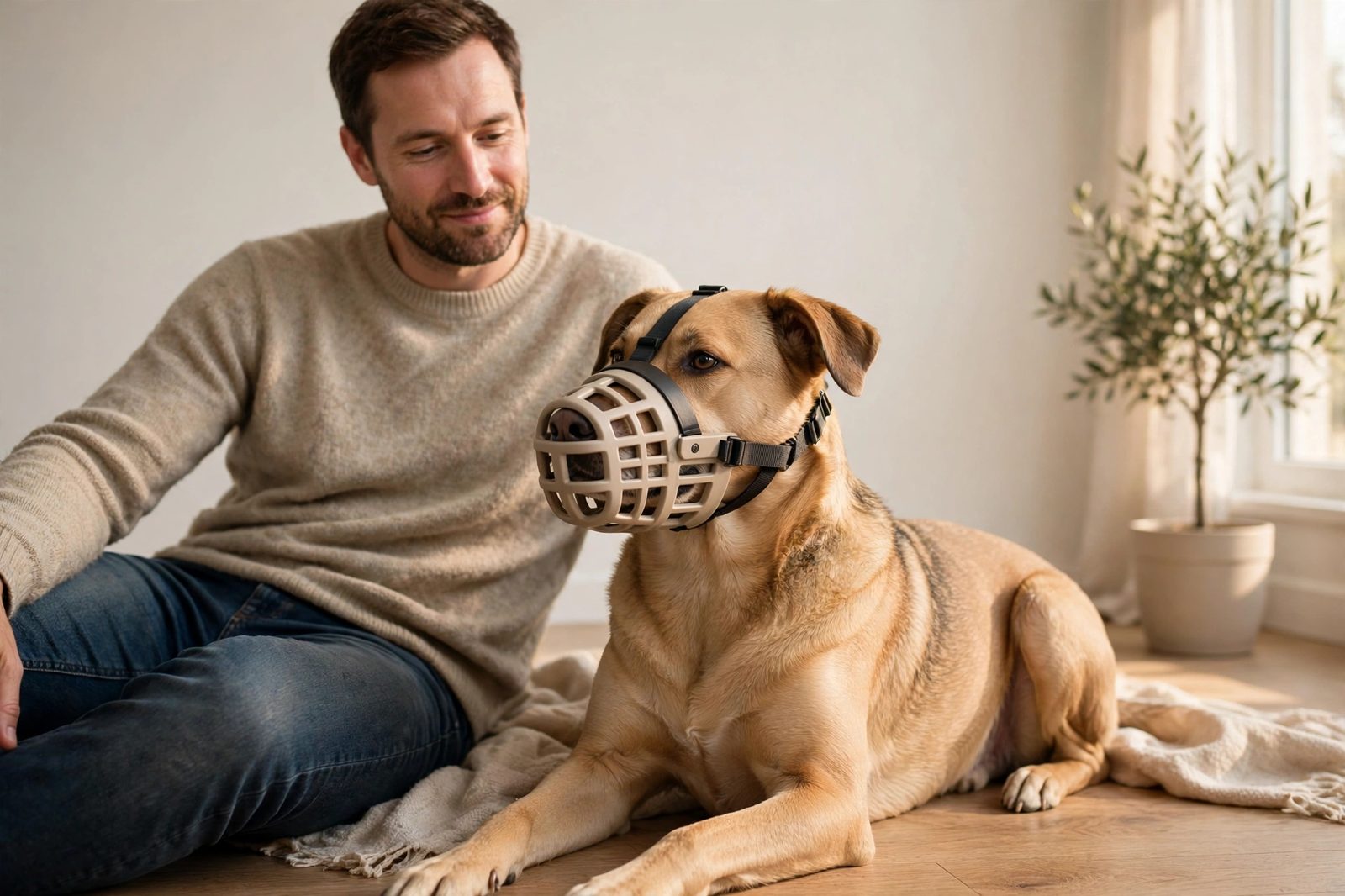
Short answer: No — a muzzle is not a safe or effective way to stop barking. A tight muzzle that holds the mouth shut prevents panting, drinking, and cooling, which can cause overheating and panic, and it does nothing about why your dog is barking. A basket muzzle still lets a dog bark, just more quietly. If barking is the problem, fix the cause; save muzzles for the safety jobs they were designed for.
Why a Muzzle Seems Like It Should Work (But Doesn’t)
The logic is tempting: barking needs an open mouth, so closing the mouth should stop the bark. In practice, dogs bark through basket muzzles quite happily — the sound is muffled, not eliminated — and a fabric muzzle tight enough to truly silence a dog is tight enough to be dangerous. Dogs cool themselves mainly by panting, and a dog that cannot open its mouth cannot regulate its temperature. On a warm day, or during excitement, that can escalate to heatstroke frighteningly fast.
There is a second problem: muzzling the symptom leaves the cause untouched. A dog barking from fear, boredom, territorial instinct, or separation anxiety still feels exactly the same with a muzzle on — it just cannot express it. That frustration often comes out sideways: more anxiety, redirected chewing or scratching, or worse behavior once the muzzle comes off. You have not trained anything; you have only pressed mute.
The Safety Risks Are Real
- Overheating: A dog that cannot pant cannot cool down. Never muzzle a dog for extended periods, in warm weather, or during exercise.
- Panic and injury: Dogs often paw frantically at muzzles, risking nail injuries, mouth sores, and choking if the muzzle shifts. An unsupervised muzzled dog is at genuine risk.
- Blocked vomiting: A dog that vomits while wearing a tight muzzle can aspirate, which is a medical emergency.
- Damaged trust: Using a muzzle as punishment teaches your dog that you are unpredictable and that its communication gets punished — which makes future behavior problems more likely, not less.
Veterinarians and behavior professionals are consistent on this point: muzzles are safety equipment for specific, short-term situations, not behavior modification tools. For a veterinary perspective on bark-control products and why cause-first approaches win, see VCA’s guide to behavior management products for dogs.
When Muzzles ARE Appropriate
Muzzles have legitimate, important uses — just not bark suppression:
- Vet visits and grooming: A frightened or painful dog may bite during handling. A basket muzzle keeps everyone safe for the duration of the procedure.
- Emergency first aid: An injured dog in pain may snap at even a beloved owner. A muzzle allows safe handling and transport.
- Bite-risk management: Dogs with a bite history may wear a basket muzzle in public or during training sessions while behavior work progresses.
- Preventing scavenging: Some dogs wear basket muzzles on walks to stop them eating dangerous items — while still being able to pant, drink, and take treats.
In all of these cases, the right tool is a properly fitted basket muzzle that allows panting, drinking, and treat-taking — and the dog should be gradually conditioned to enjoy wearing it, not have it strapped on as a surprise.
What Actually Fixes Barking
Barking is communication, and the fix depends on what your dog is saying. Start by identifying the pattern:
Territorial and alarm barking
Barking at passersby, the doorbell, or visitors is the most common type. Management helps immediately: block the view with window film or curtains, and teach a “quiet” cue by rewarding silence after the first few barks. Desensitization — pairing the trigger (a person passing) with treats at a distance — gradually changes your dog’s emotional response. Our guide on why dogs bark at the doorbell walks through a practical plan for this exact pattern.
Boredom barking
A dog left alone in a yard with nothing to do will bark to entertain itself. The fix is unglamorous: more exercise, puzzle feeders, training sessions, and companionship. A tired dog with a full enrichment menu rarely barks for hours.
Separation anxiety barking
Barking that starts soon after you leave, paired with pacing, destruction near exits, or house soiling, is distress, not disobedience. Punishing it — with a muzzle or anything else — makes it worse. Gradual alone-time training and, in serious cases, veterinary help are the real solutions.
Attention-seeking barking
If barking reliably produces attention (even scolding), your dog has learned that barking works. The fix is to reward quiet behavior generously and to stop reinforcing the bark — no eye contact, no talking, no touching during barking episodes, and attention the moment silence arrives.
Before reaching for any device, it is worth understanding how the various anti-bark products actually work — our explainer on how anti bark devices work covers ultrasonic, citronella, and vibration options honestly, including their limits.
How to Muzzle-Train Properly (For the Right Reasons)
If your dog needs a muzzle for vet visits or safety, condition it positively: smear peanut butter inside the basket muzzle, let your dog eat from it voluntarily, then gradually build up to buckling it for seconds, then minutes, always paired with treats. A dog that happily shoves its nose into its muzzle is a dog you can keep safe without a wrestling match. Never use muzzle training as a punishment, and never leave a muzzled dog unattended.
Bark Collars and Other Devices: A Quick Reality Check
Owners who rule out muzzles often ask about bark collars next, and the honest answer is similar: devices that punish barking without addressing the cause tend to disappoint. Citronella collars interrupt some dogs briefly but lose effectiveness as the dog habituates, and they do nothing for fear-based or anxiety-based barking — in fact, adding an unpleasant sensation to an already anxious dog can make the anxiety worse. Ultrasonic devices are inconsistent across dogs and environments. Vibration collars can interrupt a bark in the moment, which is useful as a training aid when paired with rewards for quiet, but as a standalone fix they are just a quieter version of the muzzle problem: suppressing the signal while the cause remains. Any device works best as a brief interruption tool inside a real training plan, never as the plan itself.
Working With a Professional
If barking is severe, sudden, or paired with aggression, fear, or destruction, bring in help early rather than after months of frustration. A certified professional dog trainer or veterinary behaviorist will start where you should: identifying the trigger, checking for pain or medical contributors, and building a desensitization and counter-conditioning plan at your dog’s pace. Professional help is not an admission of failure — barking cases are among the most common reasons owners seek trainers, and a few sessions often resolve what months of guessing could not. Ask any prospective trainer about their methods; a good one uses rewards and management, not intimidation, and will never recommend muzzling a dog to silence it.
One more point worth stating plainly: if a neighbor, landlord, or family member is pressuring you to muzzle a barking dog, that pressure is understandable — barking affects everyone nearby — but the pressure does not make muzzling safe or effective. A better short-term compromise is management: bring the dog inside during peak trigger times, use white noise, and block window views while you work on training. Those steps reduce the noise your neighbors hear without putting your dog at risk, and they buy you the time a real fix needs.
Conclusion
So, can you put a muzzle on your dog to stop barking? Technically you can strap one on — but it will not stop the barking safely, it will not fix the cause, and it risks your dog’s health and your relationship with them. Treat barking as information, find the reason, and train the fix. Keep the muzzle for what it is good at: keeping everyone safe during the moments that genuinely require it.
Frequently Asked Questions
Does a basket muzzle stop barking?
No. A properly fitted basket muzzle allows panting and vocalizing, so a dog can still bark — just more quietly. That is by design: basket muzzles are safety tools, not silence tools.
Can I leave a muzzle on my dog while I’m at work?
Absolutely not. Muzzled dogs must always be supervised. Unattended muzzled dogs risk overheating, panic injuries, and aspiration if they vomit.
Is it cruel to muzzle a dog?
A well-fitted basket muzzle, introduced with positive conditioning and used briefly for safety, is not cruel. Using a tight fabric muzzle for hours to suppress barking is a different story and can be dangerous.
What should I do instead of muzzling a barking dog?
Identify the barking trigger, manage the environment (block views, add white noise), train a “quiet” cue with rewards, increase exercise and enrichment, and consult a certified trainer or veterinary behaviorist if the barking is severe or sudden.