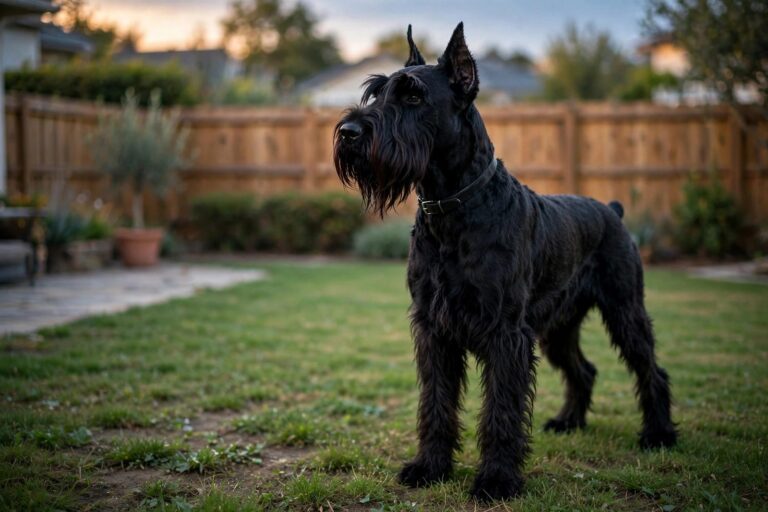
Why Do Dogs Bark at People They Know? 6 Real Reasons

When dogs bark at people they know, it is almost never a case of forgotten friendship. The usual reasons are greeting excitement that overflows into noise, demand barking that has been accidentally rewarded, an alarm habit that fires before recognition catches up, a familiar person who suddenly looks or smells different, a well-rehearsed territorial routine — or, occasionally, a health change worth a vet visit. Reading your dog’s body language tells you which one you are dealing with.
Reason 1: Greeting Excitement — They DO Like Them
The most common answer is the happiest one: your dog is thrilled. A friend or family member arrives, arousal spikes, and the feelings come out as barking. The body language gives it away — a loose, wiggly body, a tail sweeping in wide circles, ears in their natural position, maybe a play bow or a toy grabbed and paraded around. This is greeting barking, and it is the mirror image of fear barking: stiff body, weight shifted backward, tail tucked or flagged high and tight, barking that gets harsher as the person comes closer. If the whole dog looks like a wiggling comma, you are hearing joy, not warning.
Reason 2: Demand Barking — Because It Works
Dogs are superb students of cause and effect. If barking at Grandpa reliably produces petting, treats, or a game of fetch, your dog has learned that barking at Grandpa is the button that makes good things happen — and they will press it, loudly, at every visit. Demand barking has a distinctive style: the dog barks while looking directly at the person, pauses to check whether it worked, and barks again. It is aimed at people the dog knows precisely because those are the people who have paid out before. Strangers rarely reinforce the behavior, so dogs rarely bother demanding at them.
Reason 3: The Alarm Habit — Bark First, Recognize Second
Many dogs run a simple home-security script: sound at the door equals bark, full stop. The barking starts at the noise — a key in the lock, footsteps, a car door — several seconds before your dog has identified who is arriving. By the time recognition lands (“oh, it’s you!”), the barking has already happened, and momentum plus excitement carries it a few beats longer. This is exactly the sequence behind why dogs bark at the doorbell: the trigger is the event, not the person. If your dog barks at family members only at the moment of arrival and settles within seconds, this habit — not any feelings about the person — is your explanation.
Reason 4: Something About Them Looks Different Today
Dogs recognize people as a whole picture: silhouette, movement, voice, and scent together. Change one element and a familiar person can briefly register as a stranger. A neighbor your dog adores becomes suspicious in a bulky coat and hat; a family member comes home smelling of another dog, a hospital, or a bonfire; your teenager walks in wearing a Halloween mask. The barking usually stops the moment the person speaks or the dog gets close enough to catch the full scent — and that fast resolution is your clue. This overlap with why dogs bark at certain people is no coincidence: the underlying mechanism, reacting to an unfamiliar-looking human shape, is the same.
Reason 5: The Territorial Routine With Regulars
Some familiar people get barked at precisely because they are regulars in a routine your dog finds deeply satisfying. The mail carrier is the classic example: the dog barks, the “intruder” leaves, and from the dog’s point of view the barking worked — every single day. Delivery drivers, the neighbor who walks past the fence at six each evening, and the cat next door all star in versions of this loop. The dog may like these people perfectly well in any other context; at the fence or the front window, the territorial script runs on autopilot. The AKC’s guide to why dogs bark makes the broader point that barking serves many different purposes — greeting, play, alerting, and learned reward-seeking among them — and that repeatedly rewarded barking becomes a habit dogs deploy on purpose.
Reason 6: When It Is Not Social at All
Sometimes a change in barking is a medical message. A dog who suddenly starts barking at family members may be in pain and guarding themselves against being jostled or touched. Senior dogs can bark at familiar people during episodes of confusion from canine cognitive dysfunction, especially in the evening. Dogs losing their sight or hearing are also more easily startled by people “appearing” beside them, and startle barks can sound sharp and uncharacteristic. Any sudden change in whom your dog barks at — especially paired with appetite, sleep, or mobility changes — deserves a vet visit before any training plan.
How This Differs From Stranger Barking
Stranger barking is usually driven by uncertainty: fear, territorial defense, or frustration at a barrier. Familiar-person barking is usually driven by arousal and habit: excitement, demands, and routines. The training implications differ too. Stranger barking calls for careful desensitization and distance. Familiar-person barking usually responds to management and manners — a settle cue at the door, guests who wait for four paws on the floor before greeting, and a strict household policy of never paying a demand bark with attention. In both cases, punishment is counterproductive: yelling at a barking dog mostly sounds, to the dog, like you joining in.
Read the Whole Dog: Quick Body-Language Clues
The bark itself rarely tells the story — the body behind it does. Use these quick checks to sort friendly noise from a dog who needs help:
- Loose and wiggly, tail sweeping wide: excitement and greeting. This dog is happy and needs manners, not worry.
- Barking with pauses, glancing at you or the person: demand barking. The dog is checking whether the button worked yet.
- Stiff body, weight forward, hard stare, barking that deepens as someone approaches: territorial or guarding arousal. Give the dog distance and a job elsewhere.
- Weight back, ears pinned, tail low, barking mixed with retreating: fear. Do not force greetings; let the dog approach in their own time.
- Sudden change from the dog’s normal pattern at any age: think pain, senses, or cognition first, and book the vet before the trainer.
Calming the Greetings Down
- Reward the quiet seconds. When your dog notices an arrival and stays silent — even briefly — mark and treat. You are buying the behavior you want more of.
- Install a greeting routine. A practiced “go to your bed” when the door opens gives excitement a job. Release the dog to say hello once they have settled.
- Brief your visitors. No eye contact, petting, or play until the barking stops; then greet calmly. Aroused greetings from humans refill the dog’s excitement tank.
- Exercise earlier in the day. A dog who has run, sniffed, and played has a smaller arousal spike to spend on arrivals.
Frequently Asked Questions
Why does my dog bark at my partner when they come home, but not at me?
Usually a mix of routine and reinforcement: one person’s arrival may predict walks, play, or feeding, making it more exciting, and that person may also (often accidentally) reward the noise with attention. A shared arrival routine — calm entry, settle cue, greeting after quiet — levels things out quickly.
Why does my dog bark at one specific family member?
Look for what is different about that person or their pattern: they arrive at exciting times, wear uniforms or hats, play the roughest games, or are the household’s most reliable treat dispenser. Less commonly, the dog is guarding a resting spot or feeling sore when handled — if the barking comes with stiffness or growling, book a vet check.
Should I punish my dog for barking at guests we know?
No. Punishment does not address excitement or habit, and with any fear component mixed in it makes things worse. Reward quiet behavior, give your dog a trained job at the door, and manage greetings so the barking never gets the payoff that keeps it alive.
When should barking at familiar people worry me?
When it is new, escalating, or paired with other changes — growling, snapping, hiding, appetite or sleep changes, or confusion in a senior dog. That combination calls for a vet visit first, and a certified behavior professional if the vet finds nothing medical.
The Bottom Line
Barking at familiar faces is rarely a relationship problem. It is usually excitement with no off switch, a demand that has been paid too many times, or an alarm habit that fires before recognition does. Read the body language, stop rewarding the noise, give arrivals a calmer script — and check with your vet if the behavior is new. Your dog knows exactly who these people are; they are just saying it very, very loudly.