Do Giant Schnauzers Bark a Lot? Breed Truth Revealed
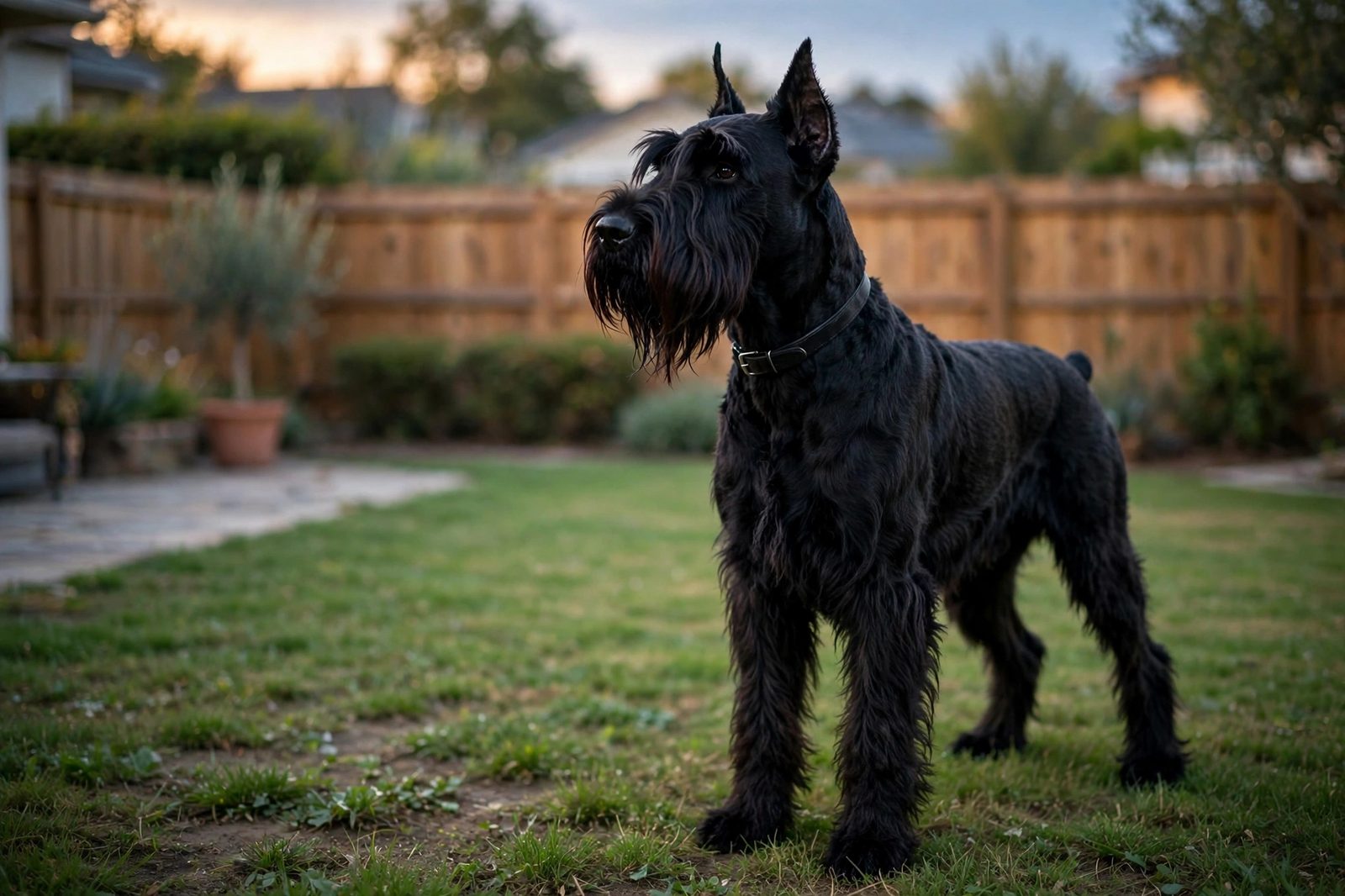
Do Giant Schnauzers bark a lot? No — Giant Schnauzers are moderate barkers. They are alert, territorial watchdogs that bark with purpose: at strangers approaching, at unusual sounds, at genuine disturbances. They do not tend to bark incessantly or “for fun” the way some smaller breeds do. But there is a catch: a bored, under-exercised Giant Schnauzer can become a very loud problem, because this is a powerful, high-energy working breed that expresses frustration vocally.
Here is the full breed truth on Giant Schnauzer barking, when it becomes excessive, and how to keep it under control.
The Honest Answer: Moderate, Purposeful Barking
Every breed source agrees on the same description. Giant Schnauzers bark a moderate amount — noticeably less than their Miniature Schnauzer cousins, who are famously vocal. The Giant’s barking profile looks like this:
- Alert barking: yes. Strangers at the door, deliveries, unfamiliar people near the property — a Giant Schnauzer will announce all of it, loudly. This is the breed doing the job it was developed for.
- Territorial barking: yes. They are naturally protective of home and family and were bred as guard and cattle-driving dogs. Expect strong opinions about the territory line.
- Boredom barking: only if neglected. A well-exercised Giant is typically quiet indoors. An under-stimulated one can bark for hours.
- Demand barking: trainable out. Like any intelligent breed, they learn fast that barking gets attention — if you let it.
Their bark itself deserves mention: deep, booming, and intimidating. One authoritative “woof” from a 90-pound Giant Schnauzer ends most doorstep conversations. That is exactly why the breed excels at deterrence — they rarely need to say much.
Why Giant Schnauzers Bark: The Breed Roots
Giant Schnauzers were developed in 19th-century Germany as all-around farm dogs: driving cattle to market, guarding property, and later serving as police and military dogs. Every one of those jobs selected for the same trait — discriminating alertness. A cattle drover’s dog that barked at everything would be useless; one that barked at genuine threats was invaluable.
That heritage is still in the modern dog. Compared to breeds selected purely for companionship, Giants assess before they vocalize. They are confident rather than nervous barkers, which is why their barking usually has a trigger you can identify — unlike anxiety-driven barking that seems to come from nowhere.
For a sense of how this compares across breeds, see whether Bull Terriers bark a lot — another powerful breed with a very different vocal profile.
When Giant Schnauzer Barking Becomes a Problem
Three scenarios turn a moderate barker into a neighborhood issue:
1. Insufficient exercise
Giants need at least an hour of vigorous daily exercise — running, training, dog sports — plus mental work. An under-exercised Giant doesn’t just get bored; it gets frustrated, and frustration in this breed comes out as sustained, powerful barking, often combined with destructive chewing and digging.
2. Isolation and boredom
Giant Schnauzers bond intensely with their families and hate being ignored or left alone in a yard all day. A lonely Giant will bark to hear itself think. This breed needs to live as part of the household, not as a yard ornament.
3. Reinforced alert barking
Every time the dog barks at the window and the “threat” (mail carrier, jogger) leaves, the dog concludes its barking worked. Without training, alert barking escalates into barking at every passerby. The fix is teaching a “thank you, quiet” routine: acknowledge the alert, then cue and reward silence.
How to Keep Barking at Healthy Levels
- Exercise first: A tired Giant is a quiet Giant. Prioritize vigorous daily activity before expecting calm behavior.
- Train “quiet” early: Let the dog alert (two to three barks), say “thank you,” then cue “quiet” and reward silence. You are not punishing the watchdog instinct — you are putting an off-switch on it.
- Socialize broadly: Giants are naturally wary of strangers. Positive exposure to many people during puppyhood prevents the fear-based barking that plagues under-socialized guard breeds.
- Manage the view: If window barking is the issue, frosted window film or restricted access beats scolding every time.
- Don’t yell: Shouting at a barking Giant reads as you barking along. It confirms that the situation warrants noise.
If your Giant’s barking focuses on specific people, our guide to why dogs bark at certain people explains the discrimination behind it and how to desensitize.
Giant Schnauzer vs. Other Schnauzers: Barking Compared
It helps to know where the Giant sits in its own family. Miniature Schnauzers are among the most vocal small breeds — alert, excitable, quick to sound off. Standard Schnauzers sit in the middle. Giants are the quietest of the three, which surprises people who assume bigger means louder. Size gave the Giant confidence; it doesn’t need to announce itself constantly.
The AKC’s Giant Schnauzer facts cover more of what makes this Working Group breed distinct — including the guarding instincts that drive most of their vocal behavior.
Teaching the “Quiet” Cue: A 2-Week Protocol
Giant Schnauzers take to this training well because it gives their watchdog instinct a job with an off-switch. You’ll need high-value treats and a consistent trigger to practice with (the doorbell is perfect).
Days 1-3: Capture the silence
Let the dog bark two or three times at a real trigger. The instant there’s a natural pause — even half a second — say “quiet,” mark it, and deliver a treat. You’re not stopping the bark; you’re paying the pause. Repeat ten times a day.
Days 4-7: Name it earlier
Start saying “quiet” right as the barking begins, then reward the moment the dog stops to process your voice. If the dog barks through the cue, you need better treats or a less exciting trigger — go back a step rather than repeating the cue louder.
Days 8-11: Add duration
Require two seconds of silence before the treat, then five, then ten. If the dog breaks, calmly reset — no scolding. Practice in different rooms and with different triggers so the cue generalizes.
Days 12-14: Proof it
Test at the front door with a helper ringing the bell. Reward a single alert bark followed by quiet. That’s the finished product: a Giant Schnauzer that announces and then stands down on command.
Common mistake: saying “quiet” while the dog is mid-bark and then treating when it eventually stops minutes later. The dog learns nothing except that barking eventually earns treats. Timing is everything — mark the exact second of silence.
4. Under-socialization
A Giant Schnauzer that wasn’t broadly socialized as a puppy often becomes a fear-barker as an adult — sounding off at anything unfamiliar because novelty itself feels threatening. This is different from confident alert barking: the body language is tense and worried rather than bold, and the barking continues long after the trigger is gone. Fear-based barking needs desensitization and counter-conditioning, not correction. If your adult Giant barks anxiously at everyday things, a certified behavior consultant is a better investment than any quick fix.
FAQ
Are Giant Schnauzers good apartment dogs regarding noise?
They can work in apartments only with very committed exercise routines. A well-exercised Giant is quiet indoors, but the breed’s alert barking at hallway noises can be an issue in thin-walled buildings. They are generally better suited to houses.
Do Giant Schnauzers bark at strangers?
Yes — wariness of strangers is a breed trait, and barking is how it expresses itself. Early socialization teaches them to discriminate between genuine threats and normal visitors.
Why is my Giant Schnauzer barking more than usual?
Look for changes first: less exercise, a new trigger in the environment (construction, a new neighbor’s dog), or age-related changes like hearing loss or cognitive decline in seniors. Sudden behavior changes warrant a vet check.
Can you train a Giant Schnauzer not to bark at all?
You shouldn’t try — alert barking is core to the breed. Train a reliable “quiet” cue instead, so the dog alerts and then stands down on command. A silent Giant Schnauzer is a contradiction in terms.
Conclusion
Giant Schnauzers don’t bark a lot by breed standards — they bark with purpose, deeply, and at real triggers. Keep one well-exercised, well-socialized, and trained with a solid “quiet” cue, and you’ll have a dignified watchdog rather than a noise complaint. Neglect the exercise and the training, though, and you’ll discover just how much volume 90 pounds of frustrated working dog can produce.