What Happens If a Dog Jumps After Being Spayed?

So, what happens if a dog jumps after being spayed? The calm answer first: a single small hop onto a low sofa is very unlikely to cause a disaster, and most owners who catch it early have nothing worse than a fright. But jumping is genuinely one of the riskiest things a recently spayed dog can do, because a spay is major abdominal surgery and jumping slams pressure through exactly the tissues that are trying to heal. What actually happens depends on the height, the repetition, and how many days have passed since surgery. Here is what can go wrong, what to check if it just happened, and how to get through the 10 to 14 day restriction window with your sanity intact.
Why Jumping Is a Problem After a Spay
A spay (ovariohysterectomy) involves an incision through the abdominal wall, removal of the ovaries and usually the uterus, and several layers of internal sutures tying off blood vessels and closing the body wall, muscle, and skin. In the first days, those closures are held together by thread, not by healed tissue. Jumping — and especially landing — contracts the abdominal muscles hard and spikes pressure inside the abdomen, stretching and straining every layer at once. Stairs, rough play, and launching off furniture create the same problem, which is why vets bundle them all into “no running, jumping, or playing” for the recovery period.
What Can Actually Happen, From Common to Serious
- Seroma and swelling. The most common outcome of over-activity. Fluid collects in the dead space under the incision, forming a soft, squishy lump. Seromas are usually harmless and reabsorb over one to three weeks, but they need monitoring and they signal you to tighten up rest.
- Pain and delayed healing. Strained tissues hurt, set back the healing clock, and can make a dog reluctant to move, eat, or settle.
- Loosened or torn external stitches. The skin edges may gape slightly. A small gap in the outer layer alone is often manageable, but it opens a door to infection and always deserves a call to your vet.
- Incision opening (dehiscence). If deeper layers give way, the wound can open properly. Anything protruding from the incision is an emergency — cover it with a clean, damp cloth and get to a vet immediately.
- Internal bleeding. Rare but serious: a slipped internal ligature can bleed into the abdomen. Pale gums, weakness, a swollen belly, collapse, or rapid breathing afterwards are emergency signs.
- Hernia. Tissue pushing through a weakened spot in the body wall creates a lump near the incision that needs veterinary assessment.
- Infection. A stressed, gaping, or licked incision invites bacteria in — expect heat, spreading redness, discharge, odour, and a dog who feels unwell.
My Dog Just Jumped — Do This Now
- Settle her calmly. Lead her to her bed or crate without fuss; excitement is the enemy right now.
- Inspect the incision and compare it with how it looked before (daily photos from day one make this easy). You are looking for gaping edges, fresh bleeding, new swelling, discharge, or anything protruding.
- Watch her for the next few hours — energy, appetite, gum colour, comfort.
- Call your vet if anything has changed, if the jump was off something high, or if it happened in the first 48 hours when tissues are most vulnerable. If the incision looks exactly as it did and she is bright and comfortable, most vets will simply advise stricter rest and continued daily checks. When in doubt, phone — clinics would far rather reassure you than repair a wound.
The 10 to 14 Day Activity Timeline
- Days 1–3: Strict rest. Crate or small room, short lead trips to the toilet only, cone or recovery suit on at all times.
- Days 4–7: Still restricted. Five-minute lead walks for toileting; no stairs where avoidable (carry small dogs), no furniture, no play with other pets — even friendly wrestling can escalate, and it helps to know whether your dogs are playing or fighting before they are back together unsupervised.
- Days 8–14: Gradually longer lead walks if the incision looks clean and dry. Jumping and off-lead play still wait.
- After the recheck (usually day 10–14): Once your vet confirms healing, normal activity resumes in stages over a few days, not all in one wild afternoon.
Daily incision checks are the backbone of this whole period; VCA’s guide to caring for surgical incisions in dogs is the reference most clinics mirror: keep it clean and dry, no baths or swimming, nothing applied to it unless your vet prescribes it.
Practical Ways to Stop the Jumping
- Confine smart: a crate, pen, or one small, boring room with no launchable furniture.
- Block the furniture and stairs with gates, cushions on end, or closed doors — remove the opportunity, not just the permission.
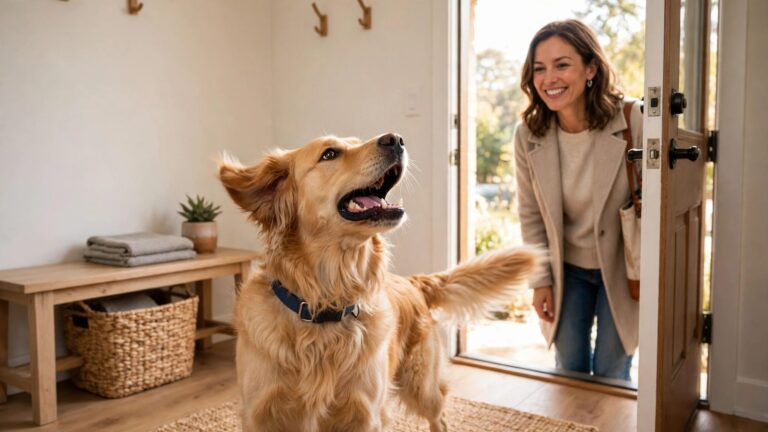
- Lead on indoors for toilet trips and whenever things get exciting, like visitors arriving. Greet guests calmly, or let her watch from behind a gate.
- Lift, do not launch: carry small dogs up steps and into cars, supporting chest and hindquarters without pressing on the belly.
- Burn the brain, not the body: lick mats, snuffle mats, frozen food puzzles, and gentle chewing give a resting dog a job. Understanding why dogs chew on socks and similar contraband is a good reminder to stock legal, satisfying chews where she can reach them.
- Ask about sedation if your dog is genuinely climbing the walls — vets can prescribe short-term calming medication, and using it is good care, not failure.
Getting Her Home Without the First Jump
The riskiest jump of the whole recovery often happens in the first hour: the leap into or out of the car on the way home from the clinic. She is groggy from anaesthetic, disoriented, and may lunge toward familiar people in excitement. Plan for it in advance. Ask the clinic staff to help you load her, or bring a second person. Lift her properly — one arm under the chest, one supporting the hindquarters, no pressure on the belly — or use a low ramp if she is too big to lift safely. At home, have the crate or pen already set up beside the car door’s shortest route, with the lead on before the car door opens. The same routine applies to every outing during the fortnight: she never gets the chance to launch herself out of the car, off the vet’s table, or up the front step, because you have removed the decision from her entirely.
Warning Signs That Need a Vet the Same Day
Call immediately for: a gaping incision or anything protruding from it; active bleeding or more than a spot or two of discharge; a hot, painful, rapidly swelling incision; pale gums, weakness, or a distended belly; vomiting, refusal to eat beyond the first day, or marked lethargy; or a dog who has chewed her stitches. Internal complications are uncommon, but they are time-sensitive, and an early phone call is never the wrong move.
Frequently Asked Questions
My dog jumped on the bed once, three days after her spay. Should I panic?
No. Settle her, check the incision carefully against how it looked before, and monitor her for the rest of the day. If it looks unchanged and she is comfortable, a single low jump is usually fine — then tighten management so it does not become a habit.
How long after being spayed can a dog jump normally?
Most vets clear normal activity, including jumping, at the 10 to 14 day recheck once the incision has healed. Build back up over a few days rather than going from crate rest to a full dog-park session.
Can my dog climb stairs after being spayed?
Slow, lead-controlled stairs are far less risky than jumping, but many vets prefer you avoid or carry for the first week, especially for the trip down, which loads the abdomen more. Follow your own clinic’s discharge sheet where it differs.
What should a healthy spay incision look like?
A neat, closed line with edges together, mild pinkness and slight swelling in the first days, and perhaps a little bruising. It should improve daily. Gaping, discharge, heat, spreading redness, or a foul smell are not part of normal healing.
The Bottom Line
One small jump will probably cost your dog nothing more than a stricter week of rest, but repeated jumping in the first fortnight can tear stitches, open the incision, or — rarely — cause dangerous internal problems. Check the wound, watch the dog, phone the vet if anything has changed, and manage the environment so willpower is never part of the plan. Fourteen quiet days is a short price for a lifetime of health.