
Should I Let Dog Lick Wound? Why Vets Say No
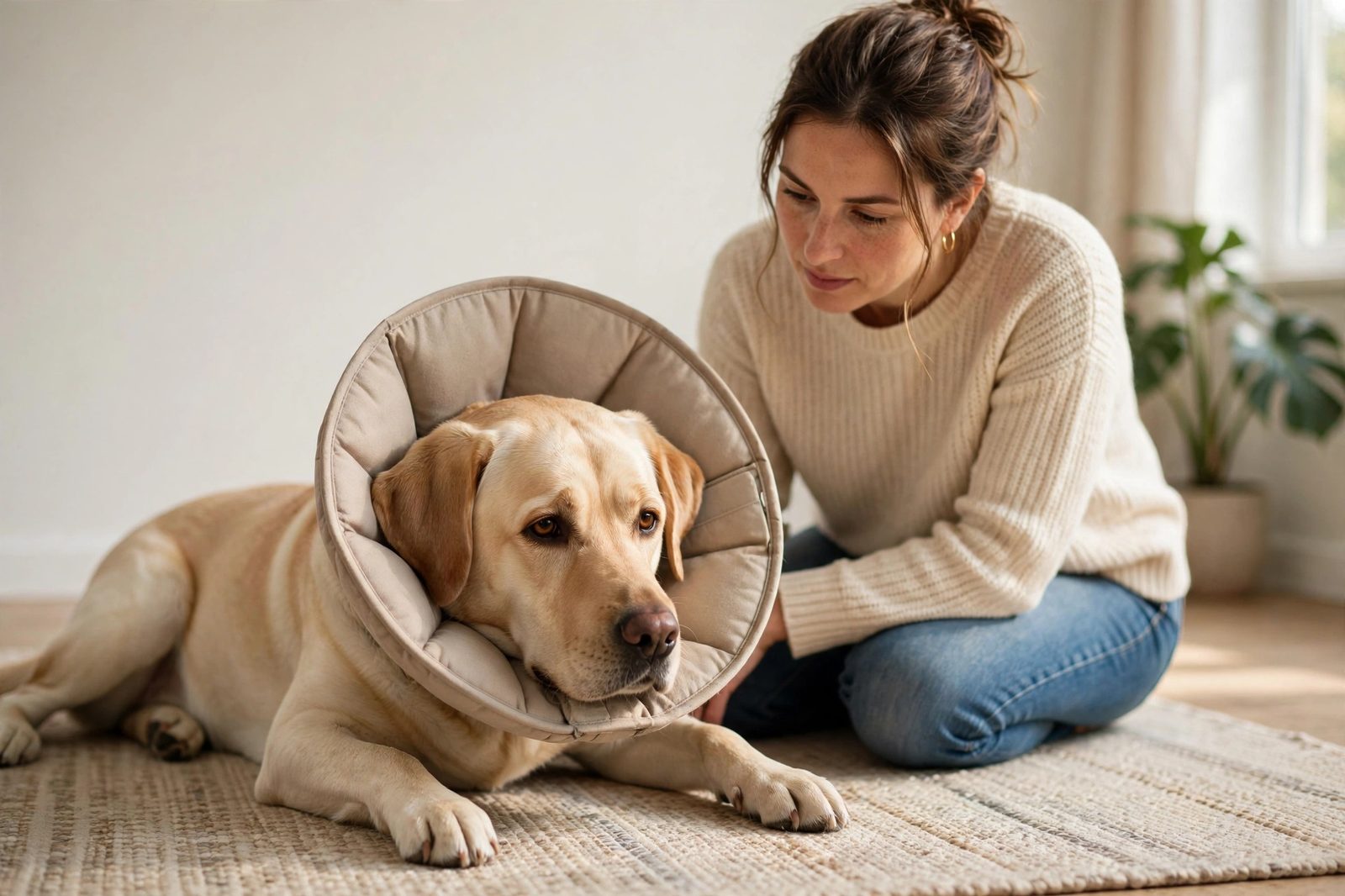
Short answer: no. If you are asking should i let dog lick wound areas and hope saliva does the healing, vets are clear that you should not. One quick lick before you can intervene is rarely a disaster, but repeated licking introduces mouth bacteria, tears at healing tissue, removes protective scabs, and can turn a minor scrape into an infected sore or a stubborn lick granuloma. The old belief that a dog’s mouth is clean and its saliva heals wounds is a myth with only a tiny kernel of truth — and the risks comfortably outweigh it. Your job is not to panic over a single lick. It is to stop the pattern, clean the wound properly, protect it with a barrier such as a cone, and know the warning signs that mean your dog needs a veterinarian, not more licking.
Where the Healing Saliva Myth Comes From
Dogs have licked their injuries for as long as there have been dogs, and people have watched them recover and credited the tongue. There is a small scientific basis for the story. Dog saliva contains compounds such as lysozyme, an enzyme that can break down some bacterial cell walls, histatins that have shown mild antimicrobial activity in laboratory studies, and opiorphin, a natural pain-relieving compound. In the wild, licking also physically removed dirt and dead tissue from an injury when there was no other option.
Here is what the myth leaves out. Those helpful compounds are present in weak concentrations, and they arrive mixed with everything else living in your dog’s mouth — and a dog’s mouth is busy. Dogs taste the ground, lick their paws and rear ends, chew sticks, and investigate other animals’ waste. Their mouths carry Staphylococcus, Streptococcus, Pasteurella, and many other bacteria that are harmless in the mouth but genuinely dangerous inside an open wound. Saliva is not medicine. At best it is a very mild antiseptic delivered by a very dirty applicator.
What Licking Actually Does to a Wound
The damage from licking is both bacterial and mechanical, and the mechanical part is underestimated. A dog’s tongue is rough, and a determined dog applies it with surprising force and persistence. Understanding why dogs lick you so much in the first place helps explain why an itchy, sore wound spot becomes such an irresistible target.
- It seeds infection. Every lick delivers mouth bacteria directly into broken skin, where they can multiply and cause redness, swelling, pus, and pain.
- It reopens healing tissue. New skin and early scabs are fragile. Repeated friction strips them away, restarting the healing clock again and again.
- It damages stitches and staples. Licking at a surgical incision can loosen or remove sutures and reopen the site — one of the most common and preventable post-surgery emergencies.
- It keeps the wound wet. Constant moisture softens surrounding skin and creates exactly the warm, damp environment bacteria prefer.
- It creates an itch-lick cycle. Licking irritates the skin, irritation itches, and itching triggers more licking, so the area grows instead of shrinking.
Lick Granuloma: When Licking Becomes the Disease
When a dog licks one spot obsessively for weeks, the result can be a lick granuloma, also called acral lick dermatitis. It usually appears on the front of a lower leg or paw as a raised, thickened, hairless, raw-looking plaque that simply will not heal. What starts as a tiny irritation, a healing cut, an insect bite, joint pain, or even plain boredom becomes a self-perpetuating habit: the licking damages the skin, the damaged skin itches and throbs, and the dog licks more.
Lick granulomas are notoriously frustrating to treat because there are two problems to solve — the physical lesion and whatever started the licking. Allergies, arthritis pain, nerve irritation, anxiety, and under-stimulation are all common drivers, which is why dogs that self-soothe orally in other ways, including those described in our guide to why some dogs suck on their toys for comfort, deserve a proper workup rather than just a bigger cone. Treatment usually combines protecting the area, addressing infection, managing pain or allergies, and adding enrichment and behavior support. The earlier you interrupt wound licking, the less likely you are to end up managing this condition for months.
When a Cone Is Non-Negotiable
An Elizabethan collar — the cone — is the most reliable way to physically prevent licking, and for some wounds it is not optional. Use one, and keep it on, in these situations:
- Any surgical incision. Follow your vet’s timeline, commonly 10 to 14 days, including overnight, when licking does the most damage unsupervised.
- Stitches, staples, drains, or bandages your dog is actively worrying at.
- Hot spots and spreading rashes that enlarge every time your dog gets access.
- Any wound your dog returns to repeatedly, even a small one — persistence is the problem, not size.
Fit matters more than the style. The cone should extend just beyond your dog’s nose so the mouth physically cannot reach around it, and you should be able to fit two fingers between the collar and the neck. Soft and inflatable collars are kinder for some dogs and work well for body wounds, but flexible dogs with leg or paw injuries can often reach around them — if your dog can touch the wound, the device has failed, whatever it cost. For the fitting details and troubleshooting, see VCA’s guide to Elizabethan collars in dogs. Recovery suits are a good alternative for torso incisions, and a clean bandage plus a protective boot can work for paw wounds when your vet approves the setup.
Safe Wound Care at Home, Step by Step
For a minor scrape or small cut that is not bleeding heavily, calm first aid at home is reasonable:
- Stop the licking and settle your dog. Clip on a cone or gently hold your dog somewhere comfortable and well lit.
- Control any bleeding with gentle, steady pressure from a clean cloth for several minutes.
- Rinse the wound with lukewarm clean water or sterile saline to flush out dirt and debris. This gentle irrigation does most of the real cleaning.
- Trim fur away from the edges if you can do it safely, so hair does not mat into the wound and you can see the area clearly.
- Skip the harsh products. Do not pour hydrogen peroxide, rubbing alcohol, or human antiseptic creams into the wound unless your vet directs it; these damage healthy tissue and slow healing. Only use a pet wound product made for dogs as labeled.
- Protect it. Cover with a light, clean, non-stick dressing if the location allows, or leave a tiny superficial scrape open to the air but physically blocked from the tongue — then monitor it twice a day.
Red Flags: See the Vet Instead
Home care has firm limits. Get veterinary help promptly if the wound is deep, gaping, or you can see fat, muscle, or tendon; if it came from a bite from another animal; if bleeding will not stop; or if you see increasing redness, swelling, heat, pus, a foul smell, or red streaks spreading from the site. Also call if stitches have come out, an incision has opened, your dog is limping or refusing to bear weight, or your dog becomes lethargic, loses appetite, or develops a fever. And if your dog keeps licking one spot with no visible injury at all, that still deserves a visit — pain, allergies, and parasites are common hidden causes, and your vet can find them before a granuloma forms.
Frequently Asked Questions
Is dog saliva antibacterial at all?
Slightly, in a laboratory sense — saliva contains enzymes like lysozyme and proteins like histatins with mild antimicrobial effects. But those effects are weak, and the same mouth delivers plenty of harmful bacteria into the wound. Vets do not consider saliva a treatment, and neither should you.
My dog licked his wound once. Should I worry?
Almost certainly not. A single brief lick of a minor wound is not an emergency. Gently clean the area, stop further access with a cone or cover, and watch it over the next day or two for redness, swelling, or discharge.
How long should the cone stay on after surgery?
Follow your own vet’s instructions, which commonly run 10 to 14 days — until the incision is fully closed and, ideally, until a recheck confirms healing. Removing it early because your dog looks miserable is the most common reason incisions get licked open.
What can I use instead of a cone?
Depending on wound location: a recovery suit for the torso, an inflatable collar for upper-body sites, or a bandage and boot made for dogs for a paw. The test is always the same — if your dog can reach the wound with any of them on, switch back to a properly fitted cone.
Should I let my dog lick my cuts too?
No. A dog’s mouth bacteria can infect human wounds as well, and some organisms are a particular risk for young children, older adults, and anyone with a weakened immune system. Clean your own cut, cover it, and let your dog show affection somewhere safer.
The Bottom Line
Your dog licks a wound because instinct tells him to, not because it works. The saliva-heals myth survives on a sliver of science and a lot of wishful thinking, while the real outcomes of licking — infection, reopened incisions, delayed healing, and lick granulomas — are what vets treat every day. Clean minor wounds gently, block the tongue with a cone or cover, and let your vet handle anything deep, bitten, stitched, or worsening. That combination heals wounds. Licking does not.