Should You Limit Water for a Puppy? What Vets Say

No — you should not limit your puppy’s water during the day. Puppies need constant access to fresh water to stay hydrated, and restricting it can cause dehydration, urinary problems, and even resource guarding. The only exception most vets and trainers accept is managing nighttime access — removing the water bowl two to three hours before bedtime as part of housetraining. Here is the full breakdown of what is safe and what is not.
Why the Question Comes Up
Almost every new puppy owner hears the same well-meaning advice: “Take the water away so they stop having accidents.” The logic seems airtight — less water in, fewer puddles out. And since housetraining accidents are one of the most frustrating parts of puppyhood, the temptation to control the input side of the equation is completely understandable.
The problem is that puppies are not plumbing. They are rapidly growing animals with high metabolic needs, small bodies, and kidneys that are still maturing. Water is not optional for them — it regulates body temperature, transports nutrients, cushions joints, and flushes waste. When puppies can start drinking water during weaning is one of the first milestones of independence, and from that point on, free access is the default recommendation from veterinary organizations.
Why Limiting Water Is Risky
Deliberately restricting a puppy’s water intake can backfire in several serious ways:
- Dehydration. Puppies dehydrate faster than adult dogs because of their higher water turnover and smaller reserves. Signs include dry gums, loss of skin elasticity, sunken eyes, and lethargy. Severe dehydration is a veterinary emergency.
- Urinary tract issues. Concentrated urine from low water intake irritates the bladder and urinary tract, raising the risk of UTIs — which, ironically, cause more accidents, not fewer.
- Resource guarding. Dogs that learn water is scarce can start guarding the bowl, gulping frantically when it appears, or becoming anxious around it. You can create a behavior problem trying to solve a housetraining one.
- Slower learning. A thirsty, uncomfortable puppy is a stressed puppy, and stressed puppies learn more slowly. Withholding water does not speed up housetraining — it just adds discomfort to the process.
- Digestive problems. Adequate water keeps digestion moving. Chronic mild dehydration contributes to constipation and harder stools.
How Much Water Does a Puppy Actually Need?
Use these guidelines as a starting point, then adjust for your puppy’s size, diet, activity, and climate:
- Very young puppies (just weaned): About one-half cup of water every two hours during the day.
- Older weaned puppies: Roughly one-half to one ounce of water per pound of body weight per day. A 20-pound puppy needs 10–20 ounces daily.
- Active days and hot weather: Needs go up. Puppies playing hard or spending time in heat may drink noticeably more — that is normal.
- Diet matters: Puppies eating dry kibble (about 10% moisture) drink more than those eating wet food (up to 70% moisture).
Most puppies self-regulate well — they drink what they need and stop. If your puppy is constantly draining the bowl and asking for more, note the amount: consistently drinking far above the guidelines (or suddenly drinking much more than usual) warrants a vet check, since excessive thirst can signal diabetes, kidney issues, or infection. A proper puppy feeding guide with safe foods pairs naturally with water management, since meals and drinking are linked — most puppies drink right after eating.
The Nighttime Exception: What Vets Actually Recommend
Here is the one form of water management that mainstream trainers and vets endorse: remove the water bowl two to three hours before bedtime, alongside the last meal. The AKC’s own guidance on puppy hydration recommends exactly this — pick up food and water about two to three hours before lights-out, take the puppy out for a final potty break, and settle in.
The key boundaries of this exception:
- It applies to overnight only, not daytime. Daytime access stays unlimited.
- Be consistent with the cutoff time, the same way you are consistent with feeding times.
- Always offer water after the last evening outing and before the cutoff — do not send the puppy to bed thirsty.
- Very young puppies (under 8–10 weeks) may still need overnight access; ask your vet rather than applying a blanket rule.
- As the puppy matures and gains bladder control, most dogs naturally stop drinking overnight even with the bowl available.
Think of it as scheduling, not restricting. You are aligning water availability with the housetraining routine, not reducing the day’s total intake.
A Practical Daily Water Schedule
Here is what a sensible day looks like for a typical 3–4-month-old puppy:
- Morning: Fresh bowl down with breakfast. Refill as needed through the morning.
- Midday: Bowl refreshed at lunch. Take the puppy out 10–20 minutes after big drinks.
- Afternoon: Keep the bowl available, especially after play sessions and walks.
- Evening: Water with dinner, then one more good drink opportunity.
- 2–3 hours before bed: Pick up the bowl. Final potty break right before crate/bedtime.
Pair every drinking session with a prompt outdoor trip in the early weeks of housetraining, and the accidents will fade without ever touching the daytime water supply. For the authoritative numbers behind this schedule, the AKC’s guide to puppy drinking water lays out intake guidelines and the nighttime rule in detail.
Setting Up Water the Right Way
Since the bowl stays down all day, it is worth setting it up properly:
- Clean it daily. Biofilm — the slimy layer that forms in water bowls — harbors bacteria. A quick daily wash with soap and water prevents the bowl itself from becoming a health issue.
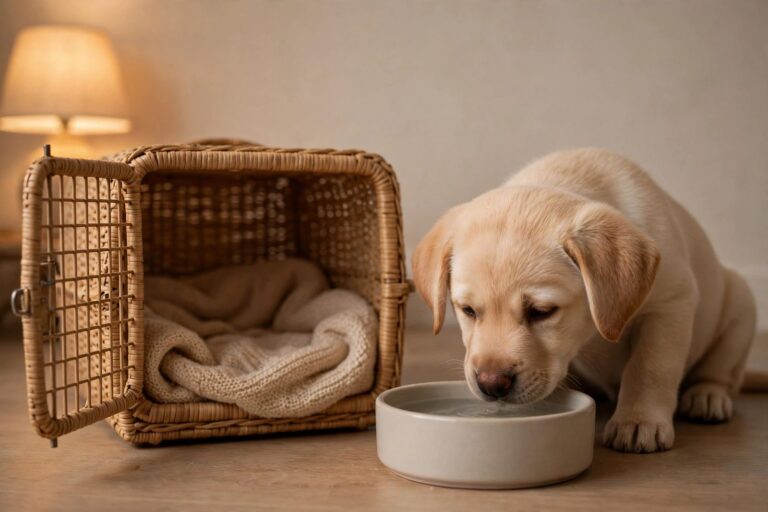
- Use a heavy, tip-proof bowl. Puppies play with everything, including water bowls. A weighted ceramic or stainless steel bowl with a non-skid base survives the puppy phase.
- Keep it somewhere calm. Place the bowl away from high-traffic doorways and the food bowl’s immediate splash zone. Some puppies drink more readily when the bowl is in a quiet corner rather than the middle of household chaos.
- Skip the additives unless your vet says otherwise. Flavored water products and supplements are marketed heavily, but plain fresh water is what puppies need. Additives can discourage drinking if the puppy dislikes the taste.
- Watch the water temperature. Cool — not ice-cold — water is most appealing, especially after play. In winter, check that outdoor bowls have not frozen over.
One more habit worth building early: watch how your puppy drinks, not just how much. A puppy that suddenly starts gulping frantically, pawing at the water, or drinking and then vomiting may be dealing with nausea, anxiety, or an underlying issue worth mentioning at the next vet visit. You know your puppy’s normal — trust it when something changes.
When a Vet Might Direct You to Limit Water
There are narrow medical exceptions — and they all come from a veterinarian, never from internet advice:
- Pre-surgical fasting, where water is withheld for a set number of hours before anesthesia.
- Acute vomiting or diarrhea protocols, where the vet may prescribe small, frequent sips rather than free access for a short period.
- Certain medical conditions requiring monitored intake.
Outside of direct veterinary instruction, the answer stays the same: do not limit it.
Frequently Asked Questions
Should you limit water for a puppy during potty training?
No — not during the day. Keep water freely available and manage accidents with frequent outdoor trips instead. Only the nighttime bowl pickup (2–3 hours before bed) is recommended.
Is it okay to take a puppy’s water away at night?
Yes, for most puppies over 8–10 weeks, removing water two to three hours before bedtime is standard housetraining practice. Offer a final drink before the cutoff.
How do I know if my puppy is drinking too much water?
Track intake for a day or two. Consistently drinking far more than about one ounce per pound of body weight, or a sudden increase in thirst, deserves a vet visit to rule out medical causes.
Can withholding water help with crate training accidents?
Temporarily withholding water while crated is sometimes suggested, but free daytime access plus a pre-crate potty break works better and avoids dehydration risk.
What are signs of dehydration in puppies?
Dry or sticky gums, loss of skin elasticity (skin stays tented when pinched), sunken eyes, lethargy, and excessive panting. Dehydration in a puppy is urgent — call your vet.
Conclusion
Do not limit your puppy’s water during the day — the risks of dehydration, urinary problems, and behavior fallout far outweigh any housetraining convenience. Manage the nighttime bowl, keep daytime access unlimited, take the puppy out often, and let the bladder catch up to the water supply on its own schedule. That is how housetraining actually works.