
When Can a Puppy Drink Water? Weaning Age Guide
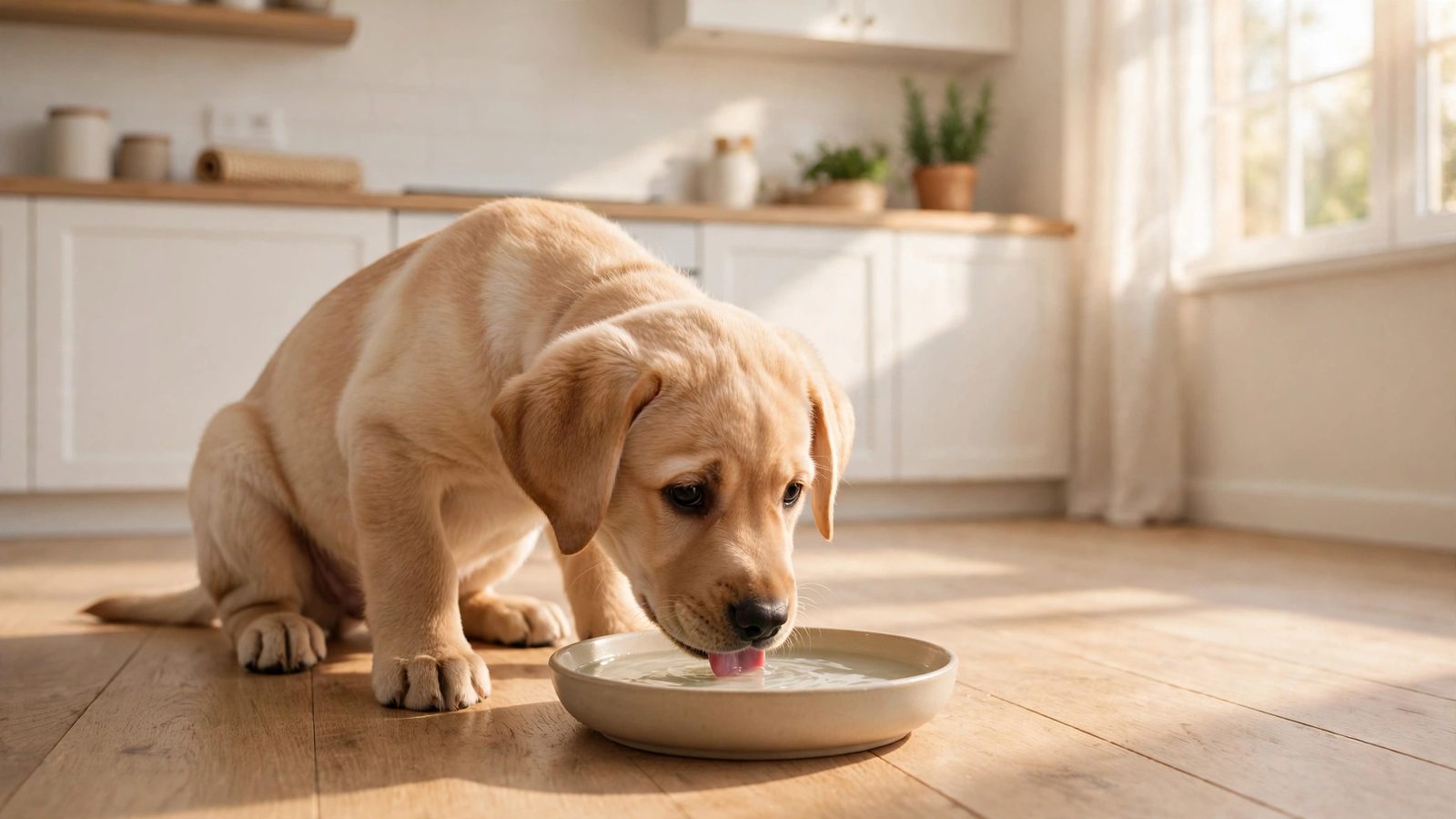
When can a puppy drink water? Puppies can start being introduced to water at around 3 to 4 weeks of age, right as weaning begins. Before that, mother’s milk provides all the hydration they need. Here is how to introduce water safely, how much puppies need at each stage, and the mistakes that can make a young puppy sick.
The Quick Answer
Offer water in a shallow dish starting at 3–4 weeks, alongside the first weaning foods. Puppies will mostly play with it at first — that is normal. By 6–8 weeks, when fully weaned onto solid food, fresh water should be available at all times. Never give water instead of milk to unweaned puppies, and never force a tiny puppy’s nose into a bowl.
Why Not Before 3 Weeks?
Newborn puppies get complete hydration and nutrition from nursing. Their digestive systems are calibrated for milk alone, and their kidneys are still maturing. Introducing water too early can:
- Fill a tiny stomach with zero-calorie fluid, displacing the milk they need for growth
- Cause dangerous chilling — wet newborns lose body heat frighteningly fast
- Risk aspiration — newborns cannot lap safely and can inhale water into their lungs
If you are raising orphaned puppies, they need a veterinary milk replacer — not water — fed on a strict schedule. Water is never a substitute for milk in the first weeks.
How to Introduce Water: Step by Step
- Time it with weaning. Start offering water a day or two before you introduce gruel (puppy food softened with warm water or milk replacer), around 3–4 weeks.
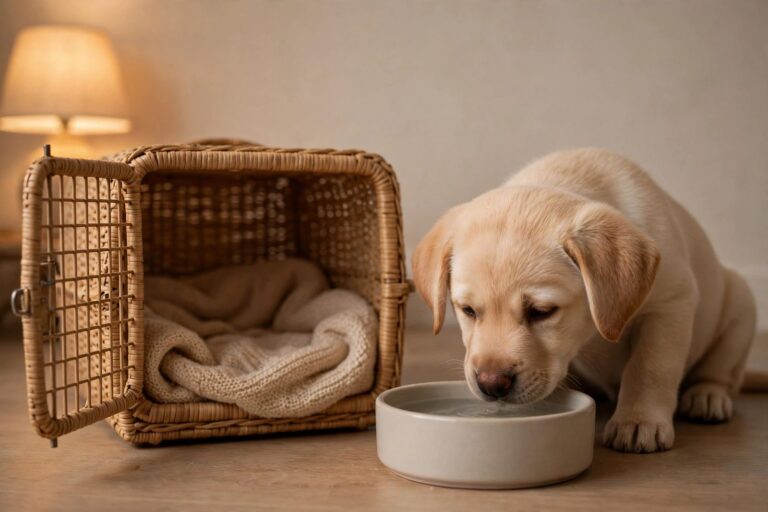
- Use a shallow, heavy dish. A low saucer or shallow pan they can reach without climbing in. Heavy ceramic or a no-tip bowl prevents the inevitable paddling from becoming a flood.
- Let them discover it. Set the dish near their sleeping area and let curiosity do the work. You can dip a fingertip and let them lick it, or gently touch a drop to their lips — never push their face in.
- Expect play first. Most puppies step in it, splash it, and drink very little for the first several days. That is learning, not failure.
- Keep it fresh and clean. Change the water several times a day. Puppies will walk through it, drop food in it, and generally disgust it within hours.
- Size up gradually. As they grow steadier on their feet (5–8 weeks), move to a regular puppy bowl, still shallow enough that a small pup cannot fall in.
How Much Water Does a Puppy Need?
There is no single number, but a useful rule of thumb: puppies need roughly ½ to 1 ounce of water per pound of body weight per day, with the higher end for very young, very active puppies and warm weather. In practice:
- Weaning (3–6 weeks): small amounts offered; most hydration still comes from milk and watery gruel.
- 6–12 weeks: free access to fresh water all day. Puppies on dry kibble drink noticeably more than those on wet food.
- 3–6 months: free access; expect intake to rise with activity and growth.
Monitor rather than measure: a healthy puppy drinks regularly through the day, urinates frequently with pale-yellow urine, and has moist gums and elastic skin. Dark urine, dry gums, lethargy, or skin that stays “tented” when pinched are dehydration warning signs — call your vet.
Bowl Safety: The Overlooked Danger
Water bowls injure and kill puppies every year through drowning and chilling. Non-negotiable rules:
- No buckets, deep bowls, or toilet access for young puppies. A tired 4-week-old can drown in inches of water.
- Use heavy, tip-proof bowls once they are mobile — flipped bowls mean no water and a soaked, chilled puppy.
- Elevated or spill-proof setups help for enthusiastic drinkers, but keep the rim low enough for the smallest pup.
- Clean bowls daily. Biofilm builds fast; a slimy bowl can harbor bacteria. Run bowls through the dishwasher or scrub with hot soapy water.
Water and House Training: Finding the Balance
New owners often ask whether limiting water helps with house training. The answer: only slightly, and never at the expense of health. It is reasonable to pick up the water bowl 2–3 hours before bedtime (after a final drink) to reduce overnight accidents in puppies over 8 weeks — but water must be freely available all day. A dehydrated puppy is far worse than a puddle on the floor.
If you are structuring the whole day around work, planning care with a puppy schedule for full-time workers helps you slot water breaks, meals, and potty trips sensibly. And remember that very young puppies cannot “hold it” long — learn how long you can leave a 4-month-old puppy alone before expecting bladder control they do not have.
Special Cases
Orphaned or hand-raised puppies
Follow your vet’s milk-replacer schedule precisely. Water introduction still starts at 3–4 weeks alongside weaning foods, but these puppies dehydrate faster — weigh daily and watch intake closely.
Puppies that will not drink
Try a different bowl (some dislike metal), slightly warmed water, or a splash of low-sodium bone broth to spark interest. If a weaned puppy refuses water for more than 12 hours or seems lethargic, see your vet — it can signal illness, not stubbornness.
Hot weather
Increase access points (multiple bowls), add ice cubes for enrichment, and never leave a puppy without water in heat. Puppies overheat faster than adults.
For the nutrition side of the weaning journey, the AKC on puppy nutrition from the dam to first food explains how milk, water, and first foods fit together.
Bottle vs. Bowl: Which Is Better?
You will see water bottles marketed for puppies — the kind with a metal spout. They keep water clean and prevent splashing, which appeals to many owners. But for young puppies, a bowl is better:
- Bowls allow natural lapping, which puppies learn faster and which lets them drink adequate volumes quickly.
- Bottles dispense slowly; a thirsty, active puppy can get frustrated and give up.
- Metal spouts can damage incoming adult teeth if chewed.
- You cannot easily monitor intake from a bottle the way you can watch a bowl level drop.
Bottles have their place — crates during travel, for example — but the primary water source at home should be a bowl.
Hydration Red Flags by Age
Call your veterinarian if you notice any of these:
- Any age: dry or sticky gums, sunken eyes, skin that stays tented, extreme lethargy, or no urination for 8+ hours
- Weaning puppies (3–6 weeks): weight loss or failure to gain 5–10% of birth weight daily — weigh twice daily during weaning
- 8+ weeks: sudden refusal to drink lasting more than 12 hours, vomiting, or diarrhea (dehydration compounds fast in small bodies)
Mild dehydration can sometimes be managed at home with encouragement and wet food, but anything beyond mild — or any doubt at all in a puppy under 12 weeks — deserves a prompt vet visit. Puppies crash faster than adult dogs.
Frequently Asked Questions
Can newborn puppies drink water?
No. Newborns (under 3 weeks) should have only mother’s milk or puppy milk replacer. Their kidneys and digestion are not ready for water, and the chilling and aspiration risks are serious.
When can puppies drink water from a regular bowl?
Start with a shallow dish at 3–4 weeks; most puppies handle a normal puppy bowl confidently by 6–8 weeks. Keep it shallow and stable until they are coordinated.
How often should I change my puppy’s water?
At least twice a day, ideally with every meal. Puppies contaminate water quickly, and fresh water encourages drinking.
Is tap water safe for puppies?
In most areas, yes — if your tap water is safe for you, it is safe for your puppy. If you have well water or concerns about quality, use filtered water and mention it to your vet.
My puppy drinks a huge amount of water. Is that normal?
Puppies drink a lot relative to their size, especially on dry food and in warm weather. But sudden, dramatic increases in thirst — especially with increased urination, lethargy, or appetite changes — warrant a vet visit to rule out issues like urinary infection or early kidney problems.
The Bottom Line
Water enters the picture at 3–4 weeks, alongside weaning: shallow dish, no forcing, fresh and frequent. By the time your puppy comes home at 8 weeks, free access to clean water is simply part of the furniture — as essential as food, sleep, and love.




2 Comments