Do Puppies Need Water at Night? The Honest Answer
The Short Answer
No — most healthy puppies do not need water at night, especially once they are past 12 weeks old and you are house training. Puppies sleep for long stretches, and a full water bowl before bed usually just means more midnight potty trips and a higher chance of crate accidents. The widely recommended approach is to offer plenty of fresh water all day, then pick up the bowl 2 to 3 hours before bedtime, followed by a final potty trip right before lights out. There are exceptions — very young puppies, hot weather, illness, and certain medications — which we cover below.
Why Withholding Water Overnight Helps (Not Hurts)
It can feel wrong to take water away from a baby animal. But a puppy’s bladder is tiny and their control is still developing — a 3-month-old can hold it roughly 3 to 4 hours at best. Every ounce of water they drink at 10 p.m. becomes a 2 a.m. whimper at the crate door.
Limiting evening water isn’t dehydration; it’s scheduling. During the day your puppy should drink freely — roughly half an ounce to one ounce of water per pound of body weight daily. By evening, a healthy, well-hydrated puppy has a full tank and can comfortably coast through 6 to 8 hours of sleep. What you’re really doing is:
- Protecting house training: fewer overnight accidents means the crate stays a clean den, not a bathroom.
- Protecting sleep: yours and the puppy’s. Broken nights make for a cranky household and a harder-to-train pup.
- Building routine: predictable water in, predictable potty out — the foundation of every reliable schedule.
The 2-to-3-Hour Rule: How to Time It
The standard trainer and veterinarian recommendation: remove the water bowl 2 to 3 hours before bedtime. If bedtime is 10:30 p.m., the bowl comes up around 8:00 p.m. Then:
- Offer one last calm drink about 30 minutes after the bowl would normally come up if your puppy seems thirsty — then take them out.
- Take your puppy out for a final potty trip as late as possible, right before crating.
- Keep the trip boring: no play, no excitement, straight back to the crate.
Also skip the evening meal within 3 hours of bed and avoid salty treats late in the day — sodium drives thirst and undoes your good timing. For more on the hydration side of the equation, see PetMD’s guidance on dog hydration, which covers how much dogs should drink and when increased thirst signals a problem.
Age Matters: When the Rule Changes
- Under 8 weeks: Puppies this young are usually still with their mother and get hydration from nursing. If you’re caring for an orphaned neonate, follow your vet’s feeding protocol exactly — this article’s advice doesn’t apply yet. Learn when puppies can start drinking water on their own.
- 8 to 12 weeks: Newly weaned puppies are still learning. You can begin lifting the bowl 1 to 2 hours before bed, but expect at least one overnight potty trip regardless. Keep a small amount of water available if your vet advises it.
- 12 weeks and up: The full 2-to-3-hour rule applies. Most puppies this age can sleep 6+ hours without water when well hydrated during the day.
- 6 months and up: Many owners relax the rule entirely for reliably house-trained adolescents — though plenty keep the evening cut-off as simple routine.
Exceptions: When Your Puppy SHOULD Have Water at Night
Don’t restrict overnight water if any of these apply — talk to your vet first:
- Illness or recovery: Vomiting, diarrhea, or fever dehydrate puppies fast. A sick puppy needs free access to water, accidents be damned.
- Hot weather or warm house: Panting loses a lot of moisture. In a heat wave, leave water down or offer ice cubes in the crate.
- Certain medications: Some drugs increase thirst and urination — ask your vet whether water restriction is safe.
- Medical conditions: Diabetes, kidney issues, and urinary infections all increase water needs. Excessive nighttime thirst itself is worth a vet visit.
- Dry food-only diet in tiny breeds: Very small puppies on kibble can dehydrate faster; your vet may suggest a different approach.
What About Water in the Crate?
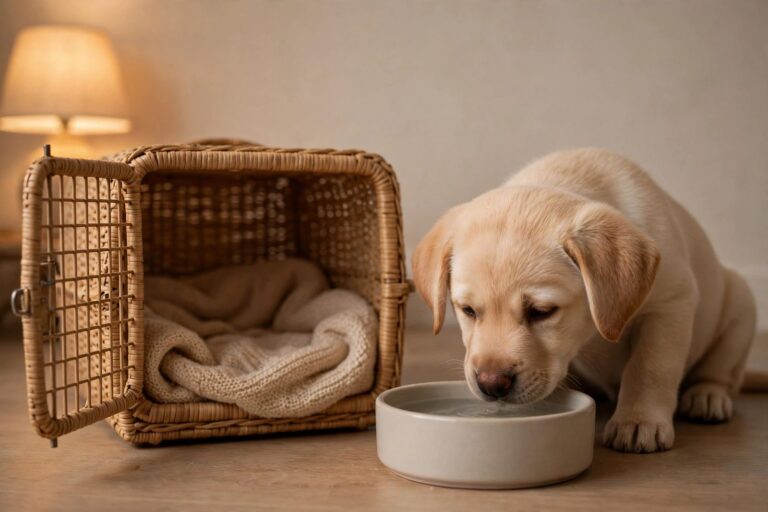
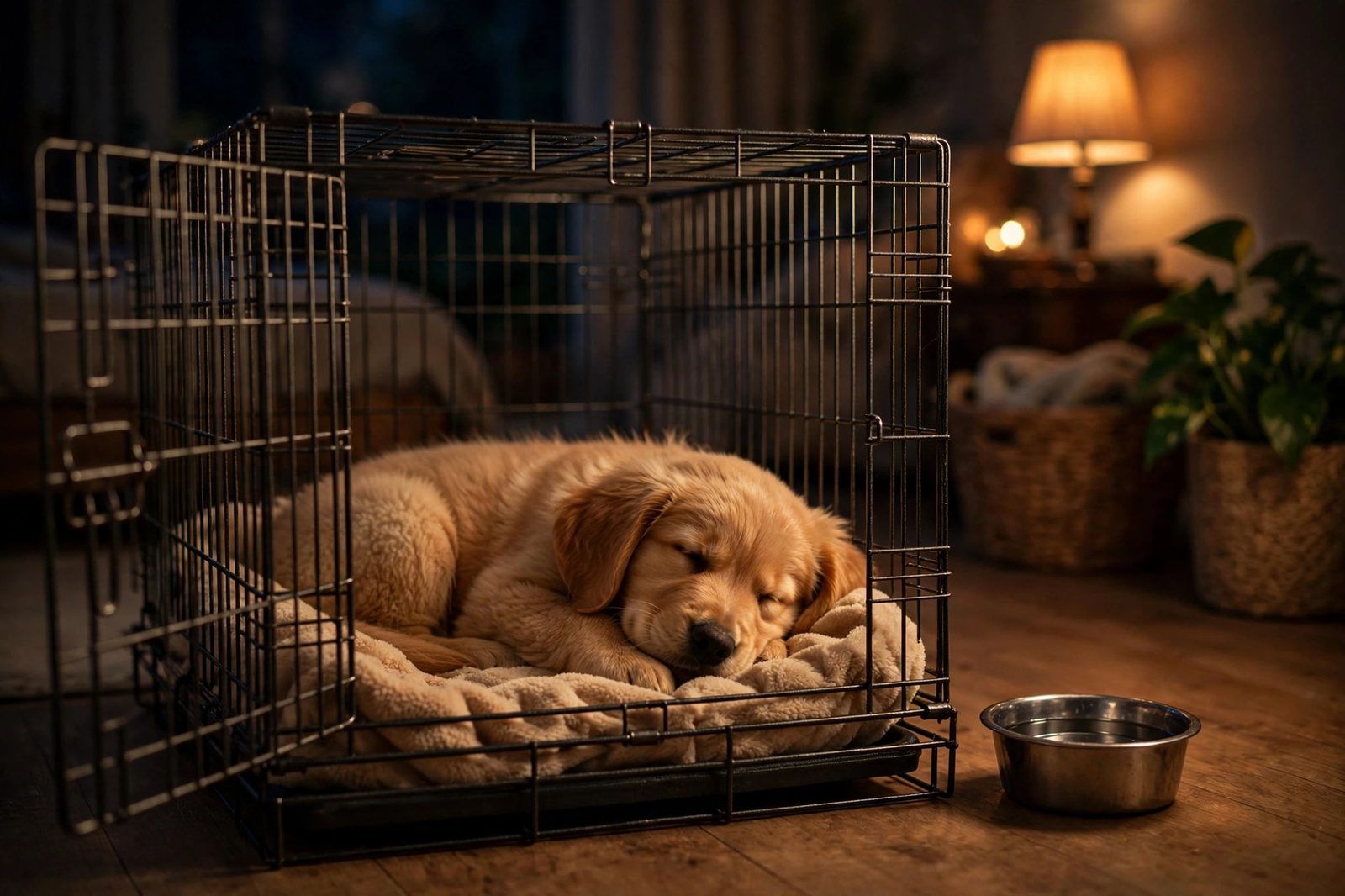
For most puppies in training, no water bowl in the crate overnight. Bowls get tipped, bedding gets soaked, and the puppy drinks out of boredom, creating the exact accidents you’re trying to avoid. If you worry about thirst, attach a small no-drip water bottle to the crate side — it offers security without the lake. Once your puppy is reliably sleeping through the night dry (usually 5 to 6 months), you can experiment with leaving water down and see how it goes.
Daytime Hydration: The Other Half of the Equation
Nighttime restriction only works if daytime hydration is generous. Make sure your puppy:
- Has fresh, clean water available all day — refresh the bowl at least twice daily.
- Gets water immediately after meals, play sessions, and walks.
- Drinks more on hot days and after heavy exercise (puppies overheat faster than adults).
- Shows no signs of dehydration: tacky gums, skin that stays tented when pinched, sunken eyes, or unusual lethargy all warrant a same-day vet call.
Making Nights Peaceful: The Bedtime Routine
Water timing is one piece of the nighttime puzzle. Pair it with building a calm, consistent bedtime routine: wind down with quiet activities for the last hour, skip rough play after dinner, do the final potty trip late, and keep the crate in or near your bedroom so you can hear a genuine need-to-go whimper. Most puppies settle into dry nights within a few weeks of consistent routine.
Sample Evening Timeline
Here’s what the last few hours of the day can look like for a 4-month-old puppy with a 10:30 p.m. bedtime:
- 6:00 p.m. — Dinner, followed by fresh water and a potty trip 15 to 20 minutes later.
- 7:30 p.m. — Gentle play or a short walk, then water available.
- 8:00 p.m. — Water bowl comes up. Offer a calm chew toy instead.
- 8:00–10:00 p.m. — Quiet family time. No salty treats. If your puppy seems genuinely thirsty, a few laps of water are fine — then straight outside.
- 10:15 p.m. — Final potty trip. Keep it boring and businesslike.
- 10:30 p.m. — Crate, lights out.
Adjust the times to your schedule — the structure matters more than the clock. The key beats are: last big drink a few hours before bed, no salt late, and a final trip as late as you can manage.
Troubleshooting: When Nights Still Go Wrong
Even with good water timing, some puppies struggle. If accidents persist past 5 months, look at the whole picture before blaming the water bowl: urinary tract infections are common in puppies and cause frequent, urgent urination; drinking far more than usual can signal diabetes or kidney issues; and anxiety or an oversized crate (too much space to use one corner as a bathroom) sabotages house training. A vet check plus a review of crate size and daytime schedule solves most stubborn cases.
Frequently Asked Questions
Can a puppy go 8 hours without water at night?
A healthy puppy over 12 weeks that drank well during the day can comfortably go 8 hours overnight without water. Younger puppies may still need a middle-of-the-night potty break and possibly a small drink — follow your vet’s advice for puppies under 12 weeks.
Is it cruel to take my puppy’s water away at night?
No, as long as your puppy is healthy and well hydrated during the day. You’re not depriving them — you’re scheduling intake around sleep, the same way you schedule meals. Cruelty would be restricting water all day; a 2-to-3-hour evening window is standard, practice.
What if my puppy whines for water at night?
First rule out a real need: is the house hot? Was dinner salty? Is the puppy ill? If none apply, it’s usually habit or attention-seeking. Offer a tiny drink once, then settle them without fanfare. Don’t turn it into playtime or you’ll train a midnight water ritual.
Should I limit food at night too?
Yes — no meals within 3 hours of bedtime. Food drives water intake and speeds up digestion, both of which lead to overnight accidents. Three meals a day (for young puppies) with the last one in the early evening works well.
When can I stop restricting water at night?
Once your puppy is reliably house-trained and sleeping through the night dry — typically around 5 to 6 months — you can try leaving water down. If accidents return, go back to the evening cut-off for another few weeks.
The Bottom Line
Healthy puppies over 12 weeks don’t need water overnight. Lift the bowl 2 to 3 hours before bed, keep daytime hydration generous, do a final late potty trip, and enjoy the dry mornings. Save the exceptions — illness, heat, medication, medical conditions — for your vet’s guidance, and the nights will take care of themselves.