Should Puppies Have Water All Day? The Honest Answer

Quick answer: Yes — puppies should have access to fresh water all day. Growing puppies dehydrate faster than adult dogs, and restricting water during the day can cause health problems and even resource guarding. The one exception: while housetraining, take the water bowl up 2 to 3 hours before bedtime (after a final potty break) to reduce overnight accidents. Never restrict water during the day.
Why All-Day Water Matters So Much for Puppies
Puppies are not just small adult dogs — their bodies work differently. They have a higher metabolic rate, they are growing rapidly, and they lose water faster through panting and play. A puppy can slide toward dehydration much quicker than an adult dog, especially in warm weather or after a roaring play session.
Water does far more than quench thirst. It carries nutrients to cells, cushions joints, aids digestion, regulates body temperature, and flushes waste through the kidneys. For a growing puppy building bone, muscle, and organs at full speed, steady hydration is non-negotiable. This is also why very young puppies get their fluids from mother’s milk first — see our guide on when puppies can start drinking water for the weaning timeline.
How Much Water Does a Puppy Need?
Use these veterinary guidelines as a starting point:
- Weaned puppies: roughly one-half to one ounce of water per pound of body weight per day. A 10-pound puppy needs about 5 to 10 ounces daily.
- Very young puppies (just weaned): about half a cup of water every couple of hours, offered frequently.
- Active days and hot weather: intake can legitimately double. Always offer more; do not cap it.
- Wet food eaters: puppies on canned or raw diets drink less from the bowl because their food contains 70%+ moisture. Kibble-fed puppies drink noticeably more.
These are averages, not prescriptions. The practical rule is simpler: keep fresh water available and let the puppy self-regulate. Healthy puppies are remarkably good at drinking what they need — problems arise from restriction, not from access.
The Bedtime Exception: Housetraining Rules
Here is the one widely endorsed exception, straight from veterinary guidance including AKC’s guide to puppy hydration: during housetraining, remove food and water bowls about 2 to 3 hours before bedtime.
How to do it right:
- Pick a consistent cutoff time. If lights-out is 11 p.m., bowls come up around 8 to 8:30 p.m. — the same time every night, just like feeding times.
- Offer water freely right up to the cutoff. Let the puppy drink its fill in the evening; you are managing timing, not total intake.
- Take a final potty trip right before bed, after the puppy has had time to process that last drink.
- Expect some accidents anyway. Young bladders are tiny. The cutoff reduces overnight wake-ups; it does not eliminate them.
Once housetraining is solid (usually by 5 to 6 months), most owners leave water down overnight too. Adult dogs with reliable bladder control should have 24/7 access.
Why Restricting Water Backfires
Some owners limit daytime water hoping for fewer puddles. This usually achieves the opposite:
- Binge drinking. A thirsty puppy given sudden access gulps excessively, then needs to urinate urgently and frequently — more accidents, not fewer.
- Resource guarding. Dogs that learn water is scarce may start guarding the bowl from people or other pets.
- Dehydration risk. Even mild chronic under-hydration stresses the kidneys and urinary tract, and puppies have less margin than adults.
- Slower housetraining. A predictable routine of water in and potty out trains faster than an unpredictable one. Scheduled water breaks fit neatly into building a daily schedule around your puppy’s needs.
The takeaway: manage the schedule, not the supply. Frequent potty trips beat water restriction every time.
Signs of Dehydration in Puppies
Know these warning signs, because dehydration can become dangerous quickly in small puppies:
- Dry, sticky gums instead of moist and slick
- Skin that stays “tented” when gently pinched at the scruff (the skin-turgor test)
- Sunken eyes, lethargy, or unusual sleepiness
- Loss of appetite and reduced urination
- Panting that seems excessive for the temperature
If you suspect dehydration — especially with vomiting or diarrhea — contact your vet promptly. Do not try to “catch up” a dehydrated puppy by forcing large volumes of water; a vet may recommend measured fluids or an electrolyte solution.
Setting Up Water the Right Way
- Wash the bowl daily. Biofilm — that slimy layer — builds up fast and harbors bacteria. Hot soapy water, rinse well.
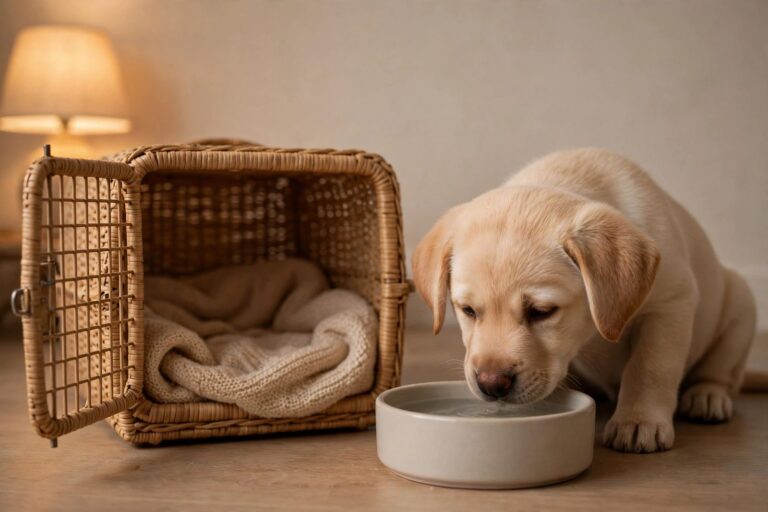
- Use a shallow, stable bowl. Tip-proof and low enough for the puppy’s size; non-slip bases prevent scary crashes.
- Room-temperature water. Ice-cold water can upset small stomachs; room temp is safest.
- Consider a fountain. Many puppies drink more from running water, and fountains keep water fresher between cleanings.
- Multiple stations for large homes. A puppy should never have to trek far to drink — especially during housetraining when you are also tracking intake.
Water Needs by Age: From Weaning to Adulthood
A puppy’s relationship with water changes as they grow:
- Under 3 to 4 weeks (nursing): No extra water needed — mother’s milk provides complete hydration. Just make sure the dam herself has constant fresh water, since nursing is thirsty work.
- 3 to 8 weeks (weaning): Introduce a shallow dish of fresh water alongside mushy weaning food. Expect more splashing than drinking at first; that is normal exploration.
- 8 to 16 weeks: Peak clumsiness and peak water needs relative to size. Offer water every couple of hours, after every meal and play session, and watch intake loosely to learn their normal.
- 4 to 12 months: The bedtime cutoff still applies during housetraining, but daytime access should be completely unrestricted. Athletic adolescent puppies in warm weather can drink astonishing amounts — that is healthy.
- Adulthood: Transition to the adult guideline of about one ounce per pound of body weight daily, with 24/7 access including overnight.
Senior dogs circle back to puppy-like needs: older kidneys concentrate urine less efficiently, so seniors often drink more and should never face restriction either.
One more scenario worth planning for: water on the go. Puppies dehydrate quickly on walks, car rides, and outings, so carry a collapsible bowl and a water bottle whenever you leave the house together. Offer water every 20 to 30 minutes during active outings, and always after play. At the dog park, bring your own supply rather than relying on communal bowls, which can spread kennel cough and parasites. Hydration is a 24-hour habit, not just a at-home one.
When Drinking Habits Signal a Vet Visit
Both extremes deserve attention. A puppy that suddenly drinks far more than usual — emptying bowls repeatedly, asking for water constantly — can be showing early signs of diabetes, kidney issues, or infection. A puppy that stops drinking, especially alongside lethargy or vomiting, needs prompt care. Track roughly how much your puppy drinks per day for the first few weeks home; knowing their normal makes abnormal obvious.
Frequently Asked Questions
Should I leave water out for my puppy at night?
During housetraining, no — remove the bowl 2 to 3 hours before bedtime and offer a final potty break. Once housetrained, overnight water is fine and recommended.
Can puppies drink too much water?
True overhydration (water intoxication) is rare and usually involves gulping huge amounts very fast, such as during hose play. Normal free-access drinking from a bowl does not cause it.
Is tap water safe for puppies?
In most areas, yes. If your tap water is heavily chlorinated or you have concerns about contaminants, filtered water is a reasonable upgrade — but do not stress about it.
My puppy plays in the water bowl instead of drinking. What do I do?
Totally normal. Use a heavier, tip-proof bowl, offer water in a smaller dish they cannot splash in, and redirect the play energy to toys. Most puppies outgrow bowl-swimming within weeks.
Should puppies get water with meals?
Offer water before or after meals rather than encouraging big gulps mid-meal, which can cause stomach upset in enthusiastic eaters. Free access the rest of the day covers their needs.
Conclusion
Should puppies have water all day? Yes — fresh, clean water available all day, every day, is one of the simplest and most important things you can give a growing puppy. Manage housetraining with a consistent bedtime cutoff, not daytime restriction. Keep the bowl clean, watch intake for sudden changes, and let your puppy drink freely: a well-hydrated puppy is a healthier, happier, and faster-housetrained one.